
Wildebeest Migration Safari: Month-by-Month Guide to the Greatest Show on Earth
- Understanding the Great Wildebeest Migration Cycle
- Planning Your Wildebeest Migration Safari for 2026
- January to March: The Calving Season in Southern Serengeti
- April to May: The Long Rains and the Herd’s Northward Movement
- June: The Transition Period and the Start of the Trek
- July: The Dramatic Arrival at the Mara River
- August: Witnessing the Iconic Mara River Crossing
- September: The High-Stakes Game of Survival in the North
- October: The Return Journey Toward the Southern Plains
- November: The Short Rains and the Migration’s Southern Push
- December: The Return to the Serengeti Grasslands
- Essential Logistics for Your East African Adventure
- Choosing the Best Safari Camps and Lodges
- Conclusion
- FAQ
Join us to see a natural rhythm as old as the earth. Millions of animals move across East Africa’s golden plains in a instinctive cycle. This Wildebeest Migration Safari lets you see a world where nature sets the pace.
To understand this movement, you need patience and local knowledge. Our guide shows you the great wildebeest migration month by month. This way, you can plan your trip to match the ecosystem’s rhythm. We believe the best discoveries happen when you’re in the right place at the right time.
By following these seasonal changes, you’ll appreciate the herds’ strength more. We hope this knowledge makes your journey a deep encounter with the wild.
Key Takeaways
- The movement is a continuous, year-round cycle across the Serengeti and Mara ecosystems.
- Timing your visit depends on the specific life stage of the herds, such as calving or river crossings.
- Preparation allows you to witness authentic wilderness behaviors without the crowds.
- Each month offers a unique perspective on the survival challenges faced by the animals.
- Deep knowledge of the terrain ensures a more meaningful and respectful observation experience.
Understanding the Great Wildebeest Migration Cycle
Every year, the Great Wildebeest Migration is a natural wonder. It happens because of ancient instincts and environmental signs. Over a million wildebeest, zebras, and gazelles take part, making it a top wildlife event.
The migration is mainly about finding food and water. These needs are driven by the seasons. The wildebeest move in a circle, from the Serengeti National Park in Tanzania to the Maasai Mara National Reserve in Kenya and back.
The Migration Patterns and Habitat
The wildebeest migration has a clear path, based on where they can eat and drink. It starts in the southern Serengeti during the calving season. Here, the grass is lush, perfect for new wildebeest.
As the seasons change, the herd heads north to the Maasai Mara. They seek new grazing and water. This journey is tough, with river crossings and avoiding predators.
The wildebeest migration takes place in vast savannas, grasslands, and rivers. The Serengeti and Maasai Mara have different landscapes. These support a wide variety of wildlife.
Key factors that influence the migration include:
- Seasonal rainfall patterns
- Availability of grazing and water
- Predator-prey dynamics
- Instinctual migration routes
Knowing these factors is key for a successful migration safari in 2026. By understanding the complex factors behind the Great Wildebeest Migration, travelers can better plan and enjoy this natural wonder.
Planning Your Wildebeest Migration Safari for 2026
To see the greatest wildlife show on Earth in 2026, you need to plan well. The migration happens all year, with each month offering something special.
Knowing when to go and what to do is key. We’ll help you plan a safari that fits your dreams.
Timing and Preparation
Success in your Wildebeest Migration Safari in 2026 depends on knowing the migration paths. You also need to be ready for the challenges of seeing this amazing event.
Getting ready is crucial for a great safari. This means picking the right time, knowing the migration patterns, and being ready for the terrain and weather.
Best Time to Visit
The best time to see the Wildebeest Migration depends on what you want to see. For the calving season, January to March is perfect. For the exciting river crossings, July to August is the best.
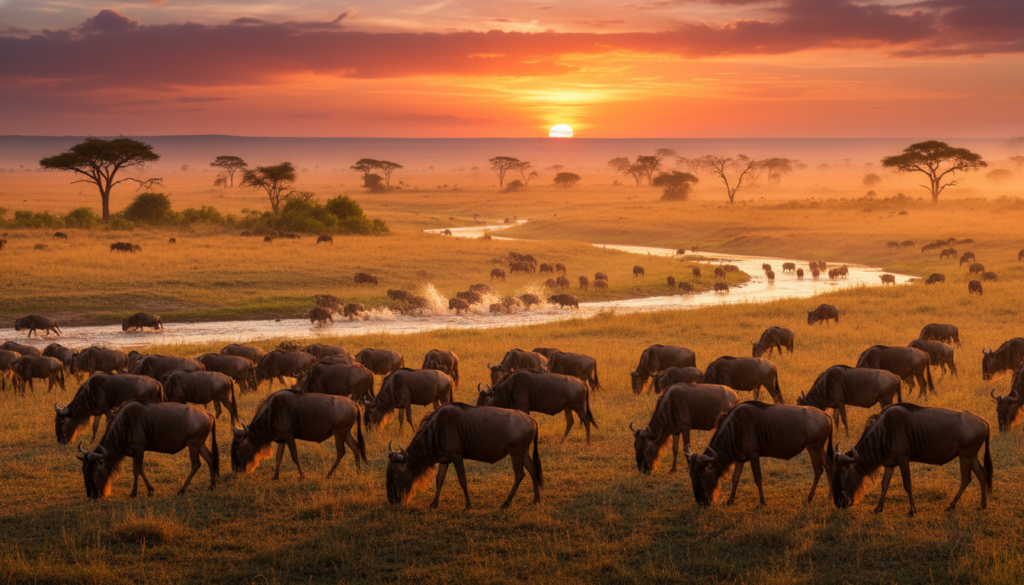
By understanding the migration cycle and planning well, you’ll see the best of the Wildebeest Migration in 2026.
January to March: The Calving Season in Southern Serengeti
At the start of the year, the Serengeti becomes a nursery for wildebeest. This time, from January to March, is when thousands of wildebeest calves are born. It’s a burst of new life in a short time.
The southern Serengeti’s grasslands are safe for wildebeest to have their babies. They have plenty of food and are safer from predators. This season is key for the wildebeest to grow their numbers after their long migration.
New Life in the Serengeti
During these months, the Serengeti is full of newborn calves. They take their first steps in the grasslands. The air is filled with bleating and young ones playing under their mothers’ watchful eyes. It’s a joy for visitors and crucial for the ecosystem.
The calving season in Tanzania draws predators like lions, leopards, hyenas, and cheetahs. This balance is vital for the ecosystem’s health.
| Month | Key Events | Ecosystem Impact |
|---|---|---|
| January | Calving begins, with a peak in births | Predator populations are attracted to the newborns |
| February | Peak calving continues, with thousands of births | The grasslands are teeming with life, supporting various species |
| March | Calving slows down, with the majority of births completed | The ecosystem begins to adjust to the new influx of young wildebeest |
The calving season shows the Serengeti’s amazing biodiversity. It highlights the complex web of life that supports it. Exploring this phenomenon deepens our respect for nature and the need to protect it.
April to May: The Long Rains and the Herd’s Northward Movement
The long rains in April and May are a key time for the wildebeest migration. The herds move north, seeking water and fresh food. This journey is vital for their survival.
The southern Serengeti, once full of new calves, starts to dry out. But the rains bring life to the north, making it green and lush. This is why the wildebeest head there, seeking better grazing.
The Impact of Rainfall on Migration Patterns
Rainfall is crucial for the wildebeest migration. The water and fresh grass they find influence their path. As the rains fill dry riverbeds and make grasslands green, the herds follow.
The table below shows how rainfall affects the wildebeest migration in April and May:
| Month | Rainfall Effect | Migration Pattern |
|---|---|---|
| April | Long rains begin, rejuvenating vegetation | Wildebeest start moving northwards |
| May | Continued rainfall, water sources replenished | Herds continue northward migration |

Watching the wildebeest migration in April and May shows the rains’ importance. The green landscapes give them food and keep them healthy. This helps them on their long journey.
Learning about the wildebeest migration in these months helps us understand their connection with nature. It shows how the environment affects their journey.
June: The Transition Period and the Start of the Trek
June marks a shift in the Serengeti as wildebeest head north for better food. The southern plains dry up, and new grazing spots appear in the north.
The wildebeest move with instinct and a drive to survive. The dry season’s progress affects their migration timing and speed.
Preparing for the Journey Ahead
In June, wildebeest eat what’s left in the southern Serengeti. Their huge herds move based on rain, grass, and predators.
They’re very aware of their surroundings, making choices based on small changes. This adaptability is crucial for their survival to the Maasai Mara.
| Factor | Influence on Migration | Impact on Wildebeest |
|---|---|---|
| Rainfall | Determines grass quality and availability | Affects feeding patterns and energy reserves |
| Grass Quality | Influences the herds’ movement and grazing patterns | Impacts nutrition and overall health |
| Predator Presence | Affects the herds’ vigilance and movement patterns | Influences mortality rates and survival strategies |
Tracking the wildebeest in June shows it’s a key time for them. The journey is tough, but they’re ready for it.
July: The Dramatic Arrival at the Mara River
In July, the great wildebeest migration meets at the Mara River. This is a moment of great danger and excitement. It’s one of the most awaited events in the migration.
The Mara River is a big challenge for the wildebeest. It’s between Tanzania’s Serengeti National Park and Kenya’s Maasai Mara National Reserve. The river is full of water from recent rains and has strong currents. Crossing it is very risky.
The Challenges of River Crossing
Crossing the Mara River is dangerous. The wildebeest face treacherous waters, waiting predators, and the risk of being trampled by others.
“The river crossing is a testament to the wildebeest’s instinctual drive to survive and thrive in the face of adversity.”
The river crossing has many challenges. The wildebeest must deal with:
- Fast-moving waters that can sweep them away
- Predators such as crocodiles and large cats that lie in wait
- The risk of being trampled by other wildebeest
To overcome these risks, the wildebeest use different strategies. They wait for the best time to cross, sometimes for days. They wait until they think the conditions are right.
| Challenge | Strategy |
|---|---|
| Fast-moving waters | Waiting for calm periods |
| Predators | Crossing in large groups |
| Trampling risk | Following experienced leaders |
August: Witnessing the Iconic Mara River Crossing
August is the peak month for observing the iconic Mara River crossing. This event showcases the raw power and beauty of the African wilderness. It’s the culmination of the wildebeest migration’s northward journey, reaching the Maasai Mara National Reserve in Kenya.
A Spectacle of Nature
The Mara River crossing is a spectacle that embodies the essence of the wildebeest migration. Thousands of wildebeest, zebras, and gazelles make the perilous journey across the river. They are driven by the quest for greener pastures. The crossing is fraught with danger, as predators like crocodiles, lions, and leopards lie in wait.
The exact timing of the Mara River crossing can be unpredictable. It often occurs early in the morning or late in the afternoon. Visitors can enhance their chances of witnessing this event by staying in close proximity to the river. Being guided by experienced rangers who can provide real-time updates on the migration’s movement is also helpful.
To maximize the experience, it’s essential to be patient and prepared. The river crossing can be a chaotic and intense experience. The wildebeest display a mix of caution and determination as they navigate the waters.
Key Insights into the Mara River Crossing
| Aspect | Description | Best Time to Witness |
|---|---|---|
| Timing | Often occurs early morning or late afternoon | Early August for peak activity |
| Predator Presence | Crocodiles, lions, leopards are common predators | Throughout August, with varying activity levels |
| Guided Tours | Essential for real-time updates and optimal viewing | Available throughout the migration season |
Understanding the dynamics of the Mara River crossing enhances the overall experience. It allows visitors to appreciate the intricate balance between predator and prey in this unique ecosystem.
September: The High-Stakes Game of Survival in the North
In the northern parts of their migration, the wildebeest face a tough survival challenge in September. The Maasai Mara, with its green grasslands and plenty of water, is key for the herds.
While grazing in the Maasai Mara, the wildebeest must watch out for many predators. Lions, leopards, hyenas, and crocodiles are all threats. The great wildebeest migration is a feast for these predators.
Survival in the Maasai Mara
The Maasai Mara presents unique challenges and chances for the wildebeest. Its rich wildlife and lush conditions support many herbivores and predators.
The wildebeest must stay alert to avoid being hunted. They form large herds for protection. But, even together, they can’t avoid all predators.
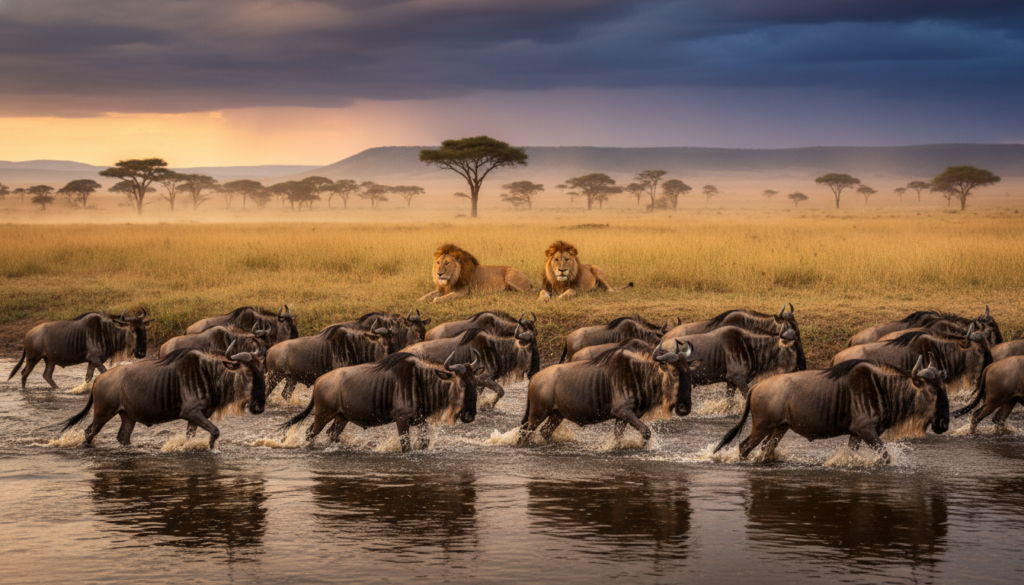
Human activities also affect the wildebeest’s survival. The Maasai Mara is near human settlements and farms. This can change their migration paths and habitat quality. It’s important to protect their habitat for the great wildebeest migration to thrive.
Watching the wildebeest in the Maasai Mara shows us the balance between nature and humans. The wildebeest’s survival depends on their ability to face environmental challenges and our efforts to protect their home.
October: The Return Journey Toward the Southern Plains
In October, the wildebeest herds start their slow move back to the southern plains. This is a key part of their yearly migration. They move because food is running low in the north and the short rains are coming.
Their journey south is shaped by where they can find food and water. They follow the rain and watch as the land turns green.
The Beginnings of the Return Migration
The wildebeest start their return journey calmly, spreading out over the land. This part of their journey changes how they move and the places they see.
The role of rainfall in starting their return is huge. The short rains in October make the southern plains green again. This makes them a great place for the wildebeest to go.
Watching the wildebeest in October shows how important this part of their journey is. It shows how strong and flexible these amazing animals are.
If you’re planning a Wildebeest Migration Safari in 2026, October is a great time to see them start their return. The landscapes are stunning, with the short rains bringing new life to the plains.
November: The Short Rains and the Migration’s Southern Push
November brings the short rains, refreshing the dry lands. This helps the wildebeest migration move further south. The rains make the dry plains more welcoming for the migrating herds.
The short rains greatly affect the migration. The fresh grasslands give the wildebeest the food they need to keep moving. The rains also change the water levels in rivers and ponds, affecting where animals can drink.
The Influence of Short Rains on Migration
The wildebeest migration is closely tied to the rains. In November, the short rains cause the grasses to grow, which is vital for the wildebeest. This is especially true in the Serengeti ecosystem, where the calving season in Tanzania has just ended, and the herds are moving again.
The changing weather patterns and the greening of the landscape guide the wildebeest. They follow the rains, which mean food and water are available. This instinct is key for their survival, especially during the tough times of their migration.
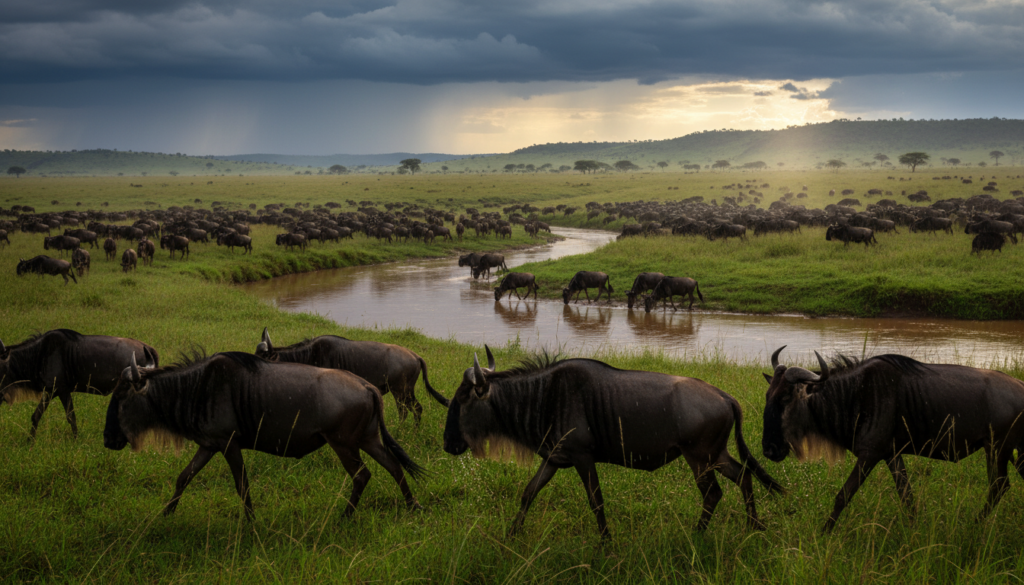
As the wildebeest head south, they face many challenges. These include predator avoidance and navigating through changing landscapes. The short rains, while helpful, also bring muddy terrain and flooded waterways.
Despite these challenges, the wildebeest migration is a breathtaking natural event. The short rains of November are crucial for this phenomenon. They ensure the cycle continues, just as it has for centuries.
December: The Return to the Serengeti Grasslands
The great wildebeest migration ends in December as they return to the Serengeti’s green plains. This marks the end of their journey across different landscapes in search of food.
When the wildebeest come back, the Serengeti is full of life again. The green grass gives them plenty to eat, helping them regain their strength after their long trip.
Ecosystem Interconnectedness
The wildebeest migration shows how balanced the ecosystem is. Their movement affects the plants they eat and the predators that follow them.
The migration is not just about the wildebeest. It’s about how all living things in the ecosystem are connected. The animals’ presence impacts other wildlife, like lions and hyenas, which depend on them for food.
The table below shows important parts of the wildebeest migration, especially their return to the Serengeti in December.
| Month | Location | Key Events |
|---|---|---|
| December | Serengeti Grasslands | Return of wildebeest herds, grazing and replenishment |
| January-March | Southern Serengeti | Calving season, new life |
| July-August | Mara River | Dramatic river crossings |
Learning about the wildebeest migration helps us understand the natural world better. It shows how these animals adapt and survive in their environment.
Thinking about the great wildebeest migration reminds us of the need to protect such natural wonders. The migration is not just a sight to see. It’s essential for the ecosystem, supporting many different species.
Essential Logistics for Your East African Adventure
Planning a migration safari for 2026 requires careful thought. You want your East African adventure to be unforgettable. A well-planned trip lets you enjoy the Great Migration without stress.
Planning involves choosing accommodations, guided tours, and understanding local infrastructure. Let’s explore these to prepare for an amazing experience.
Accommodations and Guided Tours
Choosing the right place to stay is key for a great safari. You can pick from luxury lodges or tented camps. Lodges offer comfort, while camps give a real wilderness feel.
Guided tours are also vital. Guides share knowledge on migration patterns and animal behavior. They keep you safe too.
For more trip planning info, check our FAQs and Travel Info page.
| Accommodation Type | Comfort Level | Proximity to Migration Route |
|---|---|---|
| Luxury Lodges | High | Variable |
| Tented Camps | Medium to High | Close |
| Mobile Camps | Medium | Very Close |
Mark Jenkins, a safari expert, said,
“The key to a successful migration safari lies in the details – from the quality of your guides to the flexibility of your itinerary.”
Preparing for the Unexpected
The African wilderness is full of surprises. Weather, animal movements, and more can change your plans. Being ready for these changes is important.
Being flexible and having backup plans helps. Working with your tour operators and guides is key to handling any issues.
By focusing on these logistics, your 2026 migration safari will be exciting and well-organized. Our team is here to help you plan and enjoy your safari.
Choosing the Best Safari Camps and Lodges
Your Wildebeest Migration Safari can be amazing if you pick the right place to stay. Look for a camp or lodge that’s both comfy and close to nature. This way, you’ll get to see the great wildebeest migration up close.
When picking a safari camp or lodge, think about a few things. You want a place that’s both luxury and authentic. It should let you feel the wild while giving you all the comforts you need.
Luxury and Authenticity in the Wilderness
The top safari camps and lodges are more than just places to sleep. They offer a real experience in the African wild. Authenticity means diving into the local culture and nature. Luxury makes sure you’re comfortable and refreshed.
The things you can find at safari camps and lodges vary a lot. Here are some important ones to look for:
- Guided tours with expert guides
- Spacious and comfy rooms
- Food that shows off local flavors
- Chances to learn about the local culture
Choosing a camp or lodge with these features means you’ll have a Wildebeest Migration Safari to remember.
Conclusion
We’ve explored the Wildebeest Migration Safari together. Now, we invite you to see this amazing event for yourself. The Serengeti and Maasai Mara are the perfect places to watch it.
The calving season in Tanzania is a special time. The southern Serengeti is filled with new wildebeest. Then, the Mara River crossing is a dramatic highlight.
Seeing the wildebeest migration is a once-in-a-lifetime adventure. The Mara River crossing is a must-see. It shows the strength and will of these amazing animals.
We encourage you to join us on this journey. See the migration for yourself and feel its magic.
Planning your East African adventure? We’re here to help. We’ll make sure your experience is unforgettable. With the right planning, you’ll see the wildebeest migration in all its beauty.
FAQ
The great wildebeest migration happens all year. The best time depends on what part of the journey you want to see. For the calving season Tanzania, January to March is perfect.
If you want to see the Mara River crossing, go between July and September. This is when the herds face the currents in the north.
Start planning your migration safari 2026 12 to 18 months early. This is because camps like Ubuntu Migration Camp and Sayari fill up fast. They offer a close-up experience with the herds.
The calving season Tanzania is special. It happens in the Ndutu region from late January to February. Hundreds of thousands of new calves arrive in just three weeks.
This draws predators like the lions of the Serengeti. It gives us a raw look at the start of the great trek.
The best spots are in the Northern Serengeti and the Maasai Mara. Staying at Singita Mara River Tented Camp or Olakira Migration Camp is recommended. These places offer a close view of the Mara River crossing.
Here, the wildebeest face steep banks and crocodiles. It shows their strong instinct to keep moving.
The herds move all year, but their path changes with the rains. To track the migration, follow the seasons. The southern plains are first, then the Western Corridor in May and June.
By July, they move to the northern river boundaries. By October, they head south through the eastern Serengeti, following the rains back to their grazing grounds.
Mobile camps like Alex Walker’s Serian and Nomad Tanzania’s Serengeti Safari Camp offer the best experience. They move with the seasons, avoiding permanent lodges. This lets us stay close to the great wildebeest migration while being eco-friendly and focusing on wilderness discovery.

Continue Reading
Tanzania Safari 2026: The Complete First-Timer's Guide
Embark on an unforgettable Tanzania safari in 2026 with our detailed first-timer's travel guide.
Safari in the Serengeti: What No One Tells You Before You Go
Explore the Serengeti's untamed landscapes on a guided safari that unveils its true essence.
African Safari Hot Air Balloon: The Complete Guide to Flying Over the Serengeti
Soar over the Serengeti in a hot air balloon on an unforgettable African safari adventure. Discover the magic...