Pori Africa

Ngorongoro Crater — Pori Africa Adventures
Home
Itineraries
The Route
Destinations
Explore
Experiences
Why Us
Stories
Purpose
Enquire
/div>
0 km
from Arusha
Bearing 000°
N
S
Ngorongoro Crater
2,300
Metres rim altitude
The Eighth Wonder · UNESCO · 19km across

The
Crater.

The world's largest intact volcanic caldera. 19 kilometres across. 600 metres deep. 25,000 large mammals that cannot leave. The most concentrated wildlife experience in Africa — and the most consistent, every month of the year.

19km
Diameter
600m
Depth from rim
25,000
Large mammals
~30
Black rhino
Crater
The geological context

A caldera that became
an ark.

The Ngorongoro Crater was formed approximately two to three million years ago when a massive volcano — once potentially larger than Kilimanjaro — collapsed inward after a major eruption. The resulting caldera, 19 kilometres across and 600 metres deep, created a geological enclosure that determined everything that would happen inside it. The wildlife that entered the caldera over millennia became effectively isolated from the surrounding ecosystem by the near-vertical crater walls. The result is a closed, self-sustaining ecosystem with the highest wildlife density on Earth relative to its area.

The isolation has consequences. The lion population of approximately 60 individuals is genetically distinct from the Serengeti population — they cannot interbreed across the crater walls. The black rhino population of approximately 30 individuals is the most reliably observed in Tanzania, because the animals cannot disperse across a large landscape the way rhino in other parks can. The enclosure that was created two million years ago by geology is now the defining characteristic of the wildlife experience.

Why it performs year-round

The caldera creates its own climate.

Most Tanzania parks see significant wildlife dispersal during the wet season when water is available across the landscape and the animals are not concentrated at permanent water sources. The Ngorongoro Crater does not follow this pattern. The caldera creates its own microclimate — there is always water on the crater floor, the grass is always productive, and the wildlife concentration remains high throughout the year. This makes Ngorongoro one of the few Tanzania destinations where the experience is genuinely consistent regardless of season.

The practical implication: Ngorongoro can be incorporated into a Tanzania circuit at any time of year without compromising the wildlife viewing experience. The crater descent time is important — descend before 7am to be on the floor before the vehicle density increases mid-morning, and stay until noon to cover the most productive morning game drive window. The rim camp experience at dawn, with the caldera appearing below the cloud as the light builds, requires an overnight on the rim.

Crater floor · Dawn
The lions
Rim view
Flamingos
Black rhino
What lives inside

The crater species
portfolio.

Black Rhino.
Approximately 30 black rhino live on the crater floor — the most reliably observed population in Tanzania. They cannot leave the caldera. The western floor near the Lerai Forest is the primary territory. Best observed in the early morning before 9am.
~30 individuals
The Lions.
Approximately 60 lions in genetically isolated prides. Their territories have been documented for decades. The isolation from the Serengeti population has produced measurable physical differences. Active in the open grassland at dawn, in shade by mid-morning.
~60 lions
Flamingo Concentrations.
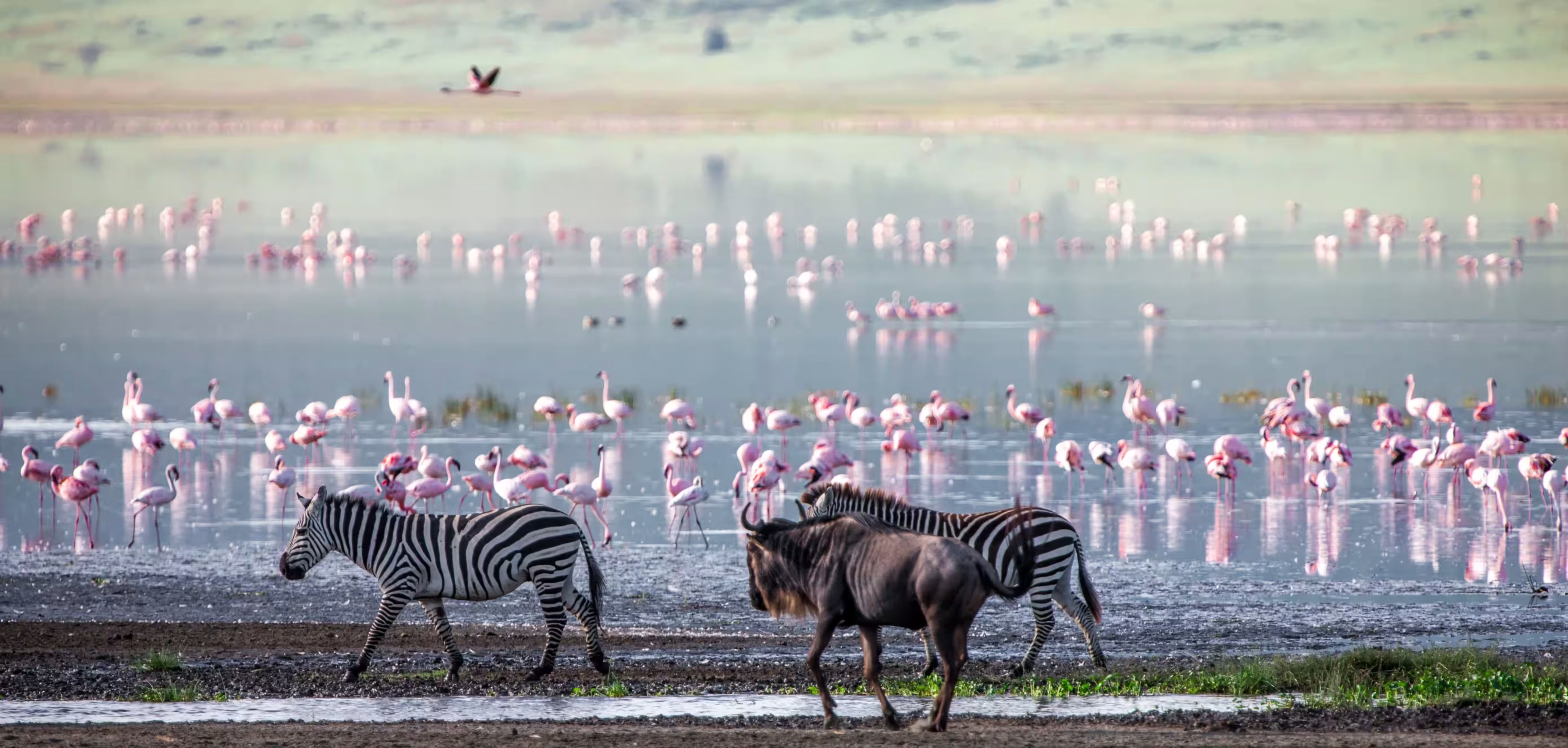
The soda lake on the crater floor supports flamingo concentrations that vary with rainfall. During the wet season, tens of thousands of lesser flamingos can be observed from the lakeshore. A pink horizon across the alkaline water.
Seasonal
Wildebeest & Zebra.
Resident herds of wildebeest and zebra remain on the crater floor year-round — unlike the Serengeti herds, which migrate. The resident population provides consistent game viewing and consistent predator activity throughout the year.
Resident year-round
Leopard & Cheetah.
Both species are present on the crater floor, though leopard sightings are less common than in the Serengeti. Cheetah are more reliably observed in the open grassland areas of the crater, particularly in the mornings before vehicle traffic increases.
Present
Spotted Hyena.
The Ngorongoro hyena clan is one of the most studied in Africa. The clans are matriarchal, large, and active around the kill sites left by the lion prides. Hyena activity at dawn, before the lions have finished feeding, is a regular feature of the crater floor morning.
Resident
Practical guide

How to get the most from
a Ngorongoro day.

When should we descend into the crater?
Before 7am. The rim road opens at first light and the early descent gives access to the crater floor before mid-morning vehicle density increases significantly. The black rhino are most active on the western floor between 7 and 10am. The lion prides are in the open grassland until around 10am when they move into shade.
Should we stay on the rim or drive up from Karatu?
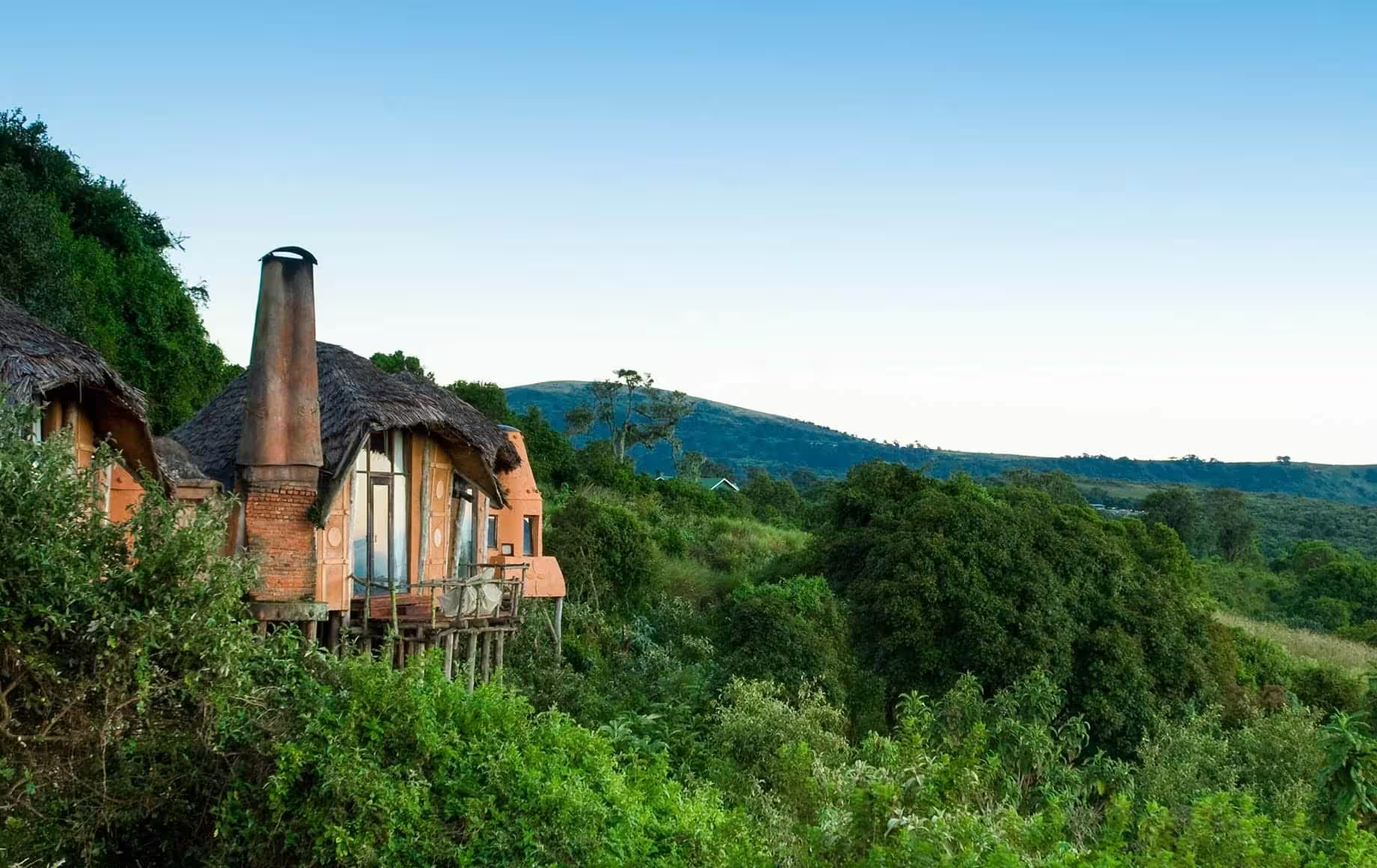
Stay on the rim. The crater rim at dawn — watching the caldera appear below the cloud as the light builds — is one of the finest moments in Tanzania. It is not possible from Karatu. The rim camp also gives the earliest descent access, which is the most productive game drive window on the crater floor.
How many days should we allocate?
One full day minimum. Two nights on the rim with two full crater descents is significantly better — the first day is for orientation and overview, the second can be planned around the specific wildlife behaviour and locations observed on day one. Ngorongoro rewards revisiting within a single circuit.
Is Ngorongoro good for the Big Five?
Yes. Ngorongoro is one of the most reliable Big Five destinations in Africa. Lion, elephant, buffalo, and black rhino are all resident and reliably observed. Leopard is present and occasionally seen. The enclosed caldera means the animals cannot disperse, which makes the observation probability significantly higher than in open-landscape parks.
N
Plan your crater descent

Into the
caldera.

We design the Ngorongoro component into your circuit with the right rim camp, the right descent timing, and the right guide for the crater ecology.

Design My Crater Circuit →
The crater in geological context

Why it performs consistently when every other park varies.

The Ngorongoro Crater performs as a wildlife destination in a way no other Tanzania park does — consistently, year-round, regardless of season. The reason is geological rather than managerial. The caldera walls, 600 metres high and near-vertical, create a natural enclosure that prevents the wildlife dispersal that affects every other open-landscape park in Tanzania. In the Serengeti, the wildebeest herd moves across 30,000 square kilometres in response to rainfall. In Tarangire, wildlife disperses widely during the wet season when water is available everywhere. In Ngorongoro, the concentration remains high year-round because the animals on the caldera floor cannot effectively leave it. The geological accident of the collapse two to three million years ago created the most predictable wildlife viewing environment in Africa.

The lion population is the clearest expression of what geological isolation produces over time. The approximately 60 lions on the crater floor are descended from a founding population separated from the Serengeti gene pool long enough to develop measurable physical differences. The prides are smaller than typical Serengeti prides because the prey base inside the caldera is finite. Scientists who study the Ngorongoro lions have documented inbreeding depression as a long-term conservation concern — a consequence of the same isolation that makes the population so reliably observable from the crater floor.

The black rhino population is the most consequential wildlife story in the crater. Tanzania lost over ninety percent of its black rhino to poaching since the 1970s. The approximately 30 individuals on the Ngorongoro floor represent one of the most significant intact populations remaining in East Africa. Their observability is a direct function of the caldera enclosure — they cannot disperse, their territories are predictable, and their morning movements in the open grassland near the Lerai Forest are reliably documented by guides who know the crater deeply. Emmanuel Moshi knows each individual animal by name and territory.

How we position the Ngorongoro component

Sequencing, timing, and why two nights changes everything.

Ngorongoro works best in the northern circuit as the second or third stop, after Tarangire and Manyara and before or alongside the Serengeti. A minimum of one night on the crater rim is necessary to access the most productive morning game drive window — a dawn departure that reaches the crater floor before 7am and covers the three-hour window of maximum predator activity before vehicle density increases mid-morning.

Two nights on the rim with two full crater days is significantly better. The first day is orientation: the scale of the caldera, the wildlife distribution, the specific territories of the lion prides, the current positions of the black rhino, the flamingo concentrations on the soda lake. The second day is focused: planned around what was observed on the first day, with the guide directing the drive toward the specific animals and behaviours that emerged on day one. The quality of observation on the second day is consistently higher than the first, because it is directed rather than exploratory.

We explain this sequencing logic to every client who asks why we are not proposing a single transit day in Ngorongoro. The transit day is the most common way to visit the crater. It is also the way that delivers the least of what the crater contains. One hour on the crater floor is a photograph. Two full days is an ecological experience.

The flamingo lake and waterbird concentrations

The alkaline lake as a wildlife destination in its own right.

The soda lake on the Ngorongoro crater floor is one of the most productive waterbird habitats in East Africa. The lake is shallow and alkaline — conditions that support the algal blooms that flamingos feed on. When the alkalinity is at the right level, tens of thousands of lesser flamingos gather on the lake surface, turning the water pink from the shore to the far rim of the caldera. The flamingo concentrations are seasonal and variable, most reliable in the wet season when the algal bloom is at its peak, but visible in reduced numbers throughout the year.

The waterbird diversity beyond the flamingos includes pelican colonies on the lake islands, stork assemblies along the lakeshore, sacred ibis in the grassland adjacent to the water, and Egyptian geese at the freshwater springs that flow into the eastern edge of the lake. The birding at the lakeshore in the morning light, with the caldera rim visible above and the wildlife of the open grassland on the plain behind, is the single richest birding location in the northern circuit. We design birding time at the lakeshore into the Ngorongoro component for any client who has expressed a birding interest, and we route the game drive to cover the lakeshore in the morning hours when the bird activity is highest.

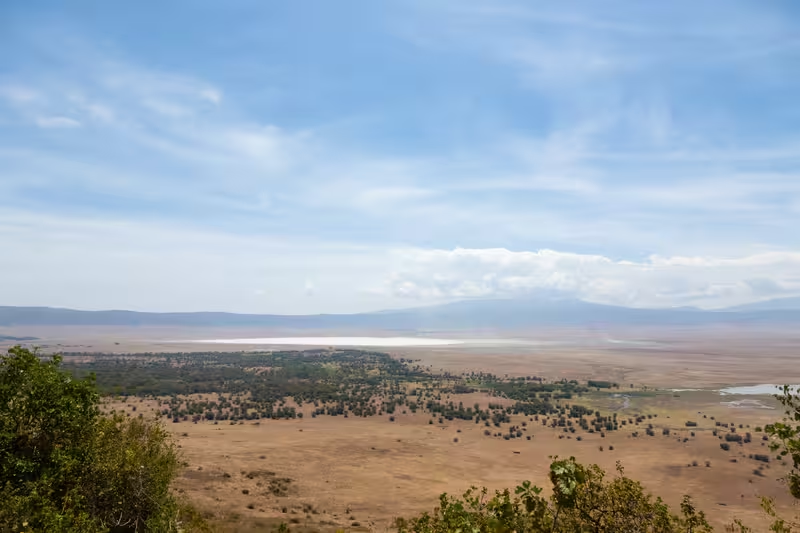
The rim experience — the view from the crater edge at dawn, before the descent — is something that overnight visitors have access to and day-trip visitors do not. The Ngorongoro crater rim sits at 2,300 metres above sea level. In the early morning, the caldera often fills with cloud that sits below the rim and above the crater floor, obscuring the wildlife below. As the sun rises and the air warms, the cloud dissipates — gradually revealing the caldera floor below, the lake, the herds of wildebeest and zebra on the open grassland, and the drama of the geological enclosure becoming visible from above. Watching this process from the rim camp terrace, with a coffee, before the morning descent, is one of the finest single moments available in Tanzania.

The drive from the rim to the crater floor takes approximately thirty minutes on the steep descent road. The road passes through the montane forest that covers the inner crater walls — a different ecosystem from the open caldera floor below, full of buffalo, elephant, and the colobus monkey populations that inhabit the forest edge. The transition from forest to open grassland as the vehicle reaches the crater floor is one of the most dramatic landscape transitions available within a single game drive. The contrast between the enclosed forest of the descent and the openness of the caldera floor — with the rim visible above on all sides — is what makes the first crater descent experience one that most clients describe as the single most visually striking moment of their northern circuit.