- Why the Land Cruiser. Why the 76 series specifically.
- Game drive equipment.
- Safety & recovery.
- What gets checked before every circuit leaves Arusha.
- Why the 76 Series configuration matters for game viewing.
- Your dedicated vehicle.
- Why the Land Cruiser is not interchangeable.
- What happens when something goes wrong.
- How we assign vehicles to programmes.
- What happens between trips.
- Let's design yourOur Vehicles experience.

The vehicle that does not break down
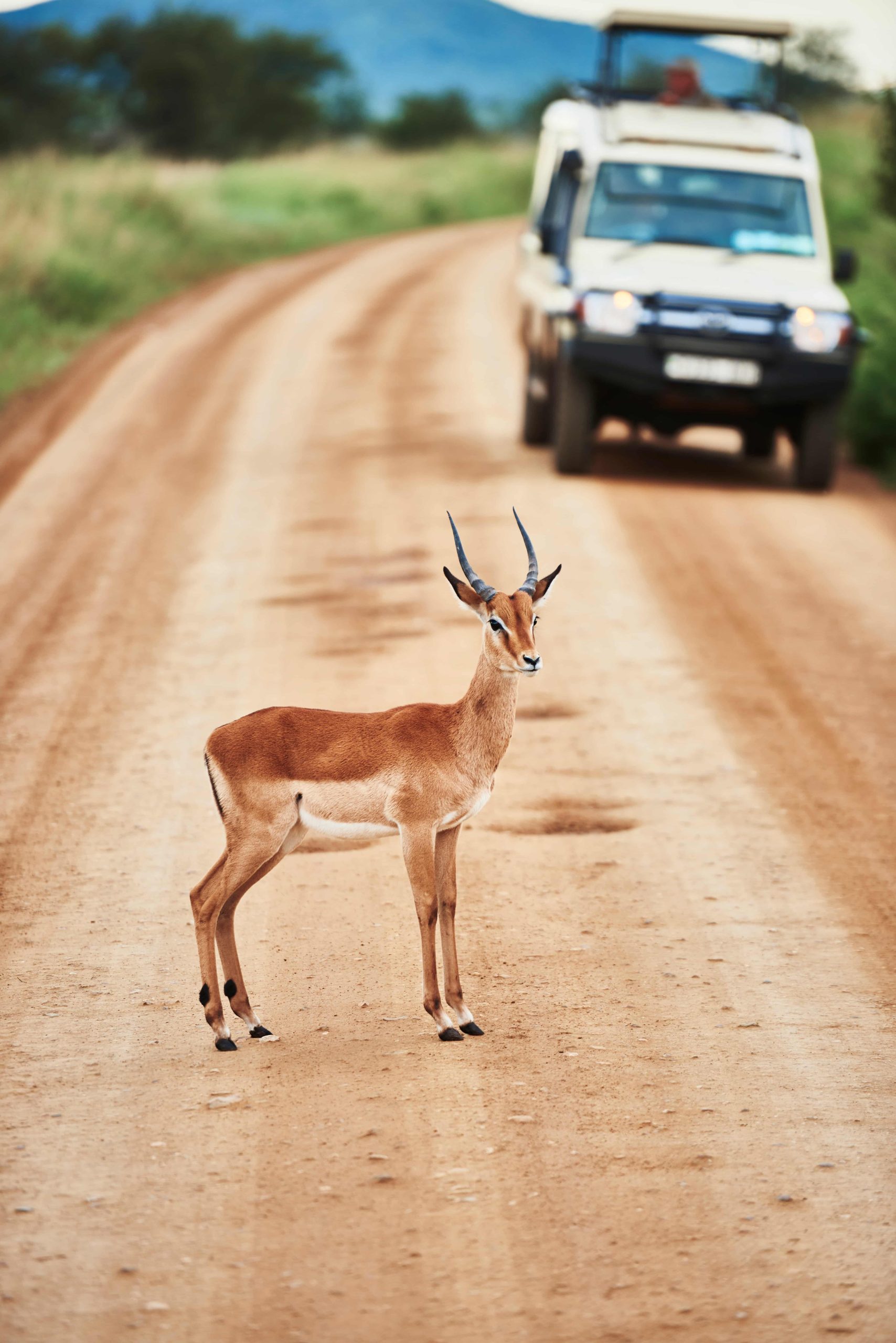
The Toyota Land Cruiser 76 Series has been the professional safari vehicle in East Africa for four decades. Mechanically reliable, rebuildable in the field, and capable in terrain most vehicles cannot navigate. Every Pori Africa circuit uses a dedicated 76 Series, inspected before departure.
Why the Land Cruiser. Why the 76 series specifically.
The 76 Series is a bare-metal working vehicle with a solid front axle, short-wheelbase turning radius, and a body structure unchanged since 1985 because the design was correct from the beginning.
The pop-top roof conversion allows passengers to stand and observe through the open top — 360-degree rotation capability during active wildlife events. The additional height produces a game viewing perspective not achievable from a standard vehicle.

Game drive equipment.
Swarovski or Zeiss 10x42 binoculars — one pair per passenger
Field reference library — birds, mammals, tracks & signs
Spotting scope for distant observation
Wildlife checklists current to circuit parks
Camera bean bag for roof edge stabilisation
Sunshade fabric for midday observation
Bush breakfast and sundowner equipment
Cool boxes with water and soft drinks
Safety & recovery.
Full first aid kit including pressure bandage and suture kit
High-lift jack, shovel, and traction boards
Tow strap and snatch block
Satellite communication device
20L emergency water supply
Basic tool kit and spare parts
Fire extinguisher and emergency flares
Flying Doctors emergency frequency card


What gets checked before every circuit leaves Arusha.
A twelve-point mechanical and equipment check conducted in the Arusha vehicle yard 48 hours before departure. Oil and fluid levels, tyre pressure and tread depth, brake function, 4WD engagement, radio and comms, pop-top mechanism, full equipment inventory. Three hours per vehicle. The breakdown rate on Pori Africa circuits is effectively zero. The most common cause of safari vehicle breakdown is deferred maintenance. The cost of maintaining to the standard required for reliable field operation is higher than deferring until repair is needed. Many operators defer. We maintain. The financial difference is absorbed in our operating cost — not passed to the client or reflected in breakdown frequency.
Why the 76 Series configuration matters for game viewing.
The safari conversion places passenger seats at a height allowing standing observation through the open roof without legs above the roof line. The correct ergonomic position for sustained viewing — hips supported by the seat back edge while the upper body is above the roof with binoculars and camera at natural line of sight.
The 1.98-metre width allows access to tracks wider vehicles cannot use and produces the turning radius needed in Serengeti kopje areas. The experienced guide uses vehicle dimensions as a tool — knowing exact clearance, roof height, and approach angles for every park's terrain.

Your dedicated vehicle.
Every circuit uses a named vehicle, a named guide, and a named driver-mechanic — the same team from Arusha to the last camp and back.

Why the Land Cruiser is not interchangeable.
Wheelbase, ground clearance, engine torque profile, and parts availability across East Africa make it the only rational choice for serious off-road work. We run late-model Land Cruisers maintained at our Arusha workshop with a resident mechanic.
Our vehicles are configured for maximum four guests rather than six. Four guests means every seat has direct window access, every person can stand at the roof without crowding, and vehicle weight remains within parameters for comfortable rough-terrain performance.


What happens when something goes wrong.
Every vehicle carries satellite comms, bush-calibrated first aid, vehicle recovery kit, and spare wheel plus tools. Guides carry a second independent communication device. This redundancy is standard on all programmes. In a breakdown: guests remain with the guide, guide contacts operations via satellite, replacement vehicle dispatched. In northern Tanzania: 2–4 hours. In southern parks we pre-position a backup vehicle in the region for all programmes over three days. Medical emergencies handled through AMREF Flying Doctors — 24-hour emergency air evacuation. All guests receive the AMREF contact and pre-trip briefing. Travel insurance covering medical evacuation is mandatory — we verify coverage before finalising any booking.
How we assign vehicles to programmes.
Allocation is based on route, group size, and terrain. A Ngorongoro crater descent prioritises ground clearance and torque; a Ruaha programme prioritises fuel range and storage capacity.
For private programmes the vehicle is fixed before departure and confirmed in pre-trip documentation. Photography guests get vehicles with bean bag mounts pre-installed and, on request, gimbal plates for video work.

What happens between trips.
Every vehicle returns to the Arusha workshop after each programme for full mechanical inspection — brakes, suspension, tyres, fluids, electrical, and the specific wear points from corrugated track.
We replace tyres on mileage schedule rather than visual inspection, because corrugated track damages tyre structure internally before wear shows externally. A blown tyre in Ruaha is a three-hour problem minimum. The cost of replacing tyres 2,000km early is trivial relative to that consequence.
The vehicle is not transport to the experience. On a long programme in a remote park, it becomes the experience — the hours in it, the conversations, the patience it demands and rewards.
Full fleet specification, current vehicle availability, and maintenance schedule available on request. Guests who want to review vehicle documentation before confirming are welcome to do so.

The Toyota Land Cruiser 76 Series has been the professional safari vehicle in East Africa for four decades.

Let's design your
Our Vehicles experience.
Send us your travel window and we'll build it around exactly what you came to see — and handle every detail on the ground.