Every park has a
specific logic.
Tanzania has 22 national parks covering approximately 15 percent of the national territory. Each one was established to protect a specific ecosystem, a specific species assemblage, or a specific landscape character. Understanding what each park actually contains is the beginning of circuit design.
The parks, by circuit.
Each park protects a different ecosystem, and the circuit you travel shapes the whole safari. Here is what each one actually contains — and who it is right for.

Flagship · 14,763 km²Serengeti National Park.
The most studied wildlife ecosystem in the world. 14,763 square kilometres anchoring the Serengeti-Mara ecosystem. The great migration — 1.5 million wildebeest and half a million zebra completing a continuous annual circuit. Year-round resident lion prides. The highest cheetah density on Earth on the southern plains during calving season.
The park performs differently in each zone — northern crossing country, southern calving plains, central Seronera, western corridor. We position camp based on the specific wildlife objectives and the season.

Northern · permanent riverTarangire National Park.
The only permanent water source across a vast semi-arid landscape. Elephant herds of 200–500 at the river. Ancient baobab trees — some over a thousand years old — give the landscape a prehistoric character found nowhere else in Tanzania.

Northern · day-parkArusha National Park.
35 minutes from Arusha. The most accessible and most overlooked. Momella Lakes, Ngurdoto Crater, walking safari on Mount Meru’s lower slopes. The entire park is visible in a half-day.
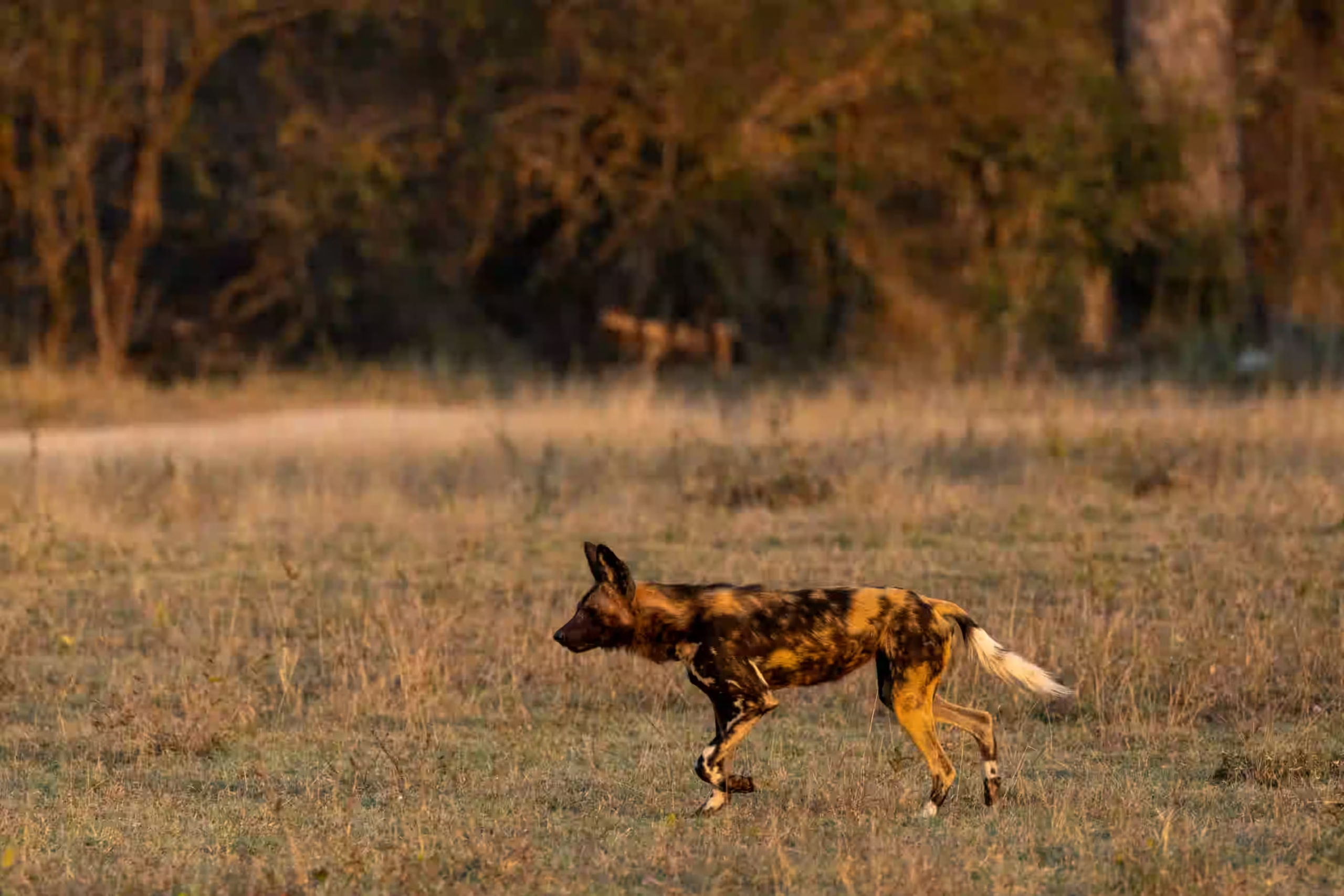
Southern · 20,226 km²Ruaha National Park.
Tanzania’s largest national park at 20,226 km². The greatest elephant concentration in Tanzania. Wild dog more reliably observed here than anywhere else. The game drive in August without seeing another vehicle is not unusual — it is the expectation.
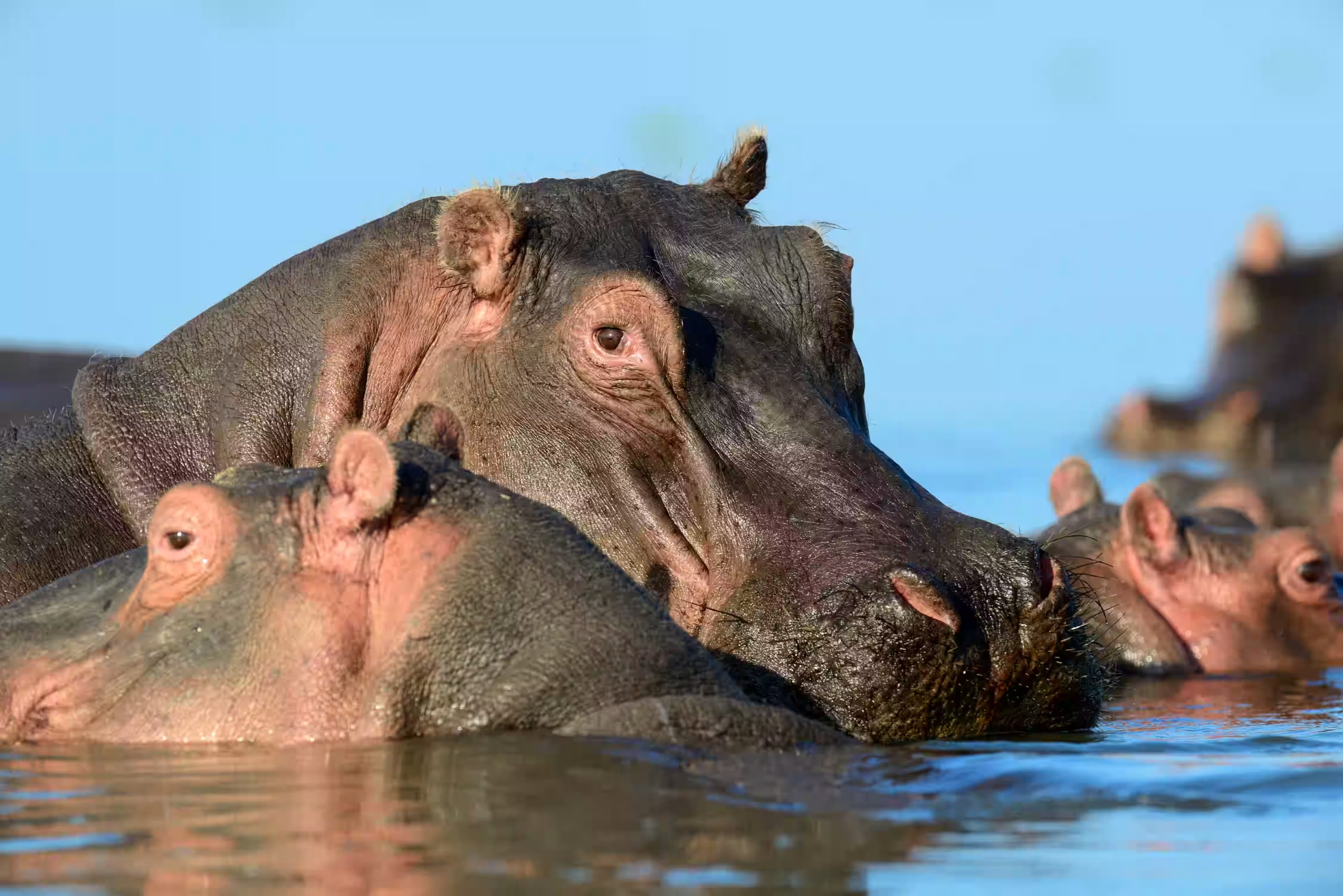
Southern · Rufiji RiverNyerere National Park.
Formerly the Selous Game Reserve. The Rufiji River produces the only regular boat safari in Tanzania. Hippo at water level. Crocodile on the banks. Fish eagle overhead. Wild dog packs have established territories here.

Western · charter onlyKatavi National Park.
Charter access only. The seasonal hippo concentrations in drying oxbow lakes during August–September are among the most dramatic wildlife spectacles in Africa. A week without seeing another tourist is possible.

Western · by boatGombe & Mahale.
Both accessible only by boat on Lake Tanganyika. The chimpanzee tracking experience — one permitted hour per day, maximum six people — is the most intimate primate encounter available anywhere in Africa.
How we match you to the
right parks.
The northern circuit parks — Serengeti, Ngorongoro, Tarangire, Manyara — are right for most first-time clients. The southern circuit serves clients who value wilderness character above all else.
The specialist parks — Mahale and Gombe for chimpanzee tracking, Katavi for extreme solitude — are right for return clients or those with specific objectives.
Tell us what you want to observe and experience. We match the parks, the season, and the camp positions.
Tell us what you want to see →Conservation, fees & access.
Conservation logic.
Tanzania protects approximately 38 percent of its national territory. The Serengeti was gazetted in 1951. Ruaha was elevated to national park in 1964. Nyerere was created from the Selous Game Reserve in 2019. The practical consequence is that visitor access rules, fee structures, and camp licensing regimes differ significantly between parks. We stay current on regulatory developments through our relationships with camp managers and TANAPA.
Where the money goes.
TANAPA charges daily conservation fees for all parks. These fees are included in all Pori Africa programme quotes. The revenue funds ranger salaries, anti-poaching operations, and community conservation programmes.
Tanzania’s wildlife population has recovered significantly over the past two decades — financed substantially by visitor fees. Guests can request a fee summary for carbon reporting or personal records.
Practical entry.
All parks require advance booking and fee payment. During peak season, daily vehicle quotas in sections of the Serengeti apply. We secure all permits before departure. Ngorongoro Crater has a separate permit system. Crater floor time is limited to six hours per vehicle per day. We schedule descents for early morning when the light and predator activity are best.

Let's design your
National Parks safari.
Send us your travel window and we'll build it around exactly what you came to see — and handle every detail on the ground.