- The baobabs of Tarangire.
- Dry season or wet season: choose your Tarangire.
- Wild dog in Tarangire: more reliable than Ruaha.
- Why Tarangire in August is unlike anything in the northern circuit.
- What makes Tarangire visually unlike any other Tanzania park.
- What makes the elephant encounter here different.
- The elephant park belongs in your circuit.
- Let's design yourTarangire experience.

The elephant park
In August and September, the Tarangire River becomes the magnet for wildlife across a vast landscape. Elephant herds numbering in the hundreds. The most reliable wild dog sightings in the northern circuit. And baobab trees that make the landscape look like nothing else in Tanzania.
The baobabs of Tarangire.
The baobabs — some over a thousand years old — create a visual character completely different from the Serengeti grassland or Manyara woodland. Elephant herds moving through baobab-dotted terrain at first light, with the Tarangire River visible below, is a composition that doesn't exist elsewhere in Tanzania.
Over 550 bird species have been recorded — including the endemic ashy starling found nowhere else. In November and December, migratory species arrive and bird density reaches its annual peak.

Dry season or wet season: choose your Tarangire.
June through October. The Tarangire River is the only permanent water and wildlife concentrates along its banks. Elephant herds of 500+. Buffalo herds. Constant predator activity. The landscape is open, gold, and dramatic.
November through May. The landscape transforms — long green grass, baobabs in full leaf, 550+ bird species. Visitor density drops dramatically. A full morning without seeing another vehicle. For birders and those who value solitude.

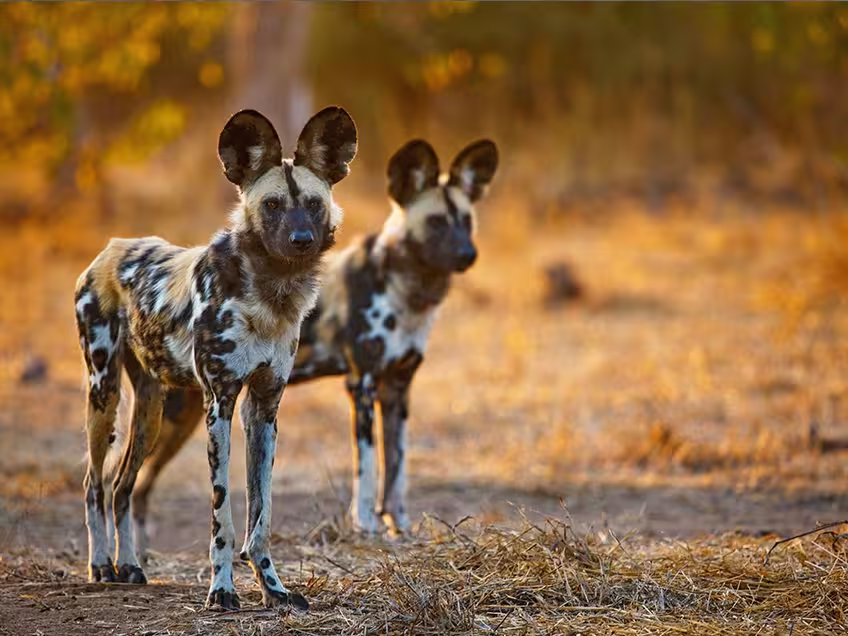
Wild dog in Tarangire: more reliable than Ruaha.
Resident packs are among the most reliably observed in the northern circuit. Most active during cool hours of early morning and late afternoon. Tracked by our guides through current-week field reports.
Probability during a two-night stay is meaningfully higher than most other northern circuit parks. We tell clients this honestly when building the itinerary.

Why Tarangire in August is unlike anything in the northern circuit.
The Tarangire River is the only permanent water across a vast semi-arid landscape. During the dry season, wildlife from a catchment far beyond the park concentrates along the river in numbers not seen in any other northern circuit park. Elephant herds of 200–500 at the water, buffalo in the thousands, and predator activity following the concentration. The game drive experience is structured differently from the Serengeti. The terrain is varied: acacia woodland, rocky escarpments, floodplain grassland, baobab-dotted hills. Encounters are dense and prolonged — an elephant herd crossing the river at close range, a python in the branches above, a wild dog pack emerging at dawn.
What makes Tarangire visually unlike any other Tanzania park.
The baobabs are enormous, sculptural, and ancient-looking in a way that makes the landscape feel prehistoric. They create a visual character that photographs like nothing else on the northern circuit.
The birding is exceptional by any standard. 550+ species, the endemic ashy starling, and November–December migratory arrivals bringing density to its annual peak.
Camp position within Tarangire matters. Camps nearest the river give best dry season elephant access. Northern sector camps give access to wild dog territories. We explain the trade-offs to every client.

What makes the elephant encounter here different.
The elephants have been habituated to vehicles across multiple generations. Family groups including mothers with very young calves approach at distances that would cause retreat in less-habituated populations. The matriarchs are distinctive individuals documented by researchers across decades.
The dry season concentration produces the most extraordinary elephant viewing in the northern circuit. Herds of 200–500 at the water, multiple families interacting at the riverbank, and the constant rumble of elephant communication. These encounters last for hours rather than minutes.
The green season transforms the landscape. The grass grows long, baobabs come into full leaf, and the park becomes one of the finest birding destinations in East Africa. Visitor density drops dramatically — a full morning without another vehicle is entirely normal.
The walking safari in the remote northern section reveals the park at a completely different scale. Elephant tracks, browse damage on baobab bark, dung telling you age profiles — ecological details the vehicle obscures.

The elephant park belongs in your circuit.
Tell us your travel dates and we will design the right Tarangire component — the right camp, the right season, the right number of nights.

In August and September, the Tarangire River becomes the magnet for wildlife across a vast landscape.

Let's design your
Tarangire experience.
Send us your travel window and we'll build it around exactly what you came to see — and handle every detail on the ground.