
The Crater Tanzania: Exploring Africa’s Most Extraordinary Wildlife Arena
- The Geological Marvel of the Ngorongoro Crater Tanzania
- Planning Your Journey to the Crater
- Navigating the Ngorongoro Safari Experience
- The Wildlife Spectacle of the Crater Floor
- Mastering the Crater Game Drive
- Accommodation Options Near the Tanzania Volcanic Crater
- The Maasai Culture and Local Communities
- Essential Gear for Your Tanzania Adventure
- Health and Safety Guidelines for Travelers
- Exploring Beyond the Crater Floor
- The Ecological Challenges Facing the Crater
- Understanding the Climate and Weather Patterns
- Logistics of Visiting the Crater
- Conclusion
- FAQ
Step into a world where time seems to stand still. The Crater Tanzania landscape offers a rare glimpse into an untouched wilderness. It is sheltered by ancient volcanic walls.
As we descend into this natural amphitheater, we find a vibrant ecosystem. It is one of the most significant wildlife sanctuaries on the planet. This unique basin serves as a sanctuary for diverse species, allowing them to thrive in a self-contained environment.
Our journey through this extraordinary wildlife arena reveals the delicate balance of life within the Ngorongoro region. By understanding the nuances of this habitat, we gain a deeper appreciation for the conservation efforts that protect it. We hope to guide you through the most meaningful ways to witness this remarkable destination firsthand.
Key Takeaways
- The region functions as a self-contained, protected ecosystem for diverse wildlife.
- Geological history shaped this unique, high-walled natural sanctuary.
- Responsible observation is essential to maintaining the area’s delicate balance.
- The site offers an unparalleled opportunity for authentic wilderness discovery.
- Strategic planning enhances the quality of your wildlife encounters.
The Geological Marvel of the Ngorongoro Crater Tanzania
The Ngorongoro Crater in Tanzania is a wonder that draws scientists and travelers. It’s a vast, untouched wilderness. This huge volcanic caldera is known as the “Eighth Wonder of the World.” It shows the complex history of the region.
The crater’s story began millions of years ago with volcanic activity. It was once a massive volcano, as big as Mount Kilimanjaro. It collapsed in on itself.
Formation of the Caldera
Creating a caldera is a complex process. It starts with a huge volcano eruption. This eruption empties the magma chamber, causing the volcano to collapse.
The Ngorongoro Crater was formed about 2.5 million years ago. This collapse made a caldera 20 kilometers wide and 610 meters deep. It’s one of the largest intact calderas in the world.
| Geological Event | Timeframe | Description |
|---|---|---|
| Initial Volcanic Activity | Millions of years ago | Volcanic eruptions began shaping the landscape. |
| Major Eruption | Around 2.5 million years ago | A massive eruption led to the collapse of the volcano. |
| Caldera Formation | Following the major eruption | The volcano collapsed in on itself, forming the caldera. |
The Unique Ecosystem Within the Walls
The Ngorongoro Crater’s ecosystem is shaped by its history. The crater floor is a self-contained world. It has a wide variety of plants and animals.
The crater is home to the Big Five – lion, leopard, rhinoceros, elephant, and Cape buffalo. Its diverse landscape supports many species. This includes grasslands, forests, and wetlands.
The Ngorongoro Crater is a fascinating study subject. It shows the beauty of nature and why we must protect it. Exploring this ecosystem helps us appreciate the world around us.
Planning Your Journey to the Crater
Planning your trip to the Ngorongoro Crater is key. You’ll want to think about the best time to see wildlife and what you need to enter. We’ll help make your visit fun and well-planned.
Best Time of Year for Wildlife Viewing
The Ngorongoro Crater is open all year. But, the best time to go depends on what you like to see. The dry season, from June to October, is great for spotting animals because they gather at water sources.
The wet season, from November to May, is perfect for birdwatching and seeing new animals. But, the roads might be harder to navigate because of the rain.
| Season | Months | Wildlife Viewing | Conditions |
|---|---|---|---|
| Dry Season | June to October | Optimal for viewing as animals congregate around water sources | Drier conditions make roads more accessible |
| Wet Season | November to May | Excellent for birdwatching and seeing newborn animals | Wetter conditions can make roads challenging |
Permits and Entry Requirements
To visit the Ngorongoro Crater, you need the right permits. It’s a protected area, and these rules help keep it beautiful and safe for animals.
Booking with a trusted tour operator like Poria Africa Adventure is a good idea. They can help with permits and make sure you follow the rules.
Entry Fees and Permits let you into the crater and are good for a set time. Always check the latest fees and rules before you go.
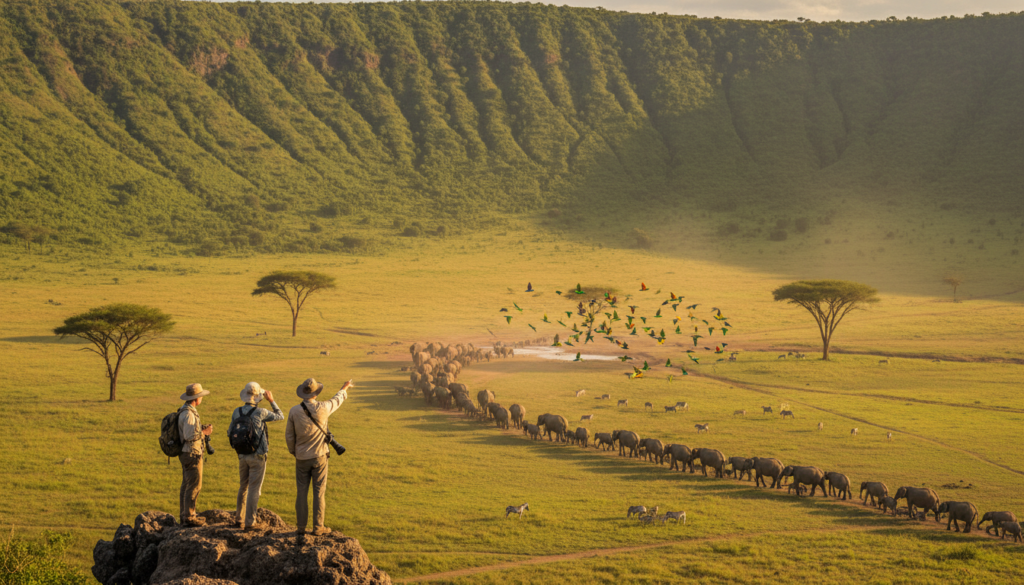
Navigating the Ngorongoro Safari Experience
The Ngorongoro safari is a top spot for wildlife lovers. It’s a UNESCO World Heritage Site known for its stunning beauty and diverse wildlife. This makes it perfect for a safari adventure.
Planning your trip is key for a great experience. The crater’s unique ecosystem and wide range of wildlife make it exciting but also challenging.
Choosing the Right Safari Operator
Finding a good safari operator is essential. They should offer safe tours and share their knowledge of the crater. This helps you understand and enjoy the wildlife and landscapes.
Look for an operator with experienced guides and a focus on sustainable tourism. Choose ones certified by local or international bodies for quality and environmental responsibility.
Group Tours Versus Private Expeditions
Choosing between a group tour and a private expedition depends on what you want. Group tours are cheaper and let you meet others. They’re great for seeing the crater together.
Private expeditions offer a more personal experience. You can plan your safari based on your interests. This is good for those who want to see specific wildlife or explore more.
Whether you pick a group tour or a private expedition, the best experience comes from a good safari operator. They help you enjoy the natural beauty and wonder of this amazing place.
The Wildlife Spectacle of the Crater Floor
Our journey into the Ngorongoro Crater shows a vibrant ecosystem. Here, the Big Five roam freely, offering an unmatched wildlife experience. The crater floor is a haven for many animals, thanks to its diverse landscapes and water sources.
On a crater game drive, seeing the Big Five is very likely. The crater is home to lions, elephants, buffalo, leopards, and rhinoceros. It’s the perfect place to watch these majestic creatures.
The Big Five in Their Natural Habitat
The Ngorongoro Crater is famous for its Big Five. Lions are often seen resting or hunting in the grasslands. Poria Africa Adventure guides know a lot about lions, sharing insights into their lives.
- Lions: The crater is home to a significant lion population, with prides often spotted in the grasslands.
- Elephants: Large herds of elephants roam the crater, led by matriarchal figures.
- Buffalo: Cape buffalo are common in the crater, often found near water sources.
- Leopards: Although elusive, leopards are present in the crater, and our guides are skilled in tracking them.
- Rhinoceros: Both black and white rhinos can be found in the crater, although they are less frequently seen due to their endangered status.
Rare Sightings and Endangered Species
The Ngorongoro Crater is also home to rare and endangered species. It supports a variety of wildlife, including the endangered black rhinoceros and the critically endangered serval. Our guides know a lot about these species, helping us spot them.
Exploring the crater floor, we see amazing animals and learn about the ecosystem. The efforts to protect these species and their habitats show our commitment to preserving this natural wonder.
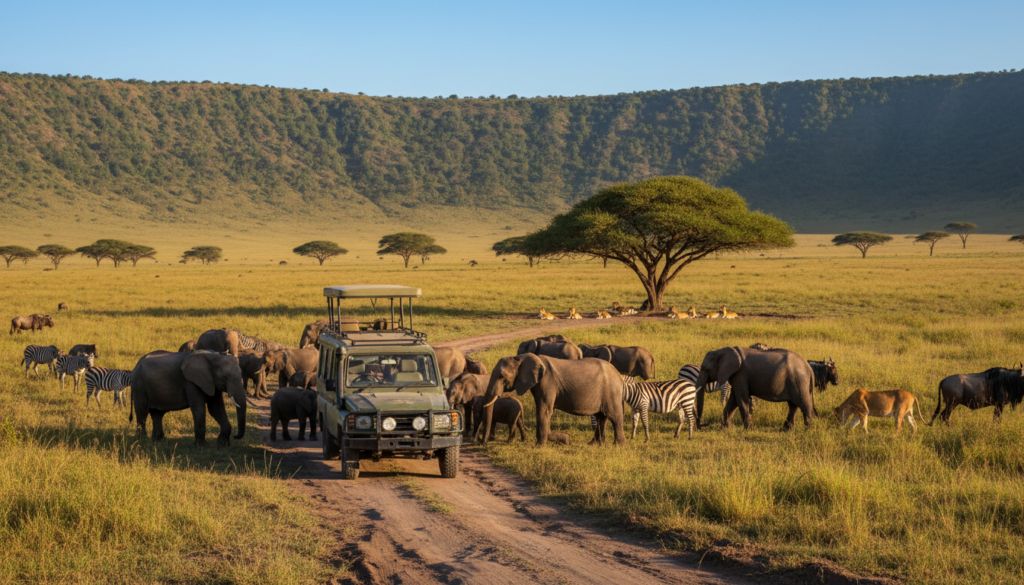
The crater game drive lets us see the wildlife’s intricate dynamics. With expert guides and a good plan, we can see many species that live in the Ngorongoro Crater.
Mastering the Crater Game Drive
A game drive in the Crater Tanzania is more than just an activity. It’s a deep dive into a world full of life and beauty. To fully enjoy this experience, knowing the environment and the animals is key.
Let’s explore how to make the most of a game drive. We start with the best time for your adventure. The early morning is often the best time because of the great conditions it offers.
Optimal Timing for Morning Drives
The morning game drive, at dawn, is the best time to see wildlife. The cooler air makes animals more active. The soft morning light also adds to the experience.
Key Benefits of Morning Drives:
| Time | Activity Level of Wildlife | Photography Conditions |
|---|---|---|
| Early Morning | High | Excellent (Golden Hour) |
| Late Morning | Moderate | Good |
| Afternoon | Low | Fair |
Photography Tips for Wildlife Enthusiasts
To capture the essence of the Ngorongoro Crater’s wildlife, you need more than a good camera. You need to understand the subject and its environment. Here are some tips to improve your photography:
- Use a telephoto lens to capture images without disturbing the animals.
- Be patient and prepared for unexpected moments.
- Consider the lighting conditions to avoid harsh shadows or overexposure.
By mastering the timing and techniques of game drives, you can enhance your experience in the Ngorongoro Crater. You’ll create lasting memories of the incredible wildlife and landscapes.
Accommodation Options Near the Tanzania Volcanic Crater
Accommodation near the Tanzania volcanic crater ranges from luxury lodges to budget-friendly camps. This variety ensures that every traveler can find a place that fits their needs and budget. It makes their visit to the crater even better.
The Ngorongoro Crater is a special place. Staying nearby can greatly improve your safari adventure. The places to stay offer not just a place to rest but also amazing views and close access to wildlife.
Luxury Lodges on the Crater Rim
Lodges on the crater rim offer luxury and stunning views. They are designed to provide comfort and luxury in the wild.
- Luxury Amenities: Many lodges have fine dining, spas, and guided tours.
- Prime Location: They are on the crater rim, giving you breathtaking views and easy access to the crater floor.
Some of the top luxury lodges include:
- Ngorongoro Crater Lodge
- Sopa Lodge
- Ngorongoro Serena Safari Lodge
Mid-Range Camps and Budget Alternatives
Not everyone wants luxury when visiting the Tanzania volcanic crater. Mid-range camps and budget-friendly options are available for those looking for a more affordable stay.
These choices offer a rustic experience, often closer to nature. They might not have all the luxury lodges’ amenities but still provide a comfortable stay and access to the crater.
- Simba Campsite: A favorite for budget travelers, offering basic amenities.
- Mid-range Options: Camps like Rhino Lodge strike a balance between cost and comfort.
Think about what matters most to you: luxury, budget, or a mix of both. Each option has its benefits. Choosing the right one will make your visit to the Tanzania volcanic crater even more memorable.
The Maasai Culture and Local Communities
Exploring the Ngorongoro Crater lets us meet the Maasai people. They’ve lived here for centuries. Learning about their culture makes our Ngorongoro safari experience richer.
The Maasai have a strong bond with the land and its animals. Their traditions and beliefs are deeply connected to nature. This makes them a key part of the ecosystem.
Visiting Traditional Maasai Bomas
Visiting Maasai bomas is a highlight of our trip. A boma is a homestead made from natural materials like mud and sticks. It’s a circular arrangement of homes.
At a Maasai boma, we get to learn about their daily life. We see their unique dances and traditions. It’s a chance to understand their social structure.
Sustainable Tourism and Community Impact
Meeting the Maasai makes us think about tourism’s impact. It’s important to support sustainable tourism. This way, our visit helps the community without harming their traditions.
Choosing local tour operators helps the ecosystem and the Maasai. It makes our Ngorongoro safari experience better. It also supports responsible tourism.
| Tourism Practices | Impact on Maasai Community | Sustainable Alternatives |
|---|---|---|
| Mass tourism | Disrupts traditional practices, strains local resources | Small-group tours, locally guided expeditions |
| Cultural exploitation | Erodes cultural heritage, disrespects local customs | Respectful cultural exchange, fair compensation for local participation |
| Environmental degradation | Pollution, habitat destruction | Eco-friendly accommodations, minimal waste policies |
Choosing sustainable tourism makes our visit better for the Maasai. It helps protect this unique ecosystem for the future.
Essential Gear for Your Tanzania Adventure
Packing the right gear is key for a great Tanzania adventure, especially for a crater game drive. The right equipment makes your trip better, safer, and more comfortable.
Clothing and Protection Against the Elements
Clothing is a big deal when planning your Tanzania trip. The weather can change a lot, from hot savannah days to cool evenings on the crater rim. Here’s what we suggest:
- Layered Clothing: For changing weather, wear layers. Choose light, breathable clothes for warm days and warm layers for cooler times.
- Sun Protection: A big hat, sunglasses, and sunscreen with high SPF are musts to avoid the strong African sun.
- Insect Repellent: Good insect repellent keeps mosquitoes and other bugs away.
- Sturdy Footwear: You’ll need comfy, sturdy shoes for walking safaris and hikes on the crater rim.
Also, remember the African weather can be unpredictable. A lightweight, waterproof jacket is a smart addition to your list. It keeps you dry in sudden rain.
Camera Equipment and Binoculars
Seeing Tanzania’s beauty and wildlife is a big part of the fun. For a great crater game drive, you’ll need the right camera and binoculars.
- Camera: A DSLR or mirrorless camera with a good zoom lens (at least 200mm) is best for wildlife shots.
- Binoculars: High-quality binoculars (7x or 8x magnification) make wildlife watching better, letting you see animals up close without disturbing them.
- Memory and Batteries: Make sure you have enough memory cards and spare batteries for your camera and other gadgets.
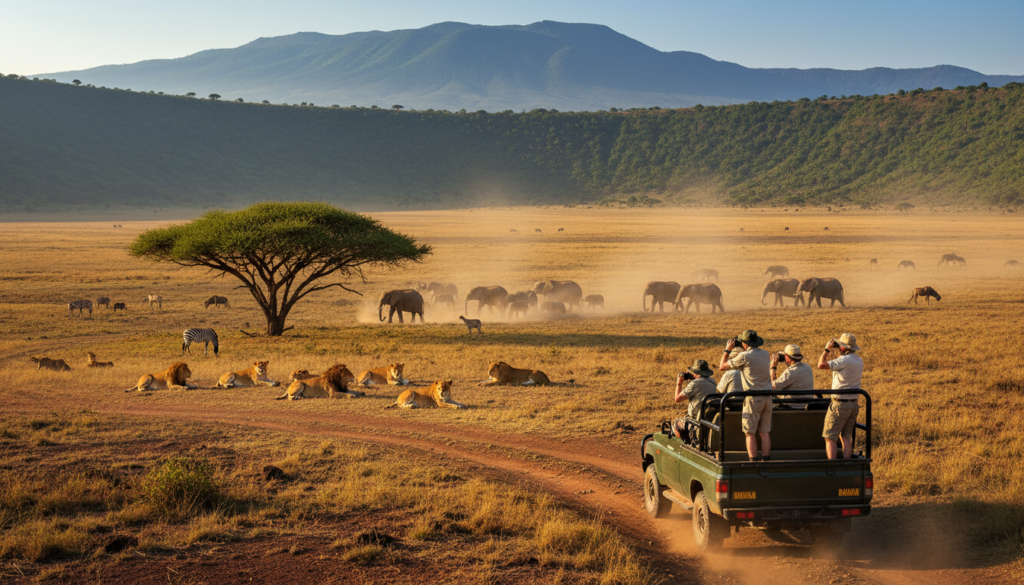
Choosing your gear carefully gets you ready for Tanzania’s adventures. From exciting crater game drives to beautiful landscapes and diverse wildlife, you’ll be all set.
Health and Safety Guidelines for Travelers
Keeping everyone safe and healthy is our main goal when we explore the Ngorongoro Crater. Before we start our adventure, we must think about the health and safety steps we’ll take. These steps will help protect us on our journey.
When we travel to the Crater Tanzania, we need to take some health precautions. We should know about the vaccinations we need and how to avoid malaria. Malaria is a disease found in some parts of Tanzania.
Vaccinations and Malaria Prevention
We should talk to our doctor before we go. They will tell us which vaccinations we need. Usually, we need shots for hepatitis A, hepatitis B, and typhoid. We also need to take medicine to prevent malaria, as our doctor advises.
Here’s a quick guide to the health precautions we should take:
| Health Precaution | Description | Recommendation |
|---|---|---|
| Hepatitis A Vaccination | Protects against hepatitis A virus | Recommended for all travelers |
| Malaria Prophylaxis | Medication to prevent malaria | Prescribed by healthcare provider |
| Typhoid Vaccination | Protects against typhoid fever | Recommended for most travelers |
Safety Protocols During Game Drives
When we go on game drives in the Ngorongoro Crater, we must follow safety rules. We should stay in our vehicle unless our guide tells us to get out. We must keep our arms and legs inside the vehicle and listen to our guide at all times.
By knowing and following these health and safety tips, we can have a safe and fun time in the Crater Tanzania. We’ll enjoy its amazing views and wildlife without worry.
Exploring Beyond the Crater Floor
There’s more to see beyond the Ngorongoro Crater’s stunning floor. The areas around it are full of wonders. These places add to the magic of visiting this Tanzanian treasure.
The Ngorongoro Crater is more than a place to visit. It’s a doorway to different landscapes and adventures. Exploring beyond the crater floor reveals the full beauty of this volcanic wonderland.
Hiking the Crater Rim Trails
Hiking the crater rim trails is an exciting adventure. From the rim, you get amazing views of the crater and its surroundings. The trails are for all fitness levels, so everyone can enjoy the scenery.
On the rim, you’ll see plants and animals different from those on the crater floor. The area is covered in grassy slopes and montane forests. This creates a home for many animals.
“The crater rim is a world away from the bustling floor, offering tranquility and unobstructed views of the Tanzanian wilderness.”
Day Trips to Nearby Serengeti National Park
Day trips to the Serengeti National Park are also a must. The Serengeti is famous for its infinite plains and the Great Migration. It’s a great addition to your Ngorongoro Crater visit.
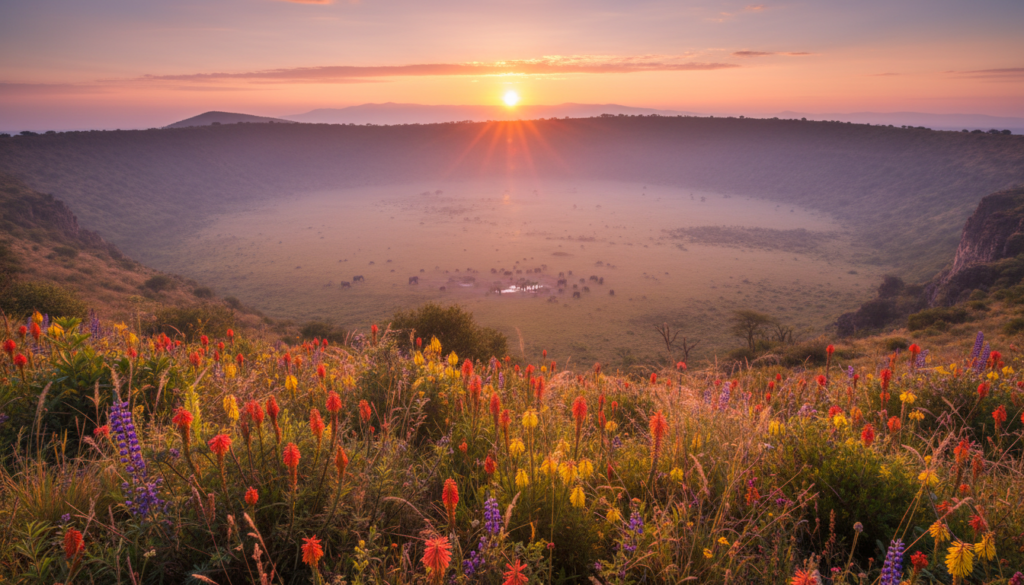
Visiting both the Ngorongoro Crater and Serengeti National Park gives you a full Tanzanian safari. You’ll see the amazing wildlife and landscapes of the country.
The Ecological Challenges Facing the Crater
The Ngorongoro Crater is facing big environmental problems. Its unique wildlife is a wonder but also a big challenge. Keeping the balance between protecting nature and human activities is hard.
Conservation Efforts and Wildlife Protection
Many efforts are being made to save the wildlife and their homes in the crater. Some important actions include:
- Habitat Management: Keeping the natural areas in the crater safe and healthy.
- Anti-Poaching Efforts: Strong steps are being taken to stop poaching and protect rare animals.
- Research and Monitoring: Ongoing studies and checks are done to understand and fix environmental problems.
Managing Human-Wildlife Conflict
Human-wildlife conflict is growing in the Ngorongoro Crater. As people build homes and farms near the crater, they take over the animals’ space. Ways to handle this problem include:
- Community Engagement: Teaching local people why conservation is important and getting them involved.
- Compensation Schemes: Programs to pay farmers for losses from wildlife, to stop them from harming animals.
- Habitat Corridors: Making paths for animals to move safely, away from people’s homes.
Understanding the Climate and Weather Patterns
Exploring the Ngorongoro Crater means knowing its climate and weather. The high altitude and location make it unique. It can be tough to navigate.
The crater gets rain in two main times: March to May and November to December. This affects the crater game drive. Wet seasons are harder, but dry seasons are better for seeing animals.
Seasonal Temperature Variations
Temperatures in the Ngorongoro Crater change a lot. Day and night, and with the seasons. In the dry season, it’s hot during the day but cold at night.
- Daytime temperatures during the dry season: 20-25°C (68-77°F)
- Nighttime temperatures during the dry season: 5-10°C (41-50°F)
- Daytime temperatures during the wet season: 15-20°C (59-68°F)
- Nighttime temperatures during the wet season: 10-15°C (50-59°F)
Preparing for High-Altitude Conditions
The high altitude can cause sickness in some. To avoid this, we suggest:
- Get used to the altitude by spending a few days in Arusha or similar places before visiting the crater.
- Drink lots of water all day to stay hydrated.
- Don’t do too much too soon in the first 24 hours after arriving.
Knowing the climate and weather helps us have a safe and fun visit. It makes our crater game drive better.
Logistics of Visiting the Crater
The Ngorongoro Crater Tanzania is a unique destination that requires some planning to visit effectively. Understanding the logistics is crucial for a seamless experience.
Transportation from Arusha
Traveling from Arusha to the Ngorongoro Crater is a significant part of your journey. You have several options, including private vehicles and guided tours. We recommend booking a reputable safari operator that offers transportation services as part of their packages.
This not only ensures your safety but also provides valuable insights into the region’s history and wildlife.
Some key considerations when choosing transportation include:
- Comfort and Reliability: Ensure the vehicle is suitable for the terrain and comfortable for the duration of your trip.
- Guided Tours: Opting for a guided tour can enhance your experience, as guides provide detailed information about the area.
- Flexibility: Consider whether you prefer a set itinerary or the flexibility to create your own schedule.
Packing Essentials for a Multi-Day Safari
Packing the right gear is essential for a successful and enjoyable safari experience. Here are some essentials to consider:
- Clothing: Pack layers for varying temperatures, including warm clothing for cooler mornings and evenings.
- Safari Gear: Include a good quality camera, binoculars, and a hat for sun protection.
- Personal Items: Don’t forget essentials like sunscreen, insect repellent, and any personal medications.
When preparing for your trip, it’s also worth considering the conservation efforts in place and how you can contribute to sustainable tourism practices.
Conclusion
The Ngorongoro Crater is a true natural wonder in Tanzania. It offers an unmatched wildlife experience. Its diverse ecosystem, rich culture, and stunning landscapes make it a top spot for travelers.
We’ve looked at the crater’s geological wonders, the best times to visit, and how to see its beauty. Whether you choose luxury lodges or guided safaris, every part of your trip will be memorable.
Planning your trip to this amazing place? We hope our insights and tips will guide you. The Ngorongoro Crater is where humans and wildlife meet. Here, Africa’s natural beauty shines brightly.
FAQ
The Tanzania volcanic crater is the world’s largest inactive, intact, and unfilled volcanic caldera. It was formed two to three million years ago. The caldera is a self-contained natural enclosure with steep 600-meter walls.
These walls create a sanctuary for over 25,000 large mammals. This makes the Ngorongoro safari experience unique within its 100-square-mile floor.
Wildlife is always present in the caldera. The dry season from June to October offers clear views. This is because the vegetation is thinner.
For those who love green landscapes and migratory birds, the “green season” is best. It runs from November to May. Arriving at dawn for your crater game drive is recommended. This way, you can see the morning light over the rim.
Yes, the crater floor is one of the few places in East Africa where you can see the Big Five in a day. The density of predators and prey here is unmatched. However, the elusive leopard is usually found in the Lerai Forest or along the rim’s dense foliage.
Most travelers start in Arusha. Then, they take a scenic four-hour drive or a brief flight to Lake Manyara airstrip. Working with operators like Nomad Tanzania or &Beyond helps manage NCAA permits and fees. This ensures a smooth entry into the conservation area.
Private Ngorongoro safari experiences let you set your own pace. You can spend more time watching flamingos or lions. Group tours are more social and cost-effective but might limit your time on specific sightings.
A private vehicle is quieter, allowing you to fully enjoy the wilderness during a crater game drive.
For the best views, Ngorongoro Serena Safari Lodge and &Beyond Ngorongoro Crater Lodge are built into the rim. They offer dramatic views. Mid-range options like Rhino Lodge provide comfortable stays slightly back from the edge.
Tented camps in Karatu offer a traditional bush atmosphere.
The rim is at about 2,300 meters (7,500 feet). Temperatures drop significantly after sunset. Pack warm layers, including a fleece and windbreaker, for early morning departures.
Once on the floor, the air warms quickly. Protecting against the equatorial sun and staying hydrated is crucial in the Ngorongoro Crater Tanzania.
The Ngorongoro Conservation Area is home to both wildlife and the Maasai people. We offer visits to traditional bomas to learn about indigenous customs. These encounters respect cultural integrity and support local sustainable development.
High-quality binoculars, like Swarovski or Leica, are key for spotting rhinos. A telephoto lens (at least 300mm) is best for photography. Don’t forget a dust-proof bag for your equipment, as the dry season can be dusty.
The Ngorongoro Conservation Area Authority balances Maasai needs with ecosystem protection. They use restricted grazing zones and community-led anti-poaching units. Choosing responsible safari operators supports the preservation of this Tanzania volcanic crater and its inhabitants for the future.

Continue Reading
Ngorongoro Crater Tanzania: The Safari Destination Inside a Volcano
Discover the breathtaking Ngorongoro Crater in Tanzania, a unique safari destination inside a volcanic caldera. Explore this natural...

Honeymoon in Tanzania: Safari, Beach and Everything In Between
Discover the ultimate Tanzanian honeymoon - safari adventures, pristine beaches, and more. Explore the best of East Africa...
Tanzania Animals: The Complete Wildlife Guide to Every Species You Can See
Discover Tanzania's diverse wildlife, from majestic lions to elusive leopards, in our comprehensive guide to every animal species...