
Best Time to Visit Tanzania: Month-by-Month Wildlife and Weather Guide
- Understanding Tanzania Travel Seasons
- The Best Time To Visit Tanzania for Wildlife Enthusiasts
- January and February: The Calving Season
- March, April, and May: The Long Rains
- June and July: The Start of the Dry Season
- August and September: Prime Wildlife Viewing
- October: The Final Stretch of the Dry Season
- November and December: The Short Rains
- Regional Variations in Weather and Wildlife
- The Great Migration: Tracking the Herd
- Climbing Mount Kilimanjaro: Seasonal Considerations
- Beach Escapes: When to Visit Zanzibar
- Packing Essentials for Every Season
- Budgeting for Your Tanzania Safari
- Health and Safety Considerations for Travelers
- Conclusion
- FAQ
Planning a trip to East Africa needs knowing the land’s natural cycles. Choosing the best time for your trip depends on the wildlife you want to see and the places you want to explore.
If you love the Great Migration or the quiet of southern parks, our guide is for you. It shows how to match your travel with the seasons. This way, you connect deeper with nature.
Check out our safari tours to see how seasons change your trip. Knowing Tanzania’s travel seasons helps you have a real adventure that respects the ecosystem.
Key Takeaways
- The dry season from June to October is best for seeing wildlife near water.
- Short rains in November and December make the landscape green and great for birdwatching.
- The calving season in early months is perfect for seeing predators and prey.
- Weather in coastal areas is very different from the northern circuit.
- Talking to experts helps make sure your trip matches your wildlife interests.
Understanding Tanzania Travel Seasons
Tanzania’s climate greatly affects the safari experience. It has a dry season and a rainy season, each with its own wildlife and weather patterns. These seasons impact how animals move and behave.
As Tanzania travel seasons change, so do the chances to see amazing wildlife. Knowing these seasons is key to planning a safari that meets your dreams. Whether you want to see the Great Migration or enjoy Tanzania’s landscapes, understanding the seasons is crucial.
The Dynamics of the Dry Season
The dry season, from June to October, has dry landscapes and animals gather at water sources. This makes it perfect for Tanzania dry season safaris. The dry weather also makes it easier to explore the wilderness.
As the dry season goes on, more animals gather at water sources. This offers great views of wildlife. Places like the Serengeti and Ngorongoro Crater are especially good during this time.
Navigating the Rainy Season
The Tanzania rainy season, from November to May, brings green landscapes and animals spread out. The rains make the air fresh and full of animal sounds. While it can be tough with muddy roads, it’s also a time to see newborn animals and enjoy Tanzania’s beauty.
In the rainy season, animals move more freely because water is everywhere. This makes it harder to see them, but the scenery is stunning. Plus, there are fewer people around.
It’s important to know both the dry and rainy seasons for a great Tanzanian safari. By understanding each season, you can pick the best time for your trip.
The Best Time To Visit Tanzania for Wildlife Enthusiasts
Planning a Tanzanian safari means timing is key. The country’s wildlife viewing changes a lot throughout the year. Knowing the best time to visit is essential for a great safari experience.
The dry season, from June to October, is the peak time for safaris. During this period, animals gather at water sources because of the dry land. This makes them easier to see.
Peak Safari Season Explained
The peak season is the best for seeing wildlife. The dry land makes it easier to spot animals. They gather at water sources, offering great views.
The weather is mild and dry during peak season. It’s perfect for both seasoned and new safari-goers.
Shoulder Season Advantages
The shoulder season, from November to December and March to May, is quieter. It’s less crowded, offering a closer connection with nature.
This season has lush landscapes due to the rains. Some areas might be hard to reach, but many lodges stay open. It’s a peaceful time to visit.
Visiting in the shoulder season can save money. Many tour operators offer deals during these times. It’s a good choice for those who can be flexible with their travel plans.
January and February: The Calving Season
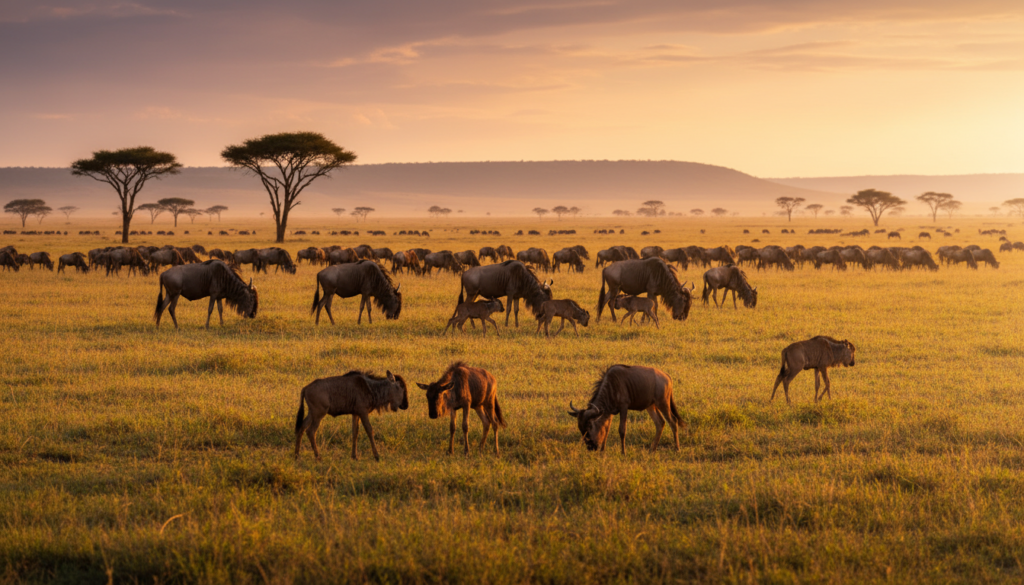
The southern Serengeti comes alive in January and February. This is when countless wildebeest calves are born. It’s a big event in Tanzania’s wildlife calendar, drawing visitors from all over.
These months are full of activity. The calving season peaks in late January and early February. Thousands of wildebeest give birth, making it a time of great excitement and danger.
Why Southern Serengeti is the Place to Be
The southern Serengeti is the heart of the calving season. Its grasslands are perfect for wildebeest to give birth. The area’s short grass plains are ideal for the newborn calves to take their first steps, and the abundant vegetation ensures that the nursing mothers have ample food.
Visitors see a wildlife spectacle like no other. Newborn wildebeest calves and predators like lions, leopards, and cheetahs create unforgettable safari experiences. The wildlife concentration in this area during January and February is among the highest in the Serengeti ecosystem.
Weather Patterns and Wildlife Activity
The weather in January and February is warm and dry. Temperatures range from the mid-20s to low 30s Celsius (mid-70s to mid-80s Fahrenheit). This dry and warm climate makes it an ideal time for safari adventures, as the dry conditions make it easier to spot wildlife around water sources.
The dry weather also means that the vegetation is less dense. This improves visibility on game drives. So, January and February are excellent months for wildlife viewing in Tanzania, with the added bonus of witnessing the calving season in the Serengeti.
March, April, and May: The Long Rains
The long rains, from March to May, change Tanzania’s ecosystem and safari experience. The country turns into a lush, green landscape. It’s filled with new life.
The Impact of Heavy Rainfall on Safari Logistics
The heavy rains of the long rains affect safari plans. Roads may flood, making some areas hard to reach. This can limit where tourists can go and change their safari experience.
But, many tour operators adjust their plans. They find new routes or activities. Travelers should be ready for changes in their itineraries.
| Month | Average Rainfall | Safari Logistics Impact |
|---|---|---|
| March | 100 mm | Initial rains may cause some road closures |
| April | 150 mm | Peak rainfall; potential for significant road disruptions |
| May | 120 mm | Rains begin to subside; some roads become more accessible |
Benefits of Traveling During the Green Season
Traveling in the green season has its perks. The landscape is stunning, with lush greenery and plenty of water. It’s great for birdwatching and photography.
Fewer tourists mean a more personal safari. The green season also brings newborn animals and migratory birds. It’s a unique time to see Tanzania’s ecosystems.
Exploring Tanzania during the long rains is rewarding. The green season offers a special experience for those who venture into the country’s rejuvenated landscapes.
June and July: The Start of the Dry Season
When June and July arrive, Tanzania’s dry season begins. This time is thrilling for wildlife lovers and photographers. The landscape and wildlife movements change significantly.
The Great Migration starts moving north, a sight that attracts many. It’s a journey to find better food as the south’s grasslands dry up.
The Great Migration Moves North
In June and July, the Great Migration heads to the northern Serengeti and Kenya’s Maasai Mara. It’s not just a simple move. Rainfall, grass quality, and predators play big roles.
The northern Serengeti has a different look than the south. It has more trees and varied landscapes. This supports a wide range of wildlife, making it great for safaris.
Temperature Shifts and Vegetation Changes
June and July also see changes in temperature and plants. The dry weather makes plants less dense, making animals easier to see. The mornings and evenings are cooler, especially in high areas.
The dry season makes plants less common, so animals gather at water sources. This makes wildlife watching even better, as animals are in smaller areas.
Exploring Tanzania in the dry season is special. June and July offer great wildlife viewing and comfortable weather. It’s the perfect time to see Tanzania’s wilderness at its best.
August and September: Prime Wildlife Viewing
August and September are key months for wildlife watching in Tanzania. The Great Migration peaks in the northern Serengeti, providing unforgettable experiences.
The dry season brings animals to water sources, making them easier to see. The dry landscape adds drama to the wildlife events.
River Crossings in the Northern Serengeti
In August and September, the Great Migration’s river crossings in the northern Serengeti are breathtaking. Animals cross the Mara River, facing dangers from crocodiles and other predators.
These crossings are thrilling and show the animals’ strength and will to survive. Seeing a river crossing is a memorable experience for many.
“The river crossings in the northern Serengeti are a highlight of the Great Migration, showcasing the raw power and beauty of nature.”
Why These Months Are Ideal for First-Time Visitors
August and September are perfect for first-time visitors to Tanzania. The animals gather around water, and the river crossings are spectacular. It’s a great time for game viewing.
The weather is mild and clear, making safaris comfortable.
| Month | Weather | Wildlife Highlights |
|---|---|---|
| August | Dry and mild | River crossings, abundant wildlife around water sources |
| September | Continued dry season, comfortable temperatures | Peak migration season, dramatic river crossings |
August and September are ideal for visiting Tanzania. They offer great wildlife viewing and comfortable weather.
October: The Final Stretch of the Dry Season
October is the last part of Tanzania’s dry season. This time, wildlife gathers around the few remaining water sources. This is especially true in the country’s famous national parks and reserves.
The dry weather changes the landscape and its creatures. With water hard to find, animals come together at the last water spots. This creates a stunning and intense scene.
Wildlife Concentration Around Water Sources
In October, wildlife is most concentrated near water. National parks like the Serengeti and Ngorongoro Conservation Area are full of life. Animals gather at lakes, rivers, and waterholes, offering a rare chance to see many species up close.
The lack of greenery also plays a big role. Herbivores go where water is, and predators follow. This makes a lively ecosystem where life flourishes around the few water spots.
Preparing for the Short Rains
As October goes on, the dry season starts to end. The short rains, expected in November, will change things. The dry weather brings animals together, but the rains will scatter them as new plants grow.
If you’re planning a trip to Tanzania in October, be ready for the change. The short rains may not be as strong as the long rains, but they still bring big changes. Make sure to pack right and keep up with weather forecasts to enjoy your safari.
In summary, October is a special time to see Tanzania’s wildlife. The animals’ gathering around water spots offers amazing views. It’s a great time for those who love safaris and photography.
November and December: The Short Rains
When November and December arrive, Tanzania sees a big change. The short rains turn the dry land into a green paradise. This change is huge for the environment, making everything look fresh and new.
The Landscape Transformation
The rains bring life back to the landscape. It’s perfect for photographers and nature lovers. The dry grasslands turn into a green blanket, and plants grow thicker.
This change also affects animals. With more food and water, they roam freely across the landscape.
Birdwatching Opportunities and Migratory Species
The short rains attract many migratory birds to Tanzania. November and December are great for birdwatching. Many species stop here before moving on.
The greenery and water sources make it a bird paradise. It’s a dream spot for birdwatchers and casual fans.
| Bird Species | Migratory Status | Habitat |
|---|---|---|
| European Bee-eater | Migratory | Open woodlands and grasslands |
| Pied Kingfisher | Resident | Rivers, lakes, and coastal areas |
| Amur Falcon | Migratory | Open country and woodland edges |
The short rains offer a special experience in Tanzania. The landscape change and birdwatching make it a great time to visit.
Regional Variations in Weather and Wildlife
Tanzania’s diverse geography leads to different climates in each region. Each area has its own unique features and attractions. Knowing these differences is key to planning a great trip.
Northern Circuit vs. Southern Circuit
The Northern Circuit, home to the Serengeti and Ngorongoro Conservation Area, is famous for safaris. It has a bimodal rainfall pattern. The long rains are from March to May, and the short rains from November to December.
The dry season, from June to October, is best for seeing wildlife. Animals gather at water sources during this time.
The Southern Circuit, with places like the Selous Game Reserve and Ruaha National Park, has a different climate. It has a unimodal rainfall pattern, with most rain from December to March. The dry season, from May to October, is great for safaris. The vegetation is less dense, and animals are easier to spot.
Key differences between the Northern and Southern Circuits include:
- Rainfall patterns: Bimodal in the north, unimodal in the south
- Best time for wildlife viewing: Dry seasons in both circuits, but at slightly different times
- Vegetation density: Varies significantly between the wet and dry seasons, affecting animal spotting
Coastal Climate and Zanzibar Considerations
The coastal regions of Tanzania, including Zanzibar, have a tropical climate. Temperatures and humidity are high all year. The coastal areas have a bimodal rainfall pattern, like the Northern Circuit.
Zanzibar, an archipelago, has a climate influenced by the sea. The best times for beach activities and water sports are the dry seasons. These are from June to October and December to February, when the weather is sunny.
- Weather: Avoid the rainy seasons for optimal beach and water activities
- Marine life: The dry seasons are ideal for snorkeling and diving due to clearer waters
- Cultural events: Zanzibar hosts various cultural festivals throughout the year, which can be an added attraction
The Great Migration: Tracking the Herd
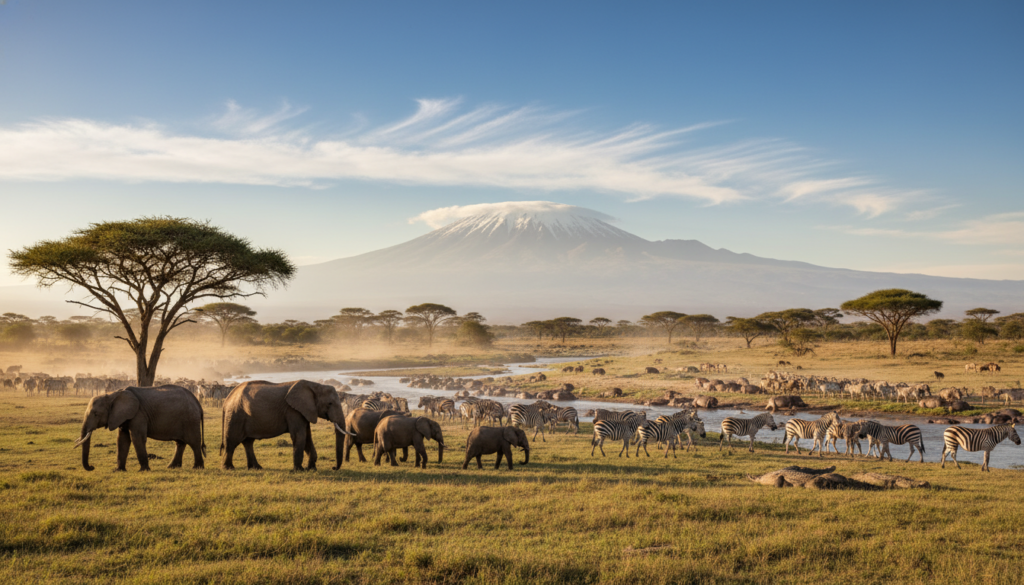
Tanzania’s Great Migration is truly amazing. It shows off the country’s rich wildlife and natural beauty. Over a million wildebeest, zebras, and gazelles move across the Serengeti and Maasai Mara. They search for better food and water.
Predicting Movement Patterns
It’s hard to guess where the herds will go. Rain, food, and predators play big roles. But, old data and local knowledge help guess their paths.
- Rainfall: Rain changes everything. The herds move to find good food.
- Vegetation: The grasslands guide the herds. They follow the best food.
- Predator Presence: Predators can change the herds’ paths. They try to stay safe.
How to Time Your Trip for the Best Sightings
Timing is key to see the Great Migration. The herds move all year. Knowing where they are is important.
Some top times to see the migration are:
- Calving Season (January-February): See thousands of wildebeest calves born in the southern Serengeti.
- Great Migration River Crossings (July-August): Watch the herds cross rivers in the northern Serengeti.
Plan your trip with the season and events in mind. Good guides and tours make it better.
Climbing Mount Kilimanjaro: Seasonal Considerations
Planning to climb Mount Kilimanjaro? Knowing the best time to go is key. It’s not just about the physical challenge. It’s also about timing your climb to avoid bad weather.
Mount Kilimanjaro, in Tanzania, has a wide range of climates. From tropical at the base to arctic at the top. This means the weather changes a lot with altitude and season.
The Best Months for Summit Success
The dry seasons are the best times to climb Mount Kilimanjaro. These are from December to March and June to October. During these times, the weather is clearer and more stable.
January and February are the top months. They have dry conditions and nice temperatures. July and August are also good, but it gets very cold at night.
| Month | Weather Conditions | Climbing Conditions |
|---|---|---|
| January | Dry, warm days, cold nights | Favorable |
| February | Dry, warm days, cold nights | Favorable |
| July | Cold, dry | Good, but cold at night |
| August | Cold, dry | Good, but cold at night |
Weather Challenges on the Mountain
Climbers face many weather challenges on Mount Kilimanjaro. These include rain, snow, and extreme cold. The rainy seasons, from March to May and November to December, make the climb harder. Trails get muddy and visibility is poor.
Key weather challenges include:
- Rain and mud during the wet seasons
- Extreme cold at higher altitudes
- Snow and ice on the summit
The weather on Mount Kilimanjaro is unpredictable. Climbers must be ready for anything.
Knowing the seasonal changes and being prepared is crucial. Choosing the right time and understanding the weather helps climbers reach the summit safely.
Beach Escapes: When to Visit Zanzibar
Zanzibar is a dream for beach lovers. Its calm and beautiful coastlines are perfect for a relaxing getaway. After a safari, Zanzibar is a peaceful place to enjoy the beach.
The island’s clear waters and rich marine life are great for water activities. Knowing when to visit is key to enjoying your beach time.
Ideal Conditions for Diving and Snorkeling
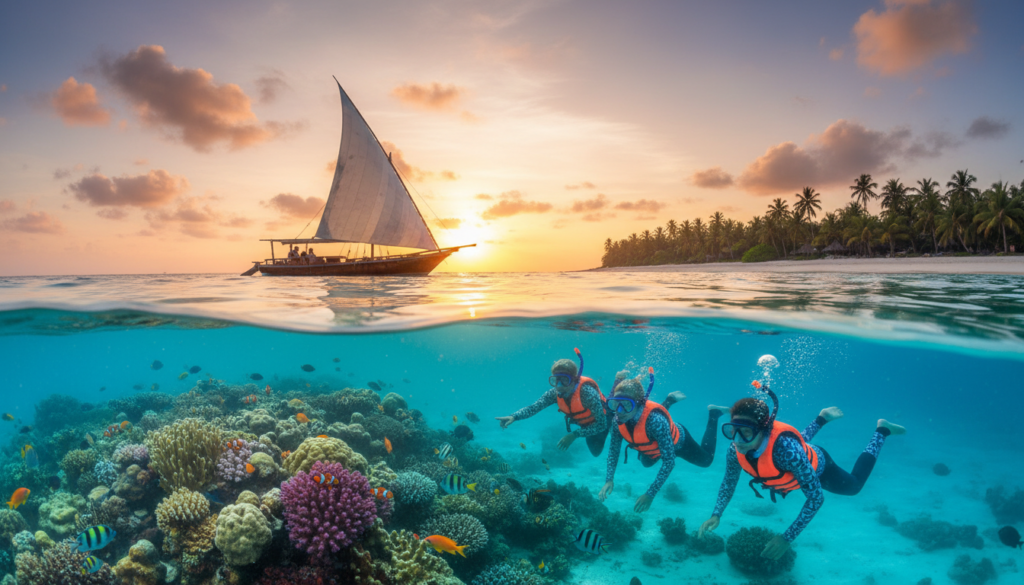
Zanzibar is a paradise for those who love diving and snorkeling. The best time is between June and October. The seas are calm, and you can see the vibrant marine life clearly.
These months are also great for exploring coral reefs. They are full of different marine species. Whether you’re experienced or new, Zanzibar has diving spots for everyone.
Avoiding the Monsoon Winds
Zanzibar has monsoon winds, the Kaskazi and Kusi. The Kaskazi monsoon is from December to March. It brings strong winds and rough seas. It’s best to visit when these winds aren’t around.
The best time for a calm beach visit is July to September. The weather is nice, and the seas are calm. You can enjoy the beaches and water activities without strong winds.
Visiting Zanzibar at the right time means a relaxing beach trip. You’ll get to enjoy the island’s beauty and calm atmosphere fully.
Packing Essentials for Every Season
Getting ready for your Tanzanian trip means knowing how to pack for different seasons. The country’s weather changes a lot, from dry savannas to rainy forests. So, it’s important to think about what you pack carefully.
It’s smart to pack clothes and gear that can be worn in different ways. This way, you’re ready for Tanzania’s hot dry days and cool rainy ones.
Clothing for the Dry Season
In the dry season, wear light, breathable clothes that shield you from the sun and heat. Moisture-wicking fabrics are great for safaris because they keep you cool and dry. Don’t forget a wide-brimmed hat and sunglasses to protect your skin from the sun.
Evenings can get chilly, especially in the highlands and during early morning drives. So, bring a few warm layers to stay cozy.
Gear for the Rainy Season
The rainy season requires gear that keeps you dry. A high-quality rain jacket and waterproof trousers are essential. Also, pack waterproof bags or dry sacks to keep your stuff dry.
Choose sturdy, waterproof boots for the rainy season. They’ll keep your feet dry and help you stay stable on wet paths.
By thinking about the season and packing right, you’ll be ready for Tanzania’s weather. This makes your trip more enjoyable and stress-free.
Budgeting for Your Tanzania Safari
Planning a Tanzania safari requires careful budgeting. Knowing the costs and how they change throughout the year is key. This knowledge can greatly enhance your safari experience.
When planning, consider the time of year and its impact on prices. Tanzania has high and low seasons, each with its own prices and experiences.
Pricing Differences Between High and Low Seasons
The high season, from June to October, sees higher prices due to more tourists. This time is best for seeing the Great Migration and enjoying good weather for wildlife watching.
The low season, from March to May and November to December, offers more affordable rates. Some places might close, but you’ll find fewer people and greener landscapes for a quieter experience.
Maximizing Value Throughout the Year
To get the most value, follow these tips:
- Book early to get better rates, especially in peak season.
- Look for deals that include everything for a cost-effective trip.
- Visit during the shoulder season (January to February or November) for lower prices and fewer people.
- Choose places that offer discounts for longer stays or off-season visits.
Understanding high and low season prices and being flexible with your dates can help. This way, you can have a Tanzania safari that’s both affordable and fulfilling.
Health and Safety Considerations for Travelers
Tanzania’s diverse ecosystems and climates require careful health and safety planning for travelers. Exploring the country’s vast wilderness and vibrant cultures comes with unique challenges. It’s important to be prepared for these.
Vaccinations and Malaria Prevention
Before starting your Tanzanian adventure, make sure you’re protected against diseases like yellow fever, hepatitis A, and typhoid. Consult your healthcare provider or a travel clinic to find out what vaccinations you need. This depends on your travel plans and health.
Malaria is a big risk in Tanzania, especially in lower areas. To reduce your risk, consider:
- Using insecticide-treated bed nets
- Wearing protective clothing and applying insect repellents
- Taking antimalarial medication as prescribed by your healthcare provider
Be aware of other diseases like dengue fever and Zika virus too. They are common in some areas.
Staying Safe During Wildlife Encounters
When on safari or in national parks, keeping a safe distance from wildlife is key. Always follow the guidance of your experienced guides. They are trained to keep you safe while you enjoy the wildlife.
To stay safe during wildlife encounters:
- Keep a safe distance from animals, even if they seem calm
- Avoid sudden movements or loud noises, which can provoke animals
- Stay within designated areas and follow park rules
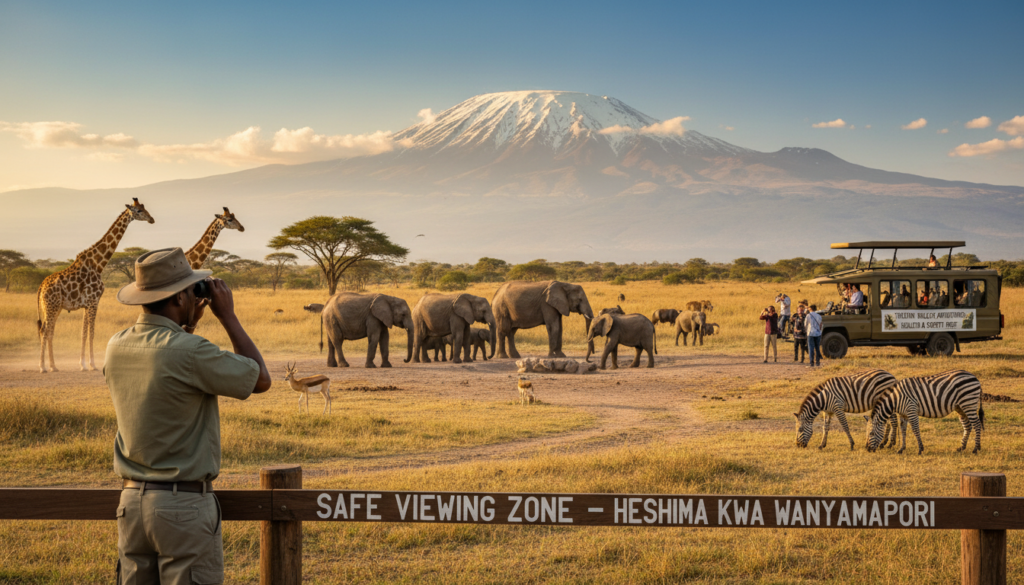
By knowing your surroundings and following safety rules, you can enjoy Tanzania’s incredible wildlife. This way, you minimize risks.
Conclusion
Finding the best time to visit Tanzania is key for a great trip. We’ve looked at the different travel seasons, showing what each has to offer. Whether you love wildlife or beach vacations, knowing the dry and rainy seasons is important.
The country’s varied places, like the Serengeti and Zanzibar, have something special all year. By thinking about the Great Migration, weather, and local differences, you can plan your visit. This way, you’ll see what you want to see.
So, the best time to visit Tanzania depends on what you like. With this guide, you’re ready to plan a trip that’s just right for you. Enjoy all that Tanzania has to offer.
FAQ
The best time to visit Tanzania for a safari depends on what you want to see. The dry season from June to October is the peak time for wildlife. During this time, animals gather at water sources, making them easier to spot.
If you want to see the Mara River crossings, plan your trip for August to September.
The rainy season, or “Green Season,” offers a unique beauty and quietness. While some areas may close, the northern parks are still vibrant. You’ll see lush landscapes and fewer tourists.
It’s the best time for birdwatching, with many migratory species around.
The calving season is in January and February in the southern Serengeti. Hundreds of thousands of wildebeest give birth during this time. It’s a chance to see the circle of life up close.
The weather is warm and clear, with occasional short showers.
Climbing Mount Kilimanjaro is safer and more successful in certain weather. The best times are January to March or June to October. These months have clear skies and stable paths.
While trekking is possible in November and December, the trails can be slippery and the summit may be cloudy.
For the best beach experience, visit Zanzibar from July to September or December to February. These months have clear waters and calm seas. Avoid April and May due to heavy rains.
Yes, there are big differences. The Northern Circuit has more predictable weather and is easier to access. The Southern Circuit is more seasonal but offers a raw wilderness experience in the dry months.
For the dry season, pack light, breathable clothes in neutral colors. Bring a warm fleece or jacket for cooler mornings and evenings. In the rainy season, a waterproof jacket and boots are essential.
Prices are highest in the peak season (June to October and late December). Shoulder seasons offer moderate prices. The Green Season (March to May) has the lowest prices for luxury lodges.
Always consult a travel clinic about malaria prevention and vaccinations. Mosquitoes are more active in the rainy season, so use repellent and wear long sleeves at dusk. Stay hydrated and protect yourself from the sun.

Continue Reading
Tanzania Animals: The Complete Wildlife Guide to Every Species You Can See
Discover Tanzania's diverse wildlife, from majestic lions to elusive leopards, in our comprehensive guide to every animal species...
The Great Migration Tanzania: A Complete Seasonal Guide
Explore the epic Great Migration Tanzania with our seasonal guide to this natural wonder.
Tanzania Safari 2026: The Complete First-Timer's Guide
Embark on an unforgettable Tanzania safari in 2026 with our detailed first-timer's travel guide.