
African Lion Safari: Understanding Predator-Prey Relationships in the Wild
- The Ecological Significance of African Predators
- Anatomy of a Hunt: How Lions Stalk Their Prey
- The Role of African Lion Safari Deer in the Ecosystem
- Evolutionary Adaptations of African Predators
- The Dynamics of Predator Prey Safari Interactions
- Strategies for Survival: How Prey Species Evade Lions
- The Reality of a Lion Kill Safari Experience
- Wildlife Interaction Tanzania: A Case Study in Biodiversity
- The Impact of Environmental Factors on Hunting Success
- Social Structure and Cooperative Hunting in Lion Prides
- The Balance of Nature: Population Control Through Predation
- Human Influence on Predator-Prey Habitats
- Ethical Considerations for Wildlife Tourism
- Technological Advances in Tracking African Predators
- Conclusion
- FAQ
We often seek the wilderness to witness the raw, unfiltered pulse of nature. When we venture into the heart of the savanna, we observe a delicate balance that has persisted for millennia. This rhythm defines the survival of every creature within the ecosystem.
Observing lions hunting Africa provides a profound look into these complex dynamics. We watch as apex predators interact with their environment, shaping the behavior of the herds they pursue. Whether we are tracking an African Lion Safari Deer encounter or watching a pride move through tall grass, we gain insight into the necessity of these interactions.
These moments are not merely spectacles; they are essential lessons in ecology. By studying these relationships, we better understand how predators and prey maintain the health and diversity of the wild. We invite you to look closer at the forces that govern life on the plains.
Key Takeaways
- Predator-prey interactions are vital for maintaining ecosystem health and biodiversity.
- Apex predators influence the movement and behavior of ungulate populations across the savanna.
- Observing these natural cycles offers a deeper appreciation for wilderness conservation.
- The survival of the pride depends on the constant, rhythmic pressure applied to the herd.
- Authentic wilderness experiences require patience and a willingness to observe without interference.
The Ecological Significance of African Predators
African predators play a vital role in keeping ecosystems balanced. They control the numbers of prey animals, which helps maintain biodiversity. These predators sit at the top of their food chains, influencing the entire ecosystem.
The Apex Predator Hierarchy
In Africa, predators like lions, leopards, and hyenas form a complex hierarchy. Lions, for example, compete with other predators for dominance and resources. This competition shapes their behavior and population sizes.
Apex predators have certain key traits:
- Dominance: They have no natural predators in their area.
- Territoriality: They protect their territories from other predators and competitors.
- Hunting prowess: They are skilled hunters, able to take down various prey.
Maintaining Ecosystem Health
African predators keep prey populations in check. This prevents any one species from overgrazing or overbrowsing, which can harm habitats. This balance is essential for ecosystem health and diversity.
For instance, lions prey on herbivores. This helps vegetation grow, benefiting other species that rely on these plants for food and shelter.
Anatomy of a Hunt: How Lions Stalk Their Prey
A predator prey safari lets us see how lions stalk and catch their prey. Watching lions in the wild shows us their clever hunting ways. These tactics help them survive.
Lions are top predators in the savannah. They have learned many ways to hunt successfully. Their hunting skills show their strength at the top of the food chain.
Stealth and Camouflage Techniques
Lions use stealth and camouflage to sneak up on their prey. Their golden coats match the grasslands, making them hard to spot. They hide behind rocks, bushes, and tall grass to sneak up.
On a predator prey safari, we see lions’ careful planning and patience. They track their prey slowly and quietly. This careful approach helps them get close enough to attack.
The Final Ambush Strategy
The final ambush is when lions use their speed and power to surprise their prey. Lionesses work together to drive the prey into a killing zone. This shows their cooperative hunting tactics.
This hunting strategy is exciting to see on a predator prey safari. It gives us a thrilling look at the complex relationship between lions and their prey. It also helps us understand the balance in the ecosystem.
The Role of African Lion Safari Deer in the Ecosystem
In the heart of African savannahs, deer and other ungulates play a key role. They help balance and diversify these environments.
Ungulates, including deer, adapt to various habitats in the savannah. Their eating habits can change vegetation patterns.
Dietary Habits of Savannah Ungulates
Ungulates in African Lion Safari areas eat different types of plants. Some eat grasses, while others prefer leaves and fruits.
This variety in eating habits affects the savannah’s vegetation. For example, grazers can change grassland types. Browsers can alter the look and density of shrubs and trees.

Reproductive Cycles and Population Density
Ungulates’ reproductive cycles depend on rain and food quality. They often give birth when food is plentiful, helping their young survive.
The number of ungulates can change due to predators, disease, and environment. Lions help keep ungulate numbers in check. This balance is vital for the ecosystem’s health.
Knowing about deer and ungulates’ reproductive cycles and numbers is key. It helps us understand how predators and prey interact. It also shows how resilient the savannah ecosystem is.
Evolutionary Adaptations of African Predators
Evolution has given African predators special features. These help them hunt better and survive in tough environments. The savannas and grasslands are very competitive.
One key area is their physical traits. These traits are perfect for fast chases.
Physical Traits for High-Speed Chases
Lions have strong leg muscles and flexible spines. This lets them run very fast during hunts. Their paw pads provide traction, making their movements quick and agile.
| Physical Trait | Description | Advantage |
|---|---|---|
| Powerful Leg Muscles | Strong muscles in the legs | Enables high-speed chases |
| Flexible Spine | Allows for greater flexibility | Enhances agility during pursuit |
| Paw Pads | Provide traction on various surfaces | Prevents slipping during high-speed runs |
Sensory Perception in Low Light
African predators have amazing low-light vision. They have a reflective layer in their eyes called the tapetum lucidum. This helps them hunt at dawn and dusk when prey is most active.
With their physical traits and sharp senses, African predators are top hunters. Knowing about these traits helps us understand the wild better.
The Dynamics of Predator Prey Safari Interactions
A predator prey safari lets us see the complex relationship between lions and their prey. This relationship has been shaped over thousands of years. As we explore the savannah, we get to see the clever strategies both sides use to survive.
Observing Natural Behavior in the Wild
Watching lions and their prey in the wild gives us a deep look into their behavior. Lions use stealth and teamwork to surprise their prey. Meanwhile, the prey species stay alert and can run fast to escape. We watch these actions with respect and patience, knowing how important they are for the ecosystem.
- The stalking techniques employed by lions, utilizing cover and stealth to get close to their prey.
- The alarm calls and vigilance of prey species, which serve as early warning systems for potential threats.
- The dynamics within lion prides, including cooperative hunting strategies and the role of different pride members.
The Importance of Patience in Wildlife Viewing
Patience is key when watching wildlife on a predator prey safari. Being patient helps us see important moments and doesn’t scare the animals away. This way, we get a real experience, as the animals act naturally without being bothered by us.
- It allows for a deeper connection with nature, as observers are more attuned to the subtleties of the natural world.
- Patience increases the likelihood of observing rare or significant events, such as a hunt or the interaction between different species.
- By minimizing disturbance, we contribute to the preservation of the natural behaviors and habitats of the wildlife we have come to observe.
Strategies for Survival: How Prey Species Evade Lions
In the African savannah, prey species have developed clever ways to avoid lions. This ongoing battle between predators and prey has led to advanced evasion techniques. These include the African Lion Safari Deer.
“The prey species’ ability to adapt and survive in a landscape dominated by predators is a testament to their resilience,” as noted by wildlife experts. This adaptability is crucial for their survival and is manifested in various ways.
Vigilance and Alarm Signaling
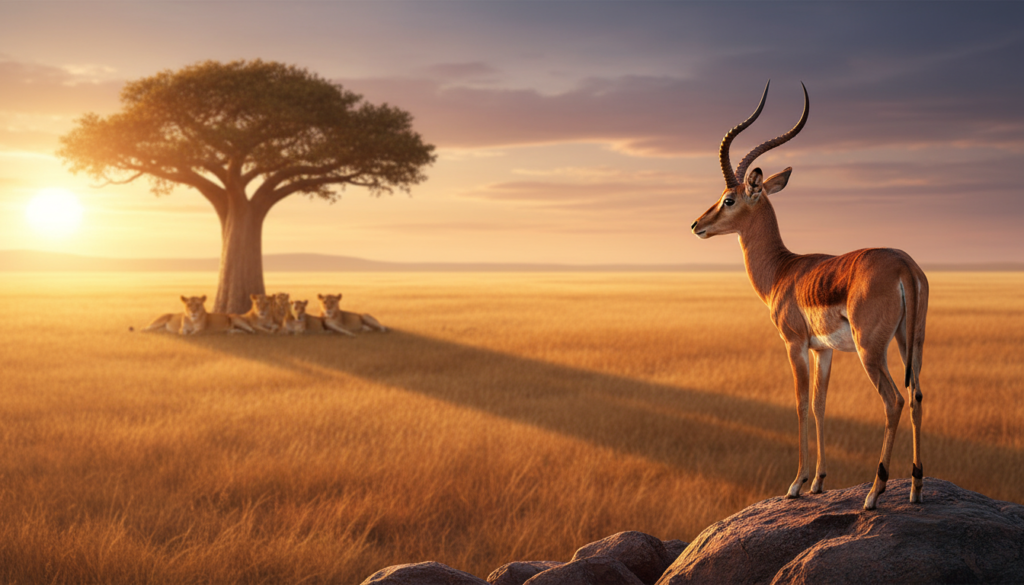
Vigilance is key for avoiding predators. Deer and other prey are always watching for danger. They use their senses to spot lions.
When danger is near, they send out alarm signals. This alerts others in the group. These signals can be sounds or visual cues.
For example, a startled deer might make a loud call. Or it might show a clear warning behavior. This alertness is vital for group survival.
Herd Defense Mechanisms
Many prey species also use herd defense to stay safe. By grouping together, they make it harder for lions to pick one out. This is known as “safety in numbers.”
Herds move together and form defensive shapes. These actions can confuse or scare lions. This shows how important social behavior is for prey species.
As Dr. Jane Smith, a renowned wildlife biologist, notes, “The complex social structures of ungulate herds play a crucial role in their defense against predators.” This highlights the significance of understanding these dynamics in the context of predator-prey relationships.
The mix of vigilance, alarm signals, and herd defense is a strong strategy against lions. These tactics help prey species like the African Lion Safari Deer survive in tough environments.
The Reality of a Lion Kill Safari Experience
A lion kill safari is both sobering and enlightening. It shows us the natural world’s brutal yet fascinating side. Seeing a lion hunt reminds us of the delicate balance in ecosystems.
As we explore the savannah, we see nature’s raw power. The hunt shows the survival instincts of both predators and prey. It’s a complex dance, where every participant is crucial.
Understanding the Brutality of Nature
The brutality of a lion kill is not just a show. It’s essential for the ecosystem’s functioning. It highlights the harsh realities of life in the wild, where survival is a daily challenge.
The lions’ hunting strategy is a lesson in stealth and strategy. They use coordinated attacks to corner their prey. This shows their cooperative hunting skills.
The Aftermath and Scavenger Roles
After a successful hunt, the lions’ kill attracts other scavengers. This energy transfer is key for the ecosystem’s balance. It supports a diverse range of species.
| Scavenger Species | Role in Ecosystem | Dependency on Lion Kills |
|---|---|---|
| Hyenas | Scavengers and Hunters | High |
| Vultures | Scavengers | Moderate |
| Jackals | Scavengers and Hunters | Low to Moderate |
This web of life shows how species are connected in the ecosystem. Each plays a vital role in the circle of life.
Wildlife Interaction Tanzania: A Case Study in Biodiversity
Tanzania’s diverse ecosystems offer a unique lens through which we can examine the complex interactions within wildlife populations. The country’s renowned national parks and conservation areas, such as the Serengeti, provide a rich tapestry of habitats that support a wide variety of species.
The Serengeti ecosystem is particularly noteworthy for its complex dynamics, which are characterized by the intricate relationships between predators and prey. This ecosystem’s health is indicative of the broader wildlife interaction trends in Tanzania.
The Serengeti Ecosystem Dynamics
The Serengeti is a prime example of an ecosystem where the delicate balance between predators and prey is maintained through a complex interplay of factors. The annual migration of ungulates, such as wildebeest and zebras, is a critical component of this dynamic, influencing the availability of prey for predators like lions and leopards.
Seasonal Migrations and Predator Availability
Seasonal migrations play a crucial role in shaping the predator-prey dynamics within the Serengeti. As ungulates migrate in search of greener pastures, the distribution and abundance of predators are influenced, creating a constantly shifting landscape of wildlife interaction.
This dynamic is further complicated by factors such as rainfall, vegetation cover, and the presence of other predators and competitors. Understanding these interactions is essential for appreciating the complexity of wildlife ecosystems in Tanzania.
By studying the Serengeti ecosystem, we gain valuable insights into the broader principles governing wildlife interactions in Tanzania, highlighting the importance of conservation efforts that protect these delicate balances.
The Impact of Environmental Factors on Hunting Success
Exploring predator-prey relationships in Africa shows how important environment is for lions’ hunting. Lions adapt well to their surroundings, which helps them survive.
The Influence of Grass Height and Cover
Tall grass helps lions sneak up on prey. But, short grass makes it hard for them to ambush. This is because there’s less cover.
Vegetation density also matters. Dense thickets slow down both lions and prey. But, sparse vegetation lets prey see predators coming.
Waterhole Ambush Tactics
Lions use ambush tactics near waterholes. They wait for animals that come to drink. Success depends on staying hidden and timing the attack right.
Key factors influencing waterhole ambushes include:
- The proximity of lions to the waterhole
- The availability of cover near the water’s edge
- The time of day and lighting conditions

The mix of environment and lions’ hunting shows their complexity and adaptability. Knowing this helps us understand the balance of ecosystems in Africa.
Social Structure and Cooperative Hunting in Lion Prides
African lions are known for their complex social lives. This is key to their hunting success. A pride usually has several lionesses, their cubs, and one or more males. This setup is vital for their survival and hunting success as African predators.
The lionesses in a pride are often related. They form a tight group that works together. This teamwork is seen most during hunts, where they use clever strategies to catch prey.
Division of Labor Among Lionesses
Lionesses do most of the hunting in a pride. They divide tasks based on their role in the hunt. Some push the prey towards others who ambush it. This teamwork boosts their hunting success.
Who does what is not random. It depends on age, health, and experience. Younger or less experienced lionesses might have easier roles. More experienced ones lead the ambush.
- Lionesses hunt together, improving their success rate.
- Roles are distributed based on age, health, and experience.
- Cooperative hunting allows for the taking down of larger prey.
The Role of Males in Territory Defense
Male lions are key in defending the pride’s territory. They mark it with scent and sounds to keep intruders away. They also protect the pride from other predators and rival males.
Having males is crucial for the pride’s stability. They protect the pride and keep resources safe. But males don’t hunt; they focus on defending territory and mating.
Wildlife experts say lion prides show their adaptability and resilience. The quote, “Lions are the most social of all the big cats, living in complex societies with distinct roles,” shows how unique their social lives are.
“Lions are the most social of all the big cats, living in complex societies with distinct roles.”
In conclusion, the social structure and hunting strategies of lion prides are key to their success as African predators. Their complex social lives help them thrive in their ecosystems.
The Balance of Nature: Population Control Through Predation
The dance between predators and prey is key to ecological balance. It affects the health and variety of wildlife. In an African lion safari, this balance is clear. Lions and other predators shape their ecosystems.
Predation keeps nature in balance. Predators control prey numbers, preventing overgrazing. This protects vegetation and the ecosystem.
Preventing Overgrazing Through Natural Selection
Without predators, prey can overgraze, harming vegetation and biodiversity. Lions prevent this by targeting weak prey. This balance lets vegetation recover and grow.
This natural selection also drives prey evolution. Prey adapt to avoid predators. This shows the complex relationship between predators and prey.
The Cycle of Boom and Bust Populations
Ecosystems go through cycles of growth and decline. Predators play a big role in these cycles. When prey is plentiful, predators thrive. But when prey numbers drop, predators struggle to find food.
This boom and bust cycle is natural. It shows the balance between predators and prey. Understanding this is key to seeing ecosystem complexity during a predator prey safari.
Human Influence on Predator-Prey Habitats
Human activities are taking over the natural homes of Africa’s wildlife. This is a big problem for both predators and their prey. In places like Tanzania, finding a balance between human needs and wildlife protection is key.
The effects of human actions are many, with habitat fragmentation being a big issue.
Fragmented Landscapes
Habitat fragmentation happens when big areas are split into smaller parts. This is due to things like farming, cities, and new roads. It makes it hard for animals to find food, shelter, and mates.
The effects of habitat fragmentation are huge. They hurt not just the prey but also the predators. Predators need big areas to hunt and live.
Mitigating Conflict
As humans build homes and farms in wildlife areas, conflicts rise. In Tanzania, lions and other predators are seen as threats to livestock. This leads to them being killed. To solve this, we need new ideas. Ideas like community programs that teach people why wildlife matters and help protect their animals.
“Conservation is not just about protecting wildlife; it’s about finding ways for humans and animals to coexist.”
To lessen human-wildlife conflicts, we use technology. Things like GPS collars and monitoring systems help track animals. This helps predict and prevent conflicts.

In summary, human actions affect predator-prey habitats in Africa in many ways. We need a wide range of solutions to fix this. By understanding the problems and working on solutions, we can protect Africa’s wildlife for the future.
Ethical Considerations for Wildlife Tourism
Ecotourism is growing, making it key to view wildlife responsibly. When we see animals like the African Lion Safari Deer, we must think about how we affect their homes.
Wildlife tourism can help conservation if done right. It brings money to local areas and teaches people to love nature. But, we must do it without harming the animals or their homes.
Responsible Viewing Practices
It’s important to watch wildlife without disturbing them. We should keep a safe distance, not litter, and respect their natural ways. Guides help teach these rules to tourists.
On a lion kill safari, we must watch carefully. Our presence can change how lions hunt or eat. Guides should know about lion behavior to keep the experience natural.
Supporting Conservation Through Tourism
Tourism can help conservation in many ways. It can fund projects and help communities. By choosing eco-friendly tours, we support green practices. Tourism also raises awareness for wildlife, helping conservation efforts.
By picking tours that follow ethical rules and help local conservation, we help protect animals like the African Lion Safari Deer. This makes our visit better and helps wildlife and their homes last longer.
In summary, being ethical is crucial in wildlife tourism. By watching wildlife responsibly and supporting conservation, we make our wildlife encounters valuable and sustainable.
Technological Advances in Tracking African Predators
New tracking technology has changed how we see African predators. It lets researchers collect better data than before. This is key for understanding how predators and prey interact in the wild.
Technology has made studying lions hunting in Africa easier. Scientists can now track these animals with great detail. This helps them learn more about these amazing creatures.
GPS Collaring and Data Collection
GPS collars are a big step forward in tracking African predators. These collars send out data on where the animals go and what they do. This data is very helpful for learning about lion prides.
GPS collars have shown us a lot about lion prides. They tell us about their home ranges and how they move. This info is important for protecting their habitats.
Remote Camera Traps in Research
Remote camera traps are also key for studying lions hunting in Africa. These cameras take pictures and videos when animals move by. They let us watch predators without disturbing them.
Camera traps have given us a new view of lions and other predators. They show us how they hunt and interact with each other. This info helps us understand their lives better.
By using GPS collars and camera traps together, researchers can make better plans for African predators. This helps ensure lions and other animals can thrive for years to come.
Conclusion
Understanding the balance between predators and prey is key to keeping ecosystems healthy. At the African Lion Safari, we see how lions and their prey, like deer, interact. This shows us why conservation is so important.
Watching these interactions on a predator prey safari teaches us to love and protect nature. The ways lions and deer adapt to each other are truly amazing. It shows us the beauty and complexity of nature.
By supporting wildlife tourism and conservation, we help protect these incredible animals and their homes. Learning from nature reminds us of the need to keep predators and prey in balance. This is crucial for the health of our planet.
FAQ
Lions play a key role in the East African ecosystem. They keep the balance by controlling the number of animals like wildebeest and zebra. This helps prevent overgrazing and keeps the savannah healthy.
They act as natural selectors, ensuring only the strongest animals reproduce. This strengthens the ecosystem’s gene pool.
Watching lions hunt is a test of patience. It’s not a quick chase. Instead, it’s a slow, careful hunt.
Lionesses use tall grasses to sneak up on their prey. The final attack is a quick, intense moment after hours of waiting.
The environment affects lions’ hunting success. In the Serengeti, tall grass limits how close lions can get. During dry seasons, they ambush prey near waterholes.
This shows their ability to adapt and survive.
Prey species like gazelles and buffalo use different strategies to avoid predators. Gazelles jump high to signal they’ve been spotted. Cape buffalo mob lions to chase them away.
Tanzania is a biodiversity hotspot. Places like the Ngorongoro Crater and Serengeti offer a close look at life. We see everything from hunting to scavenging.
It’s a place where life’s cycle is clear and honest.
Lions’ social bonds are complex. Lionesses hunt together, trapping prey. Males protect the pride’s territory from rivals.
This teamwork makes them successful hunters.
We should watch wildlife responsibly. Keep quiet and don’t disturb the animals. Choose ethical tour operators to support conservation.
This helps protect animals and local communities.
Technology helps conservation efforts. GPS collars track lions’ movements. Remote cameras study their behavior without disturbing them.
This data helps create safe habitats for predators and prey.

Continue Reading
Mount Kilimanjaro Safari Experience: Wildlife on Africa's Highest Peak
Join us on a Mount Kilimanjaro safari and explore the diverse wildlife that thrives on the slopes of...

Luxury South African Safaris: Kruger, Sabi Sands and Beyond
Discover the essence of luxury South African safaris in Kruger, Sabi Sands and beyond. Our expert-led experiences immerse...

Africa Safari: Your Ultimate A to Z Planning Guide
Discover the ultimate Africa safari planning guide - from A to Z. Explore the best destinations, activities, and...