
Mount Kilimanjaro Safari Experience: Wildlife on Africa’s Highest Peak
- The Ecological Zones of Kilimanjaro
- Planning Your Mount Kilimanjaro Safari
- Mammals of the Lower Slopes
- Birdlife and Avian Diversity
- Rare and Endemic Species
- Combining a Climb and Safari in Tanzania
- Best Practices for a Kilimanjaro Game Drive
- Seasonal Wildlife Patterns
- Conservation Efforts in Kilimanjaro National Park
- Photography Tips for Mountain Wildlife
- Essential Gear for Your Safari Adventure
- Safety and Ethical Wildlife Viewing
- Conclusion
- FAQ
Explore the hidden life on Africa’s highest peak, beyond the summit. The ecosystems around it offer a profound connection to nature. Many travelers only see the climb, missing the natural world around them.
Starting a Mount Kilimanjaro Safari lets you see different habitats. From lush rainforests to alpine deserts, each supports unique species. These animals have learned to live in this tough environment.
Seeing Kilimanjaro wildlife needs patience and quiet. The best moments come when we slow down. This way, the mountain shows us its true beauty and biodiversity.
Key Takeaways
- The mountain hosts diverse ecosystems ranging from rainforests to alpine deserts.
- Wildlife viewing requires a patient and observant approach.
- Each ecological zone supports specialized flora and fauna.
- Authentic wilderness experiences prioritize depth over spectacle.
- Understanding the mountain’s biology enhances the overall travel experience.
The Ecological Zones of Kilimanjaro
Kilimanjaro’s ecological zones show the mountain’s amazing biodiversity. Life thrives from the base to the summit. Each zone offers a different habitat for a wide range of wildlife. Understanding these zones is key to appreciating the rich biodiversity of a Kilimanjaro national park safari.
Cultivation Zone and Rainforest
The lower slopes of Kilimanjaro are used for agriculture, supporting local communities. As we climb, we enter the rainforest zone. This area is lush and full of life.
Here, you can find many animals on Kilimanjaro, like primates and birds. The rainforest is vital for the mountain’s ecological balance. It helps regulate the climate and provides shelter for many species.
Heath and Moorland Transitions
After the rainforest, we reach the heath and moorland zone. This area is marked by giant heathers and lobelias. Plants here adapt to the harsh, cooler conditions.
The landscape is dotted with fascinating flora. The air is crisp and cool. This zone requires resilience from both plants and animals, offering breathtaking views.
| Ecological Zone | Characteristics | Notable Species |
|---|---|---|
| Cultivation Zone | Agricultural land, lower slopes | Various crops, local wildlife |
| Rainforest | Lush, dense forest | Primates, birds, diverse undergrowth |
| Heath and Moorland | Giant heathers, lobelias, cooler | Unique flora, adapted species |
Alpine Desert and Arctic Summit
The higher altitudes are the alpine desert. This area has limited vegetation due to extreme conditions. The air is thin, and temperatures drop low at night.
“The summit of Kilimanjaro is a surreal experience, with its otherworldly landscape and breathtaking views. It’s a testament to the mountain’s unique ecology.”
Finally, we reach the arctic summit, the highest point. This zone is extremely cold, with glaciers. The conditions are so harsh that only a few species can survive here, making it unique.
Planning Your Mount Kilimanjaro Safari
Planning your trip to Mount Kilimanjaro is key to a great experience. A well-planned journey lets you enjoy the mountain’s varied landscapes and wildlife fully.
Choosing the Right Time of Year
The season you choose for your Mount Kilimanjaro safari matters a lot. The mountain’s weather changes with the seasons, affecting your climb and wildlife sightings.
The dry season, from June to October, is best for climbing. The trails are clearer, and the weather is better. This time is also good for seeing animals, as they gather near water.
Climatic Conditions on Kilimanjaro
| Season | Weather Conditions | Wildlife Viewing |
|---|---|---|
| Dry Season (June to October) | Clear skies, cooler temperatures | Good, animals gather around water sources |
| Wet Season (November to May) | Rain, mist, warmer temperatures | Fair, lush vegetation can make spotting harder |
Selecting a Reputable Tour Operator
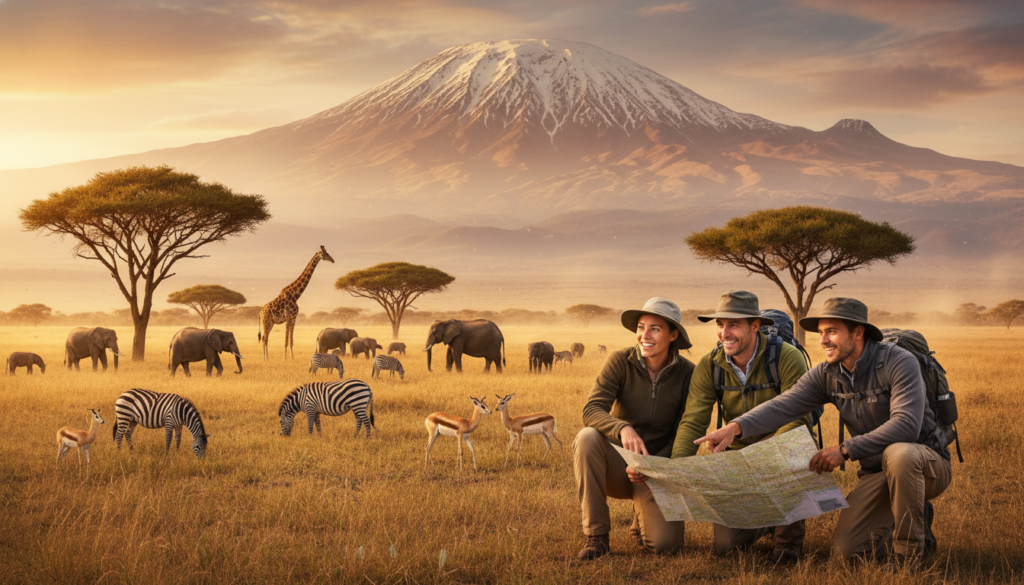
Choosing a good tour operator is vital for a safe and enjoyable Mount Kilimanjaro safari. Look for operators with experienced guides, a good safety record, and positive feedback.
Do your homework on potential operators. Ask about their experience with climb and safari Tanzania trips. A good operator can make your trip better.
Permits and Park Regulations
Knowing and following park rules and getting the right permits is important for your Mount Kilimanjaro safari. Kilimanjaro National Park has rules to protect visitors and the environment.
Make sure your tour operator takes care of the permits for you. They know what’s needed and can make things easier for you.
Mammals of the Lower Slopes
Our journey through the lower slopes of Kilimanjaro shows a rich variety of mammals. From agile primates to large herbivores, the area is full of life. It’s a place of wonder and discovery.
Primates of the Rainforest
The rainforests of Kilimanjaro’s lower slopes are home to many primate species. These smart and social animals are key to the forest’s health.
Blue Monkeys and Colobus Monkeys
In this region, you’ll find blue monkeys and colobus monkeys. Blue monkeys are agile and eat both plants and animals. Colobus monkeys have striking black and white coats and mostly eat leaves. Both are important for spreading seeds and helping the forest grow.
Large Herbivores and Predators
The lower slopes of Kilimanjaro are also home to larger animals. These animals add to the area’s biodiversity and make wildlife viewing exciting.
Elephants and Buffalo Sightings
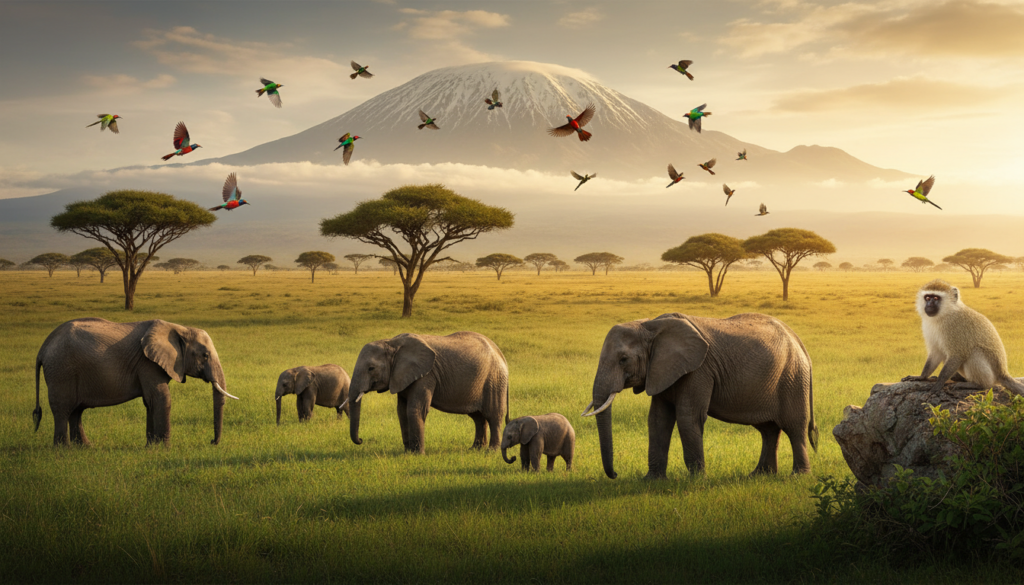
Elephants and buffalo are notable large herbivores here. Elephants live in complex societies, and buffalo are powerful. Seeing these animals gives us a peek into the ecosystem’s balance.
Exploring the lower slopes, we see how all these species and their homes are connected. The presence of large animals and predators shows why we must protect Kilimanjaro’s ecosystems.
Birdlife and Avian Diversity
Kilimanjaro’s bird diversity shows its ecological richness. We see many bird species as we move from rainforest to alpine desert. Each ecosystem supports birds that have adapted to its conditions.
The mountain’s geography and climate support a wide range of birds. Over 150 bird species call Kilimanjaro home, many found nowhere else. The forest belt is especially rich in endemic species, thanks to its lush canopy and dense undergrowth.
Endemic Species of the Forest Belt
The forest belt is dense and wet, perfect for many birds. Species like the Kilimanjaro Weaver and the Sharpe’s Starling are found here. They are loved by birdwatchers for their unique traits and behaviors.
The forest belt is also a key stop for migratory birds. During migration seasons, the forest comes alive with songs and calls. This adds to the mountain’s avian diversity.
Raptors and High-Altitude Birds
Higher up, the birdlife changes. The heath and moorland zones are home to raptors like the Augur Buzzard and the Verreaux’s Eagle. These birds of prey are a thrilling sight, showing the mountain’s wild spirit.
The alpine desert is harsh but beautiful, home to hardy bird species. Birds like the Alpine Swift and the Kilimanjaro White-eye have adapted to the extreme conditions. Some species migrate to and from the mountain.
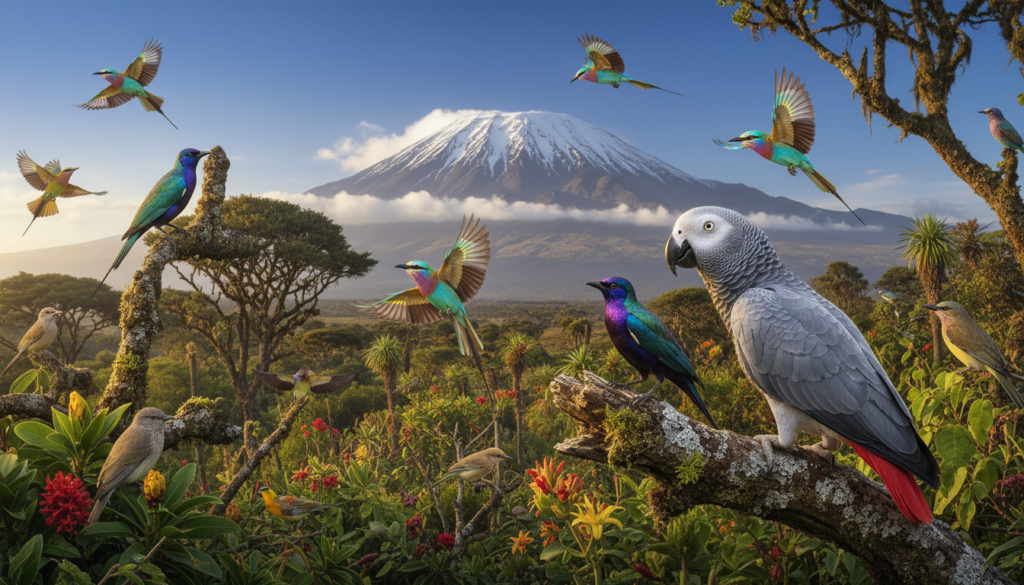
Kilimanjaro’s bird diversity is a major draw for visitors. It offers a unique chance to see Africa’s highest peak’s avian fauna. Whether you’re a birdwatcher or just appreciate birds, Kilimanjaro has something for everyone.
Rare and Endemic Species
As we climb Mount Kilimanjaro, we meet rare and unique species found nowhere else. These organisms have adapted to the mountain’s varied environments. This creates a rich tapestry of life.
The mountain’s biodiversity is a sign of its ecological importance. It’s a place where species have evolved to thrive in harsh conditions. These include the high elevations where the air is thin.
The Kilimanjaro Shrew
The Kilimanjaro shrew (Myosorex zinki) is a standout among the mountain’s fauna. It’s found only on Kilimanjaro and lives in the alpine desert and moorland zones.
This small mammal has evolved special traits to survive at high altitudes. Its physiology and behavior are unique, allowing it to thrive in tough conditions.
Unique Flora and Fauna Interactions
The relationships between plants and animals on Kilimanjaro are fascinating. The mountain’s diverse plants support a wide range of animals. From large herbivores on the lower slopes to small creatures at higher elevations.
For instance, the alpine zone’s giant lobelias and senecios provide homes for insects and birds. These, in turn, feed the mountain’s predators. Key interactions include:
- The pollination of flowers by sunbirds and other birds
- The dispersal of seeds by animals like bats and monkeys
- The provision of shelter and habitat by the mountain’s diverse plants
These interactions are vital for Kilimanjaro’s biodiversity. They show why it’s crucial to protect the mountain’s ecosystems.
Combining a Climb and Safari in Tanzania
Traveling to Tanzania lets you climb Africa’s highest peak and go on a safari. This mix of adventures shows off the country’s varied landscapes. You’ll see mountains, savannas, and craters.
Integrating Kilimanjaro with Serengeti and Ngorongoro
Planning a trip that includes climbing Kilimanjaro and a safari is key. The Serengeti and Ngorongoro are great for safaris. They offer amazing wildlife and landscapes that match Kilimanjaro’s beauty.
The Serengeti is famous for its Great Migration. It’s a chance to see incredible wildlife. Ngorongoro Crater is home to many animals, including the Big Five.
Logistical Considerations for Multi-Day Trips
Planning a multi-day trip needs careful planning. We look at the climb’s length, safari time, and travel between places.
A common plan is to climb Kilimanjaro for 7-8 days. Then, spend 3-4 days on a safari in the Serengeti and Ngorongoro. Traveling is by road or flights, depending on the plan.
| Destination | Duration (Days) | Activities |
|---|---|---|
| Mount Kilimanjaro | 7-8 | Climbing, hiking |
| Serengeti National Park | 3-4 | Game drives, witnessing the Great Migration |
| Ngorongoro Crater | 1-2 | Game drives, exploring the crater |
This integrated trip offers a full Tanzanian adventure. It highlights the country’s natural wonders and wildlife.
Best Practices for a Kilimanjaro Game Drive
When you go on a game drive in Kilimanjaro National Park, knowing the best practices is key. It’s not just about seeing animals; it’s about doing it right. This means being kind to the environment and the animals that live there.
Navigating the National Park Boundaries
Knowing the park’s limits is important for a great game drive. Kilimanjaro National Park has many different areas, each with its own wildlife. To get around well, you should:
- Learn the park’s map and its different zones.
- Stick to the paths to not mess up the habitats.
- Know the off-limits areas for your safety and the environment’s.
Vehicle Requirements and Safari Etiquette
The vehicle you choose for your game drive matters a lot. A 4×4 is best because of the park’s rough terrain. Also, following safari rules is key for a good time. This means:
- Keeping a safe distance from animals to not scare them.
- Being quiet to not disturb the animals.
- Waiting for animals to come to you, don’t go to them.
By following these tips, you can have a fun and responsible game drive. It’s all about enjoying the wildlife while keeping the park beautiful.
Seasonal Wildlife Patterns
Exploring Kilimanjaro’s slopes reveals the importance of knowing wildlife patterns by season. The mountain’s varied ecosystems host a wide range of animals. Their behaviors and where they live change with the seasons.
Dry Season Migration and Visibility
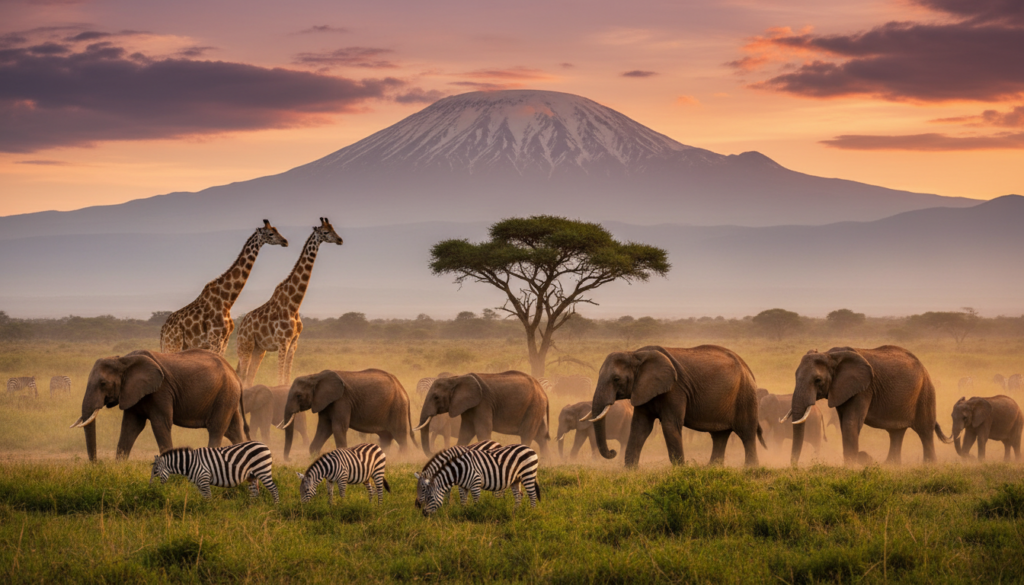
The dry season, from June to October, brings animals together at water sources. This makes them easier to see. Spotting many species becomes more likely.
The dry weather also makes plants thinner. This makes it easier to see animals. Large animals like buffalo and elephants often gather where water is still found, like rivers and waterholes.
Wet Season Vegetation and Breeding Cycles
The wet season, from November to May, changes the landscape and animal behavior. Rain makes plants grow thick, making animals harder to spot. Yet, it’s a great time to see animals breeding.
The wet season is full of food and water. This is when many animals have babies. It’s the best time for their young to grow strong.
| Season | Wildlife Behavior | Visibility |
|---|---|---|
| Dry Season (June to October) | Concentration around water sources | High visibility due to reduced vegetation |
| Wet Season (November to May) | Breeding and dispersal | Lower visibility due to dense vegetation |
Conservation Efforts in Kilimanjaro National Park
The preservation of Kilimanjaro’s unique biodiversity is a big task. It needs careful planning and community help. As we explore this majestic mountain, we see how important it is to protect its ecosystems.
Protecting Fragile Ecosystems
Kilimanjaro National Park has many ecosystems, like rainforests and alpine deserts. These places are home to many plants and animals, some found only here. Protecting these ecosystems is key for biodiversity and the planet’s health.
The park’s management uses several strategies to protect these areas. They restore habitats, control invasive species, and watch wildlife. For example, they remove invasive plants like Eucalyptus and Acacia to help native plants grow.
| Ecosystem | Conservation Challenge | Management Strategy |
|---|---|---|
| Rainforest | Invasive species | Removal of non-native plants |
| Alpine Desert | Climate Change | Monitoring of glacial melting |
| Moorland | Human impact | Controlled trails and camping sites |
Anti-Poaching Initiatives and Community Involvement
Poaching is a big threat to Kilimanjaro’s wildlife. The park fights this with anti-poaching efforts. They have rangers on patrol, gather intelligence, and work with local communities to teach about conservation.
Working with local communities is key. It helps them feel responsible for conservation. The park does this through education, tourism benefits, and community involvement in decisions.
Exploring Kilimanjaro National Park shows us how vital conservation is. Protecting ecosystems and fighting poaching with community help is crucial. This way, Kilimanjaro will keep being a biodiversity haven for future generations.
Photography Tips for Mountain Wildlife
Photographing wildlife on Kilimanjaro needs careful thought. The mountain’s varied landscapes and lighting make it a challenge. We must capture the essence of animals in different environments.
The lighting on Kilimanjaro changes a lot. This means we need to choose our camera gear wisely. The rainforest’s soft light is different from the bright sunlight at higher altitudes.
Equipment Selection for Variable Light
For animals on Kilimanjaro, the right gear is key. A camera that works well in low light is a must for the rainforest. A lens with a wide aperture lets more light in.
At higher elevations, the bright sun requires a different strategy. Use a lens with a narrower aperture to avoid overexposure. A polarizing filter can also help by reducing glare and enhancing colors.
Capturing Wildlife in Dense Forest Environments
Photographing in Kilimanjaro’s dense forests is tough. The thick foliage and low light make it hard to get clear shots. Patience and the right equipment are crucial.
To succeed, waiting for the right moment is key. A camera with good autofocus and fast burst mode helps. Knowing the animals’ behavior also helps capture important moments.
With the right equipment and approach, we can capture the beauty of Kilimanjaro’s wildlife. Even in the dense forest, we can get amazing shots.
Essential Gear for Your Safari Adventure
Getting ready for your Kilimanjaro safari is key. You’ll need the right clothes and top-notch optical gear. As you climb, the weather and surroundings change a lot. So, packing smart is crucial.
Clothing and Layering Systems
For your Kilimanjaro adventure, a layering system is a must. It lets you change clothes as the temperature and activities shift. Begin with a base layer that wicks away moisture, then add insulating layers for warmth. Finish with a waterproof, windproof outer layer to shield you from the elements.
A good layering system keeps you comfy and adaptable. It’s also smart to wear colors that blend with nature. This can make spotting wildlife easier.
Binoculars and Optical Equipment
Binoculars are vital for a Kilimanjaro safari. They let you see wildlife from afar without scaring it off. Choose binoculars with 7x or 8x magnification for the best view.
Also, think about bringing a spotting scope for closer looks. It’s great for your game drive, letting you see wildlife up close without risking your safety or theirs.
Safety and Ethical Wildlife Viewing
Exploring Kilimanjaro’s wildlife is exciting but comes with big responsibilities. We must respect the natural habitats and behaviors of its amazing animals. As we explore Kilimanjaro National Park, we need to think about our impact on the environment and its creatures.
Maintaining Distance from Wild Animals
It’s important to keep a safe distance from wild animals for our safety and theirs. Getting too close or feeding them can upset their natural ways and lead to dangerous situations. We should stay at least 10 meters away from most animals, and even farther for bigger or more aggressive ones.
Using the right tools, like telephoto lenses for photos, lets us capture special moments without bothering the animals. Our guides are trained to keep us safe and respectful at all times.
| Animal | Recommended Distance | Special Considerations |
|---|---|---|
| Large Herbivores (e.g., elephants, buffaloes) | 15 meters | Be cautious of their movement and body language |
| Predators (e.g., lions, leopards) | 20 meters | Avoid direct eye contact and sudden movements |
| Primates (e.g., monkeys) | 10 meters | Do not feed them, as this can alter their diet and behavior |
Respecting Natural Habitats and Behaviors
It’s key to respect the natural habitats and behaviors of Kilimanjaro’s wildlife to keep the ecosystem balanced. This means staying on trails, not littering, and avoiding actions that could disturb animals or their homes.
Our actions today will shape the future of Kilimanjaro’s incredible biodiversity. By picking responsible tour operators and following guide advice, we help with conservation in Kilimanjaro National Park.
Enjoying Kilimanjaro’s wildlife is a privilege, not a right. By being aware of our impact and respecting nature, we ensure future generations can enjoy the Kilimanjaro national park safari experience.
Conclusion
Our journey through the Mount Kilimanjaro safari has shown us the amazing wildlife and ecosystems. The different zones of Kilimanjaro, from the bottom to the top, are home to many plants and animals.
A safari here lets you see the rich wildlife of Africa’s highest mountain. Knowing when to see animals, the conservation work, and how to watch wildlife makes your trip better. It also helps protect this amazing place.
If you’re thinking about visiting or just want to learn more about Kilimanjaro, keep exploring. A safari here is a trip that will give you unforgettable memories and a closer bond with nature.
FAQ
At the summit, the cold climate makes it hard for animals to survive. But, the lower rainforest and heath zones are full of life. We often see blue monkeys and black-and-white colobus monkeys in the trees.
In quieter areas, like the northern slopes, we might spot elephants, buffalo, and small antelopes like the bushbuck. The Kilimanjaro shrew, a rare mammal, also calls the mountain home.
A Kilimanjaro game drive is different from those in flat savannahs. Most wildlife viewing is on foot during a trek in Kilimanjaro National Park. But, for a unique experience, visit Amboseli National Park in Kenya.
There, you can see animals against the backdrop of Kilimanjaro’s slopes.
Start with the climb. After reaching the Arctic summit, move to a climb and safari Tanzania plan. This includes visiting the Ngorongoro Crater and the Serengeti.
This order lets you rest while enjoying the wildlife of East Africa.
The mountain’s bird life is amazing. Look out for the Hartlaub’s turaco and the silvery-cheeked hornbill. In the alpine desert, the white-necked raven is common.
For bird enthusiasts, the Malachite sunbird is a highlight in the moorland transition zone.
In the dry seasons, from late June to October, animals are easier to see. This is because they gather near water sources.
In the wet seasons, the rainforest is lush. This makes finding mammals hard, but it’s great for birdwatching. Many birds come to breed during this time.
Bring binoculars with at least 8x magnification for scanning the forest. For photography, a camera that works in low light is key.
A versatile telephoto lens is best for capturing primates and raptors without disturbing them. This way, we can enjoy ethical wildlife viewing.
A: Kilimanjaro National Park has dedicated ranger teams. They patrol regularly to fight poaching and protect the fragile ecosystems.
We support these efforts through community involvement. This ensures tourism benefits locals, helping protect the mountain’s unique flora and fauna.
Safety is our top priority. When we’re in areas with elephants and buffalo, our guides use their knowledge to keep a safe distance.
We always give way to wildlife and follow strict safari etiquette. This way, we don’t stress the animals or disrupt their natural behavior.

Continue Reading
African Safari Hot Air Balloon: The Complete Guide to Flying Over the Serengeti
Soar over the Serengeti in a hot air balloon on an unforgettable African safari adventure. Discover the magic...

Africa Safari: Your Ultimate A to Z Planning Guide
Discover the ultimate Africa safari planning guide - from A to Z. Explore the best destinations, activities, and...
Safari in the Serengeti: What No One Tells You Before You Go
Explore the Serengeti's untamed landscapes on a guided safari that unveils its true essence.