
Family African Safari: How to Plan the Perfect Trip With Kids
- Determining the Best Age for an African Safari
- Selecting the Ideal Destination for Families
- Understanding Malaria Risks and Health Precautions
- Choosing Between Private Reserves and National Parks
- Crafting the Perfect Family African Safari Itinerary
- Selecting Kid-Friendly Safari Lodges and Camps
- Packing Essentials for Traveling with Kids in Africa
- Navigating Flights and Ground Transportation
- Engaging Children with Wildlife and Conservation
- Managing Dietary Needs and Food Safety
- Essential Safety Protocols for Families in the Bush
- Budgeting for Your Family Safari Adventure
- Preparing Children for the Cultural Experience
- Working with Specialized Family Safari Operators
- Conclusion
- FAQ
Planning a trip to the wild needs careful thought for all family members. Traveling with kids Africa has its own set of challenges. But, seeing nature up close is truly rewarding.
We aim to help you plan an unforgettable wilderness adventure. By choosing the right pace and location, you can make a family safari Africa perfect for everyone. Let’s explore the key steps to make your trip safe and memorable.
Key Takeaways
- Prioritize lodges that offer specialized programs for younger guests.
- Select regions with shorter travel distances to minimize fatigue.
- Consult with experts to balance active game drives with downtime.
- Pack essential gear to ensure comfort during long days in the bush.
- Focus on educational opportunities to engage children with local ecosystems.
Determining the Best Age for an African Safari
Planning an African safari for your family means thinking about your kids’ ages. It’s important because it affects how much they can enjoy and safely take part in the adventure.
Figuring out if your child is ready for a safari involves knowing their developmental stage. This is key because it affects how much they can get out of the experience.
Developmental Milestones and Safari Readiness
Children grow at different speeds, and when they’re ready for a safari depends on it. Older kids who can walk far, know basic wildlife safety, and love nature usually do well. Checking if your child meets these criteria helps decide if they’re ready for the trip.
For younger kids, it’s about their ability to sit still during drives and their health and energy. Knowing these things helps plan a safari that everyone will enjoy.
Managing Expectations for Toddlers Versus Teenagers
It’s important to manage what you expect from your kids on a safari, especially if they’re different ages. Toddlers might not get the wildlife watching, but they can enjoy nature’s sights and sounds. Keeping them busy with simple tasks like animal spotting or collecting leaves can make them feel part of the adventure.
Teenagers, however, might understand more about the environment and conservation. They might enjoy guided tours and learning more about the safari. Tailoring the safari to your kids’ ages and interests can make it more fun and meaningful for them.
In the end, choosing the right age for a safari depends on your child’s maturity, interests, and abilities. By thinking about these carefully, you can make sure your family has a great and educational safari experience.
Selecting the Ideal Destination for Families
Choosing the right place for a family African safari is key. Africa has many safari spots, each with its own charm. The best spot balances fun with comfort and is easy to get to.
Why South Africa is the Top Choice for First-Timers
South Africa is great for families new to safaris. It has a strong tourism setup and lots of places to stay. South Africa’s safari lodges and camps have things for kids and adults. The wildlife and views are amazing for everyone.
As one traveler said,
“South Africa’s safaris offer a perfect blend of adventure and luxury, making it an ideal choice for families.”
Exploring the Child-Friendly Reserves of Kenya
Kenya is known for its kid-friendly safari spots, like the Maasai Mara National Reserve. Safari guides in Kenya make sure families have fun. Kids can learn about the Maasai culture too.
The Unique Appeal of Botswana for Older Children
Botswana is perfect for older kids who love adventure. The Okavango Delta and Chobe National Park are top spots. Here, families can go on mokoro canoe trips and guided walks. It’s a chance to see the wild up close.
Understanding Malaria Risks and Health Precautions
When planning your family’s African safari, it’s key to think about health risks like malaria. Traveling with kids to Africa means taking many health precautions. This ensures a safe and fun trip for everyone.
Consulting with Travel Medicine Specialists
Seeing a travel medicine specialist is a must before your trip. They give advice based on your family’s health, where you’re going, and when. They also give shots and meds you might need. For more travel health info, check our FAQs and travel information page.
See a travel medicine specialist 4-6 weeks before you leave. This lets time for shots to work. Talk about any health issues, allergies, or worries you have.
Navigating Prophylaxis Options for Children
Choosing the right malaria prevention for kids is important. The best option depends on the child’s age, weight, and health. Options include atovaquone-proguanil, doxycycline for kids over 8, and mefloquine. Talk to your specialist to find the best choice for your kids.
| Prophylaxis Option | Age/Weight Restrictions | Notable Side Effects |
|---|---|---|
| Atovaquone-proguanil | 5 kg and above | Gastrointestinal issues |
| Doxycycline | 8 years and above | Photosensitivity, GI upset |
| Mefloquine | 5 kg and above | Neuropsychiatric effects |
Essential First-Aid Kits for the African Bush
A good first-aid kit is crucial for your safari. It should have band-aids, antiseptic wipes, pain relievers, and any personal meds. Also, include a thermometer, tweezers, and a snake bite kit if needed.
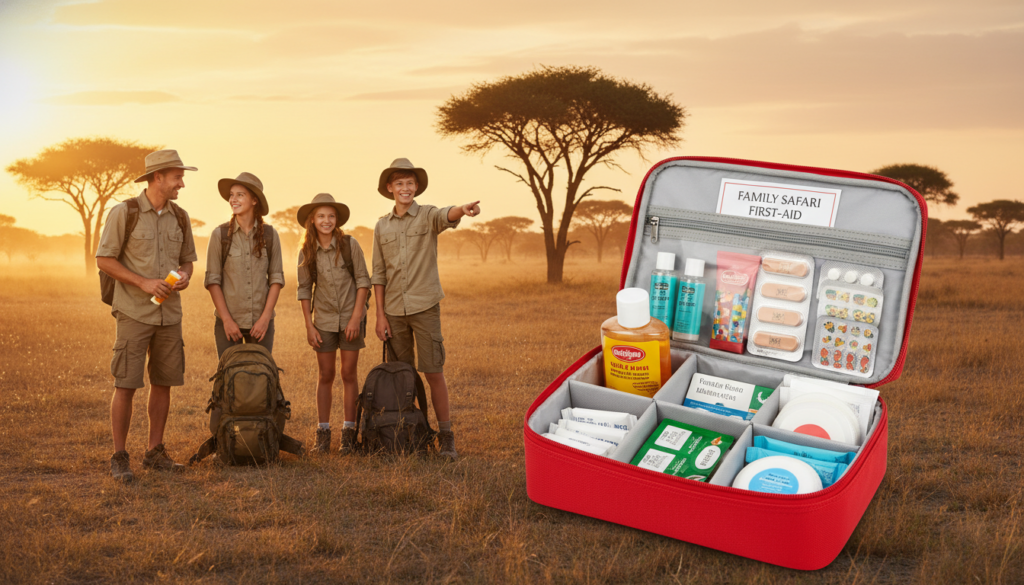
“A good first-aid kit can be a lifesaver in the African bush. It’s not just about treating minor scrapes and cuts; it’s about being prepared for any situation that may arise during your safari adventure.”
In conclusion, knowing about malaria risks and taking health precautions is key for a safe family safari. By getting advice from travel medicine specialists, choosing the right malaria prevention for kids, and preparing a first-aid kit, you can reduce health risks. This way, you can enjoy making unforgettable memories with your family.
Choosing Between Private Reserves and National Parks
Planning a family African safari means deciding between private reserves and national parks. Each offers a unique experience. Knowing the differences helps you choose what’s best for your family.
Private reserves offer exclusivity and flexibility, making for a personalized experience. National parks, on the other hand, provide a traditional safari feel with diverse landscapes and lots of wildlife.
Off-Roading in Private Concessions
Private reserves let you off-road, getting closer to wildlife. Off-roading offers a unique chance to see animals up close. It creates memories that last a lifetime for families.
- Enhanced wildlife viewing opportunities
- More personalized and flexible safari experiences
- Potential for spotting rare or elusive species
Fenced Lodges for Extra Peace of Mind
Safety is key for families. Private reserves often have fenced lodges. These lodges are safe, keeping wildlife outside. Families can enjoy the African bush safely.
As one safari operator says,
“The peace of mind that comes with staying in a fenced lodge is invaluable, especially when traveling with children.”
Fenced lodges offer:
- Enhanced safety for families with children
- Reduced risk of wildlife encounters near accommodations
- A more relaxed atmosphere, allowing for a more enjoyable experience
In conclusion, choosing between private reserves and national parks depends on your family’s preferences. Whether you prefer the exclusivity of private reserves or the traditional safari of national parks, understanding their benefits helps you make the right choice for your family.
Crafting the Perfect Family African Safari Itinerary
Creating the perfect family African safari itinerary is all about choosing activities that excite both kids and adults. A well-planned safari is key to making memories that last a lifetime. It ensures everyone has a great time.
It’s important to balance game drives with downtime. Game drives are exciting, but so is relaxing and having flexibility in your plan.
Balancing Game Drives with Downtime
When planning game drives, we think about the kids’ ages and how long they can focus. Younger kids do better with shorter drives and breaks. Older kids and teens might enjoy longer drives. It’s also smart to plan drives for early morning and late afternoon when animals are most active.
Having downtime is crucial too. It lets families rest and enjoy their lodge or camp. Lodges often have pools, kids’ clubs, and spas for relaxation and bonding.
| Activity | Age Group | Duration |
|---|---|---|
| Game Drives | 4-12 years | 2-3 hours |
| Nature Walks | 8+ years | 1-2 hours |
| Kids’ Club Activities | 4-12 years | 2-4 hours |
Incorporating Cultural Experiences and Educational Tours
Adding cultural experiences and educational tours makes the safari better for kids. Visiting local communities and learning about crafts and conservation is educational. It helps kids appreciate local culture and the environment.
At Poria Africa Adventure, we create family safari itineraries that fit each family’s needs. Our guides and staff make sure your safari is fun and educational.
Selecting Kid-Friendly Safari Lodges and Camps
Choosing the right lodges and camps is key for a great family safari. The best family safari Africa offers needs both kids and parents. The right place to stay makes everyone’s trip better.
Families have special needs, and the right spot can change everything. A good place to stay adds to the fun of the safari.

Amenities That Make a Difference for Parents
Parents should look for certain amenities when picking a place to stay. Things like babysitting, kids’ clubs, and family dining are important.
“A lodge with a kids’ club is a big help for parents,” says a safari expert. “It lets them relax while their kids have fun.”
Other great features include pools, game rooms, and spas with kids’ programs. These make the trip fun for everyone in the family.
The Importance of Family Suites and Interconnecting Rooms
For families, the layout of the accommodation is very important. Family suites and rooms that connect are perfect for families with kids.
Family suites often have extra perks like private decks or pools. This makes the safari even better. Rooms that connect are great for families of all sizes.
Choosing places with family suites and connecting rooms ensures a comfortable and memorable trip for everyone.
Packing Essentials for Traveling with Kids in Africa
When you travel with kids in Africa, it’s important to pack the right things. This makes your family safari trip fun and stress-free. Africa’s different climates and places need careful thought about what to bring.
Africa’s weather changes a lot from one place to another. The time you visit also affects the weather. So, pack clothes that can be worn in different ways to stay comfortable.
Clothing Strategies for Variable Temperatures
Layering your kids’ clothes is key for Africa’s changing weather. Lightweight, breathable fabrics are great for hot days. Insulating layers are needed for cooler times, especially in the dry season.
Think about what you’ll do when choosing clothes. For game drives, wear neutral colors to blend in. Also, remember to pack rain gear for sudden rain in the wet season.
Must-Have Entertainment and Comfort Items
Traveling with kids needs more than just the right clothes. You also need things to keep them happy and busy. Portable games, coloring books, and small toys are great for long trips or lodge downtime.
Bring things from home that your kids love, like a favorite blanket or stuffed animal. These can make them feel safe in new places. Also, pack headphones or ear protection for flights or loud places.
By carefully packing these items, you can make your family’s safari trip better. Everyone will stay comfortable and have fun.
Navigating Flights and Ground Transportation
Planning flights and ground transport is key for families on an African safari. The trip to your destination can be as exciting as the safari itself. Just plan it well.
Long-haul flights can be tough, especially for kids. “Children have different needs when it comes to travel,” says a travel expert.
“The key to a successful long-haul flight with kids is preparation and flexibility.”
To beat jet lag, adjust your child’s sleep schedule a few days before flying. Match it to your destination’s time zone.
Minimizing Jet Lag for Younger Travelers
Beating jet lag is more than just sleep. Keeping your child hydrated is key. Make sure they drink lots of water before and during the flight. Also, keep them busy with books, games, or entertainment systems.
When you arrive, get them outside in the sun. This helps adjust their body clock. Stick to a regular routine for meals and sleep to adjust to the new time zone.
Safety Considerations for Bush Flights and Transfers
Safety is crucial for bush flights and ground transfers. Choose a reputable tour operator with safe transport. Bush flights need extra care because of the remote locations.
Look for operators with strict safety rules. Always check the safety record of your transportation provider and ask about their emergency plans.
Ground transfers can be tricky, especially in rural areas. Make sure your safari operator has well-kept vehicles and experienced drivers. They should know the terrain well.
Good planning of flights and ground transport reduces travel stress. This lets you enjoy the excitement of your safari adventure more.
Engaging Children with Wildlife and Conservation
Engaging kids with nature on an African safari is more than just seeing animals. It’s about diving into the experience. As we explore the savannas and forests, we can teach our children to love and protect the environment.
Turning Game Drives into Interactive Learning
Guides can make game drives fun for kids with scavenger hunts. Kids look for specific animals or plants. This keeps them interested and teaches them about nature. Using binoculars lets them see wildlife up close without disturbing it.
Getting kids to track animals is also great. Guides show them how to spot animal signs like footprints. This turns a simple drive into a detective adventure. It helps kids learn to observe and connect with nature.

Supporting Local Conservation Projects as a Family
Supporting local conservation projects is another way to teach kids about wildlife. Many safari lodges and tour operators let families help with conservation. They can visit community projects or help with wildlife monitoring. These activities teach kids about conservation and how humans affect the environment.
By getting kids involved in conservation, we teach them to care for the planet. This is a powerful way to make sure future generations protect our wildlife and ecosystems.
Managing Dietary Needs and Food Safety
Planning a family safari in Africa means thinking about food and safety. It’s important to meet your family’s dietary needs for a great trip.
Traveling with kids means considering their food needs. This could be due to allergies, intolerances, or just what they like. “Kids have different nutritional needs than adults,” a travel health expert says. “It’s key to meet these needs, especially when food choices are limited.”
Communicating Allergies to Lodge Staff
Telling your lodge about any food allergies or restrictions is crucial. Most safari lodges can handle different diets, but they need to know ahead of time.
Before you go, talk to your lodge about your family’s needs. They can often make special meals, like gluten-free or dairy-free. Make sure to share any severe allergy information.
- Inform your lodge about any food allergies or dietary restrictions before your trip.
- Discuss specific meal requirements and options with the lodge staff.
- Ensure that your lodge has a clear understanding of your family’s needs.
Handling Water Safety and Hydration
Having safe drinking water is vital for your family’s health on safari. In many African countries, tap water is not safe. You’ll need a plan for safe water.
Most safari lodges offer safe water, but check before you arrive. Bringing water purification tablets or a portable filter is a good idea too.
Staying hydrated is especially important for kids in Africa’s heat. Make sure your kids drink lots of water, especially during game drives or when outdoors.
A family safari operator once said, “Hydration is key to preventing dehydration and heat-related illnesses, especially in young children.”
“We always advise our families to drink plenty of water and to stay hydrated, especially when we’re out on game drives or exploring the bush,”
Essential Safety Protocols for Families in the Bush
Starting a family African safari means knowing and following key safety rules. It’s vital for a fun and safe trip. Being ready is essential for a great journey.
Following ranger advice during game drives is a big part of staying safe. Rangers know the land and animals well. Their help is very important.
Following Ranger Instructions During Game Drives
Ranger tips help keep you and your family safe. They also make sure you see wildlife up close. It’s important to listen to their advice and act quickly. This means staying in safe areas, keeping hands and feet inside, and not startling animals.
Rangers will show you dangers and talk about animal behavior. Listening to their stories makes the trip better. You’ll learn more about the animals and enjoy the experience more.
Teaching Children About Wildlife Behavior
Teaching kids about animals is key to a safe safari. Knowing how animals act helps kids follow safety rules. This makes the trip safer and more fun.
Simple rules like staying close, being quiet, and not touching animals are important. Explain these to your kids before going on game drives.
Using the safari as a learning chance helps kids respect nature. Encourage them to ask questions and learn from guides. This makes the trip fun and educational.
By listening to rangers and teaching kids about animals, you’ll have a safe and unforgettable safari.
Budgeting for Your Family Safari Adventure
Planning a family African safari means knowing all the costs. A good budget helps you enjoy the trip without worrying about money. It makes the adventure more fun.
Creating a budget involves more than just the tour cost. You also need to think about extra expenses.
Hidden Costs to Consider Beyond the Base Rate
The base rate covers the basics like where you stay, eat, and go on game drives. But, there are hidden costs to watch out for:
- Transfers and transportation costs, including bush flights
- Optional activities such as hot air balloon rides or walking safaris
- Gratuities for guides and lodge staff
- Travel insurance that covers medical evacuations and trip cancellations
- Visa fees and any necessary vaccinations or medications
Knowing these extra costs helps you budget better. It keeps you from getting caught off guard with unexpected expenses.
Value-Added Packages for Families
Many tour operators have value-added packages for families. These include:
- Child-friendly activities and entertainment
- Family suites or interconnecting rooms
- Special dietary accommodations
- Guided educational tours and conservation programs
These packages make your family’s safari better. They add fun and memories. Look for what each tour operator offers for your family.
Think about the base rate and extra costs. Also, consider the value-added packages. This way, you can plan a best family safari Africa trip that fits your budget and needs.

Preparing Children for the Cultural Experience
Planning a family African safari means getting ready for the rich cultures you’ll meet. It’s not just about seeing amazing wildlife. It’s also about diving into local traditions.
Before you go, teach your kids about local customs and how to act respectfully. This makes their trip better and helps them understand and respect the cultures they’ll see.
Teaching Respect and Cultural Etiquette
It’s key to teach kids to respect local ways and traditions. Simple actions, like dressing modestly or taking off shoes in homes, show respect. These small steps can make a big difference in how you’re welcomed.
In many African cultures, pointing with your left hand or finishing a meal completely is seen as rude. It suggests the host didn’t provide enough food. Teaching your kids about these customs helps them avoid mistakes and enjoy their cultural journey more.
| Cultural Tip | Significance |
|---|---|
| Dress modestly | Shows respect for local customs and traditions |
| Remove shoes when required | A sign of respect when entering homes or sacred spaces |
| Avoid pointing with your left hand | Considered impolite in many African cultures |
Reading Lists and Documentaries Before Departure
Get your kids ready with books and documentaries about the cultures you’ll see. Stories about African traditions can spark their curiosity and give them context.
Documentaries on the history and daily life of the places you’ll visit are also great. They make learning fun and visual, preparing your family for the cultural adventure ahead.
By educating your kids about the cultural aspects of your African safari, you make the trip more meaningful for everyone. It’s a chance to learn and grow together.
Working with Specialized Family Safari Operators
Planning a family safari in Africa can be easier with a specialized tour operator. They know how to make your trip memorable and stress-free. Traveling with kids needs careful planning, and they can help a lot.
These operators have lots of experience with families. They can customize your safari to fit your kids’ ages and interests. This way, everyone in the family can have fun and learn something new.
Why Expert Planning Saves Time and Stress
Planning a family safari is key. A good tour operator takes care of all the details, like booking places to stay and activities. This saves you time and reduces stress, so you can enjoy your trip more.
They also plan the itinerary to make sure everyone has a good time. They balance game drives with breaks, so kids aren’t too tired and adults can relax.
A well-planned safari itinerary is key to a successful family adventure.
Vetting Tour Operators for Child-Centric Policies
Not all tour operators are good for families. When looking for one, find those with experience with kids. They should have policies that focus on families.
- Check if the operator offers family-friendly accommodations and activities.
- Ask about their experience in handling children’s needs and any special requirements they may have.
- Look for operators that provide educational content and activities tailored for children.
Choosing an operator that cares about families makes your safari better for everyone. It’s more enjoyable and less stressful.
Conclusion
As we wrap up our guide to planning a family African safari, we’ve covered key points. We talked about how to check if your kids are ready for an African safari. We also discussed how to pick the best place for your family.
Understanding your family’s needs is crucial. Choosing lodges and camps that are good for kids makes the trip unforgettable. We highlighted the importance of health measures, safety, and learning about local cultures.
With the right planning, your family’s African safari can be a memorable adventure. Before you go, find tour operators who know how to handle families with kids. They’ll help make your trip special.
By choosing the right tour operators, you’ll make memories that last a lifetime with your kids.
FAQ
For first-time families, South Africa is a top pick. Places like Madikwe Game Reserve or the Eastern Cape are great. They are malaria-free and have good infrastructure.
Lodges like &Beyond Phinda Private Game Reserve offer special kids’ programs. They focus on learning, not just fun.
Kids aged eight to ten get the most out of a safari. They can handle longer drives and learn more about nature. For teens, activities like bush walks in the Okavango Delta are great.
Talk to a travel medicine expert two months before your trip. Some areas, like Kariega in South Africa, are malaria-free. But places like the Maasai Mara need special precautions.
Discuss Malarone with your doctor and pack a first-aid kit for kids. Include sunscreen and insect repellent for a safe trip.
Private areas offer better wildlife views and more flexibility. You can drive off-road and tailor drives to your child’s pace. Plus, lodges are often fenced for safety.
Mix early drives with downtime to avoid burnout. Choose lodges with pools and learning centers for kids. Cultural visits add depth to the trip.
Pack clothes in layers for temperature changes. Use neutral colors to blend in and avoid bugs. Bring comfort items and entertainment for quiet times.
Give kids their own binoculars and a wildlife checklist to keep them engaged.
Teach kids to listen to their ranger and stay quiet in the vehicle. Lodges like Singita handle food allergies well. Tell us about your needs early so they can prepare.
Specialized operators know the details that regular agencies miss. They ensure child-friendly policies and safety. This makes your trip smooth and worry-free.

Continue Reading
Kruger vs Serengeti: Which African Safari Is Right for You?
Discover the unique features that distinguish Kruger and Serengeti, the two premier safari destinations in Africa, to find...

Kruger National Park Safari: Complete Guide for First-Time Visitors
Embark on a Kruger National Park Safari with our insider's guide, packed with tips for first-time visitors.
Kenya Family Safari: Age-by-Age Guide to Traveling With Children
Explore Kenya's wilderness with your family on an unforgettable Kenya Family Safari. Our age-by-age guide helps you plan...