
Exploring the vast, untamed wilderness offers a unique view. An African safari experience is not just about seeing animals. It’s about feeling the quiet rhythm of the land. It invites you to see nature in its purest form.
Preparation is key for a great trip. When you start planning first safari trips, the choices can seem endless. We want to make it simple, giving you clear, useful tips for your journey.
We want your first trip to be both meaningful and well-understood. By learning about the ecosystem, you’ll go from just watching to being part of a long story.
Key Takeaways
- Prioritize quality over quantity when selecting your wilderness camps.
- Understand the seasonal shifts that dictate wildlife movement and visibility.
- Pack light to ensure ease of movement during bush flights and game drives.
- Respect the local guides as your primary source of ecological wisdom.
- Approach the landscape with patience to witness authentic animal behavior.
Understanding the African Safari Experience
An African safari is all about adventure and connecting with nature. It’s a journey that reveals the beauty and uniqueness of the wild.
It’s not just a tour to see animals. It’s a deep dive into the ecosystems that support incredible wildlife. Here, nature’s rhythms are felt, and the untamed beauty is breathtaking.
Defining the Modern Safari
The modern safari has changed a lot from its old days. Now, it offers many experiences for different interests. Whether you want to see the Big Five or enjoy nature’s peace, there’s a safari for you.
Safaris now offer a range of activities, from guided drives and walking safaris to fly-in safaris and hot air balloon rides. Each safari gives a unique view of the African wilderness, letting you connect with nature in different ways.
Types of Safari Experiences
When planning your African safari, knowing the different experiences is key. Your choice depends on what you like and what you want from your safari.
| Safari Type | Description | Best For |
|---|---|---|
| Guided Game Drives | Explore the savannah in a 4×4 vehicle with an experienced guide. | Wildlife viewing, comfort, and accessibility. |
| Walking Safaris | Immerse yourself in nature on foot, guided by experts. | Nature walks, birdwatching, and a more intimate experience with nature. |
| Fly-in Safaris | Access remote areas by air for a unique perspective. | Adventure seekers, those looking for a panoramic view. |
Each safari type offers a unique way to see the African wilderness. By picking the right one, you can have a fulfilling and unforgettable adventure.
Choosing the Right Destination for Your First African Safari
Africa has many safari options, and picking the right one for your first trip is key. The continent has different landscapes, from savannahs to forests, each with its own wildlife. This variety means you can find the perfect spot for your first safari.
East Africa: The Classic Savannah Landscapes
East Africa, especially Kenya and Tanzania, is famous for its savannahs and wildlife. Places like the Serengeti in Tanzania and the Maasai Mara in Kenya are known for the Great Migration. This event is one of the most amazing wildlife spectacles on Earth.
The savannahs here are open grasslands with acacia trees. They’re perfect for seeing the Big Five: lion, leopard, rhinoceros, elephant, and Cape buffalo. With good tourism services, East Africa is great for first-time safari-goers.
Southern Africa: Diversity and Accessibility
Southern Africa, including South Africa, Botswana, and Zambia, offers a wide range of safari experiences. You can see different landscapes, from the Kruger National Park in South Africa to the Okavango Delta in Botswana. This diversity supports many types of wildlife.
This region is also known for being easy to get to and offering luxury safaris. Lodges and tour operators here provide top-notch services. This makes planning your trip simpler. Southern Africa’s varied landscapes and wildlife, along with easy travel, attract many visitors.
When deciding between East Africa and Southern Africa for your first safari, think about what you want. If you want to see the Great Migration, East Africa is better. For a mix of landscapes and luxury, Southern Africa might be more appealing.
Key Considerations:
- Wildlife Diversity: Both regions have amazing wildlife, but the species and events differ.
- Accessibility: Think about how easy it is to get to and around your chosen destination.
- Safari Experience: Consider what kind of safari you want, like luxury lodges or mobile safaris.

Best Times of Year to Visit
Planning your first safari? Knowing when to go is key. The right time can greatly enhance your experience.
Understanding the Dry and Wet Seasons
Africa’s savannahs have two main seasons: dry and wet. The dry season is from May to October. During this time, the land is dry, and animals gather at water sources. This makes it easier to see many species.
The wet season, from November to April, brings greenery and scatters animals. It’s harder to spot them, but you’ll see newborns and enjoy the scenery.
“The dry season is often preferred by safari-goers due to the ease of spotting wildlife, but the wet season has its own unique charms and advantages.”
Timing Your Trip Around the Great Migration
The Great Migration is a must-see. It’s when wildebeest, zebras, and gazelles move in search of food. It happens all year, with different parts of the journey in different places.
For example, the Maasai Mara’s river crossings in July to September are famous. To see this, plan your trip carefully and be flexible.
- January to March: Calving season in the Serengeti.
- July to September: River crossings in the Maasai Mara.
- October to December: The herds begin their journey back to the Serengeti.
Knowing these patterns lets you plan your safari. You can see the Great Migration or enjoy the quiet of the off-season.
Budgeting and Planning Your First Safari
Planning an African safari means more than just the tour cost. You need to think about all the expenses involved. This way, your trip will be both unforgettable and affordable.
When making a budget, consider all the costs of an African safari. These include the tour, travel, vaccinations, and extra activities. Each part adds up to the total cost of your adventure.
Hidden Costs to Consider
There are hidden costs to watch out for when planning your safari. These include:
- Travel insurance, which is highly recommended for international travel
- Vaccinations and medications required for travel to certain African countries
- Visa fees, which vary by nationality and destination
- Gratuities for guides and staff, which are often expected
- Optional activities or excursions not included in the standard tour package
Knowing these extra costs helps you plan better. It keeps your trip budget-friendly and stress-free.
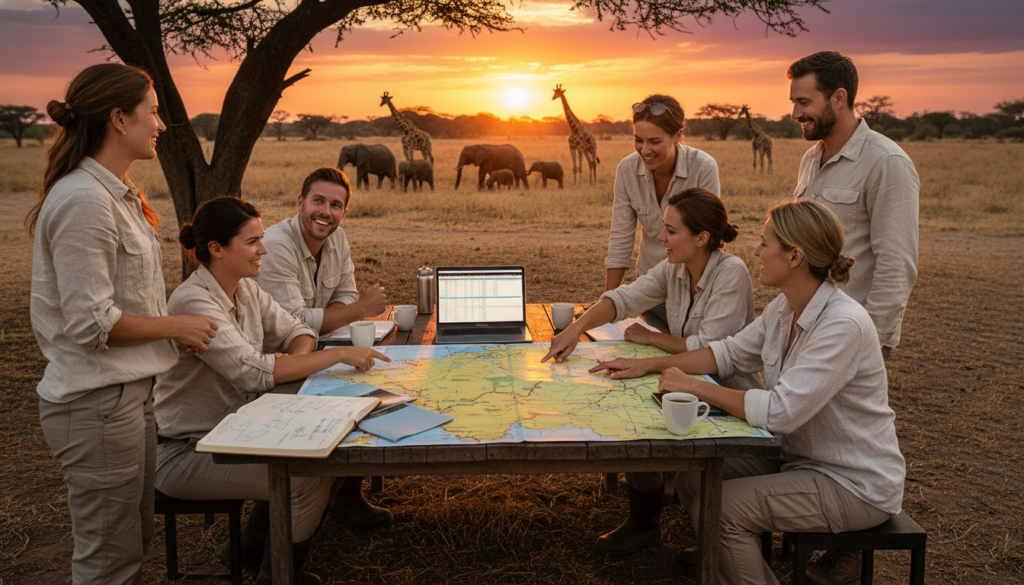
Luxury vs. Mid-Range vs. Budget Options
African safaris come in luxury, mid-range, and budget options. Each offers a different experience, from comfort to exclusivity.
Luxury safaris have top-notch accommodations and personalized service. They also give you special access to wildlife. Mid-range options balance comfort and cost, with good lodges and tours. Budget safaris are simpler but still offer a real safari feel at a lower price.
When picking, think about what matters most to you. Do you want luxury or a more basic adventure? There’s a safari for everyone.
Selecting the Right Safari Operator and Accommodation
Getting ready for your African safari? Choosing the right tour operator and place to stay is key. The right choice can make your trip better and safer.
When picking a safari operator, trust is essential. A trustworthy operator makes your trip smooth and fun. They also help protect wildlife and their homes. Trustworthiness means experience, knowledgeable guides, and caring for the environment.
Vetting Tour Operators for Reliability
To find a reliable tour operator, follow these steps:
- Look up their reputation online, reading reviews and testimonials.
- See if they’re part of well-known tourism groups or boards.
- Ask about their guides’ skills and knowledge. Good guides make your trip better.
- Check their safety record and emergency plans.
As one traveler said,
“A great safari guide knows about wildlife, culture, and history. They make your trip richer than just seeing animals.”
Choosing Between Lodges, Tented Camps, and Mobile Safaris
African safari accommodations vary from fancy lodges to tented camps and mobile safaris. Each offers a unique adventure:
Lodges offer comfort and extras like pools and spas. They’re close to parks, making game drives easy.
Tented camps let you feel closer to nature. They range from simple to fancy, with some having bathrooms and great food. Tented camps are all about nature.
Mobile safaris mean moving tents to follow wildlife or explore new places. It’s perfect for those who love the wild and seeing different views.
Choosing between lodges, tented camps, and mobile safaris depends on what you want. Think about comfort, nature, and your safari dreams. Pick a reliable tour operator for a memorable and eco-friendly safari.
Essential Packing List for the Savannah
Going on your first African safari? Knowing what to pack is crucial. The savannah’s climate and activities require specific items for comfort and enjoyment.
Clothing Choices for Climate and Comfort
The savannah’s sun and temperatures can be extreme. Neutral-colored clothing helps you blend in and stay hidden from wildlife. Here’s what to bring:
- Lightweight, breathable clothes for hot days
- Warm layers for cooler mornings and evenings
- Sturdy shoes for walking safaris
- A hat and sunglasses for sun protection
Your clothes should be comfy and practical. Moisture-wicking fabrics keep you dry and comfy all day.
Gear and Technology Requirements
There’s more to pack than just clothes. Binoculars are key for spotting wildlife, and a good camera captures your trip’s memories. Don’t forget to pack:
- Binoculars for wildlife viewing
- A camera with a telephoto lens for distant shots
- Power banks and solar chargers for device charging
- A water bottle or hydration pack to stay hydrated
For your first African safari, being prepared is essential. The right clothes and gear make for a memorable trip. Aim for comfort and readiness, so you can enjoy the African savannah’s beauty.
Health, Safety, and Travel Requirements
Planning a successful African safari means being ready for health, safety, and travel needs. It’s important to think about several key points to make your trip fun and safe.
Vaccinations and Malaria Prophylaxis
Before you go to Africa, talk to a doctor about needed vaccinations and meds. You might need shots for yellow fever, hepatitis A, and typhoid. Also, malaria meds are often a must for safaris. Your doctor will help figure out what you need based on your trip plans.
Malaria prophylaxis is key in some areas. The right meds depend on when you go and where you’ll be. Remember, while meds help a lot, they’re not 100% safe. So, use bug spray and wear long clothes to avoid mosquito bites.
Visa Regulations and Travel Insurance
Knowing visa rules for your trip is crucial. Visa rules change a lot, and some need advance planning, others can be gotten at the border. Check official government sites or ask your tour operator for help. For more info, visit our FAQs and travel information page.
Travel insurance is also a must. A good policy covers medical issues, trip cancellations, and more. Since safaris are often far from cities, good insurance can save you money and worry.
By focusing on health, safety, and travel needs, you’ll be ready for a great African safari.
Wildlife Spotting Etiquette and Photography Tips
Going on an African safari means you must respect the animals and their home. This respect is key for your safety and the animals’ well-being.
Rules for Interacting with Animals
When you’re with wildlife, it’s important to be polite. Keep a safe distance to stay safe and not scare the animals. Aim for 10 to 15 meters, but it depends on the animal and the situation.
Also, stay calm and quiet during drives. Animals get scared by sudden sounds or movements. Our guides know how to handle these moments, so listen to them.
| Dos | Don’ts |
|---|---|
| Keep a safe distance from wildlife | Approach or feed the animals |
| Stay calm and quiet during observations | Make sudden movements or loud noises |
| Follow the guide’s instructions | Litter or leave behind any trash |
Capturing the Perfect Wildlife Shot
Photography is a big part of the safari. It lets you capture the beauty of the wildlife. To get the perfect shot, you need the right gear and knowledge.
First, know your camera well. For wildlife, a telephoto lens is key. It lets you take photos from far away without bothering the animals.

Also, be patient and watch the animals’ behavior. Knowing their patterns and habits helps you get the best photos.
By respecting wildlife and using your photography skills, you’ll have a great safari. You’ll make memories that will last forever.
Navigating Daily Safari Routines
Starting your first African safari? Knowing the daily routines can make it better. It helps you enjoy and learn more from your guides and the wild.
The Typical Day on Game Drive
Your safari day starts early, with a big breakfast. Then, you go on a game drive, the best part of the day. Early morning drives are great because animals are most active then. Your guide will show you different species and tell you about their lives.
After a few hours, you return to the lodge for brunch. The sun is too strong in the middle of the day, so you relax. Some places offer walks or other fun activities during this time.
The late afternoon is another good time for drives. Animals start moving again as the sun sets. You might have a sunset dinner or a dinner in the bush, making your safari even more special.
Understanding Safari Lingo and Guide Communication
Learning safari terms can make your trip better. Words like “spoor” (animal tracks), “habitat” (where animals live), and “migratory patterns” will become common. Your guides know a lot and love to share, so ask them lots of questions.
Talking well with your guide is important. They can tell you a lot about animals, help you see them, and keep you safe. Always ask if you don’t understand something or if you have questions.
By knowing the daily routines and talking well with your guides, you’ll get the most out of your African safari. It will be an adventure you’ll never forget.
Cultural Sensitivity and Local Community Engagement
Going on an African safari is more than seeing amazing wildlife. It’s also about diving into the rich culture of the continent. As we explore, we enter the world of diverse communities that have lived with nature for ages.
To truly enjoy our African safari experience, we must respect local cultures. This means understanding and following local customs, which change a lot from place to place.
Respecting Local Traditions and Customs
When we meet local communities, we need to be careful with our actions. Simple things like dressing modestly or removing shoes before entering sacred places can make a big difference. As a local saying goes,
“You can’t see the forest for the trees.”
We must look beyond what’s right in front of us to truly see the cultural landscape.
It’s also important to know the rules about taking pictures. Asking before taking someone’s photo shows respect for their privacy and culture. This helps create a positive and respectful atmosphere during our planning first safari.
Supporting Local Economies Responsibly
Helping local economies is key to cultural sensitivity. By choosing local guides, tour operators, and artisans, we help the communities we visit. This makes our trip better and ensures tourism benefits everyone.
Choosing local products and services supports sustainable tourism. As the saying goes,
“The way to a man’s heart is through his stomach.”
Buying local food and crafts is a tasty way to connect with the community and help their economy grow.

By being culturally sensitive and engaging with local communities, we make our African safari experience richer. This approach not only makes our journey more fulfilling but also helps keep Africa’s culture and nature alive.
Managing Expectations on Your First African Safari
Getting ready for your first African safari? It’s important to set the right expectations. At Poria Africa Adventure, we know it’s more than just seeing animals. It’s a journey of discovery, for you and the wild.
The African savannah is full of life, but it follows its own rules. Knowing this helps you enjoy your safari more.
The Reality of Wildlife Sightings
Seeing wildlife is a big part of the safari fun. But remember, the wild is unpredictable. Animals move freely, and their sightings depend on weather, time, and season.
| Factor | Influence on Wildlife Sightings |
|---|---|
| Weather | Animals hide during bad weather, making them harder to see. |
| Time of Day | Best times are early morning and late afternoon when animals are active. |
| Season | In the dry season, animals gather near water, making them easier to spot. |
Knowing these things helps you manage your expectations and enjoy the safari more.
Patience as a Virtue in the Bush
Patience is key on safari. Waiting for animals or the perfect photo is part of the fun. The unpredictability of nature makes it exciting.
At Poria Africa Adventure, our guides help you see wildlife. But they also teach patience and enjoying the surroundings.
By slowing down and embracing the safari, you’ll find it’s just as rewarding as the sights.
Sustainable Tourism and Conservation Efforts
Travelers have a big role in shaping Africa’s wildlife future. Planning our first safari is more than just a trip. It’s a chance to help protect the amazing places we visit.
Tourism can affect the environment and local people. But, done right, it can also help conservation. By picking eco-friendly safari companies, we can make our trip good for Africa’s nature.
How Your Visit Supports Wildlife Protection
Visiting African safaris helps protect wildlife in many ways. Safari operators give money to protect animals and their homes. Also, tourists help keep poachers away by making areas safer.
Responsible tourism also helps local people by creating jobs. This makes them more likely to protect wildlife. It’s a win-win for both people and animals.
| Conservation Effort | Impact of Tourism | Benefits |
|---|---|---|
| Anti-Poaching Initiatives | Financial support through tour operators | Reduced poaching, increased wildlife populations |
| Habitat Restoration | Funding from tourism revenue | Preservation of natural habitats, biodiversity |
| Community Development | Job creation, economic stimulation | Reduced human-wildlife conflict, community support for conservation |
Choosing Eco-Friendly Safari Providers
When planning your first safari, pick operators who care about the planet. Look for those with Tourism Industry Association (TIA) or International Ecotourism Society (TIES) certifications. These show they follow eco-friendly rules.
Choose companies that work on local projects and help communities. These efforts make your trip better and help the environment last longer.
By choosing wisely, we can help protect Africa’s wildlife and nature for the future. Our safari trips can make a big difference.
Conclusion
We hope this guide has helped you get ready for your first African safari. It’s packed with tips and advice to make your trip unforgettable and enriching.
Going on this adventure means more than just planning. It’s about being open to the natural world and its creatures. Your safari is not just about seeing animals. It’s about connecting with the land and the people who live there.
Choosing responsible tour operators helps protect these amazing ecosystems. By being mindful of your impact, you support conservation efforts. We suggest approaching your safari with patience, respect, and a desire to learn.
With good planning and the right attitude, your first African safari will be a journey of discovery. It will leave you with memories that will last forever.