
Getting ready for a trip to East Africa needs careful planning of your gear. We think a well-prepared traveler connects more with nature, moving smoothly and confidently. Knowing what to pack for a Tanzania safari helps you stay comfy while watching the savanna’s rhythms.
Our Safari Packing List for Tanzania is all about being useful and caring for the environment. By picking layers that can be worn in different ways and strong gear, you make room for real exploration. We suggest these items as the base for your wild adventure.
Key Takeaways
- Prioritize neutral-colored, breathable fabrics to blend into the natural environment.
- Pack versatile layers to manage the significant temperature shifts between dawn and midday.
- Choose high-quality optics to enhance your wildlife viewing experience from a distance.
- Include essential sun protection and personal health items to maintain comfort in remote areas.
- Keep your luggage soft-sided and lightweight to accommodate bush plane and vehicle storage requirements.
Understanding the Tanzania Safari Environment
Before heading to Tanzania for a safari, it’s important to know the environment. Tanzania has different ecosystems, like the Serengeti’s savannas and the Ngorongoro Crater’s landscapes. These areas have different climates that need careful thought.
Climate Variations Across National Parks
Tanzania’s national parks have different climates. The Serengeti is dry from June to October, and wet from November to May. The Ngorongoro Conservation Area has a milder climate because of its high altitude.
When packing for your safari, research the climate of each area you’ll visit. Knowing the weather can help you pack right for any extreme conditions.
Key Climate Considerations:
- Temperature changes between day and night
- Rainfall patterns in the wet season
- Temperature changes with altitude
The Importance of Layering for Temperature Shifts
Layering is key for dressing in Tanzania. Temperatures can drop a lot at night, even in the dry season. It’s important to pack clothes that can be layered to adjust to these changes.
Include lightweight, breathable clothes for hot days and insulating layers for cooler times. This way, you can adjust to the day’s temperature changes.
Dust and Terrain Considerations
Tanzania’s rough terrain and dry conditions can make a lot of dust, especially during game drives. Choose durable, easy-to-clean clothes and gear for this.
The terrain can also be tough, with bumpy roads and uneven paths. Wear sturdy, comfortable shoes for walking safaris. Also, a good camera with dust protection is key for capturing memories.
Terrain and Dust Considerations:
- Durable, easy-to-clean clothing and gear
- Sturdy, comfortable footwear for walking safaris
- Dust protection for electronic devices
The Ultimate Safari Packing List Tanzania Essentials
Tanzania’s diverse climates and landscapes require careful packing for a safari. It’s key to know the must-have items for comfort and safety during the trip.
Must-Have Items for Every Traveler
For a Tanzanian safari, some items are a must. These include:
- Comfortable and versatile clothing for different temperatures and activities.
- Reliable and durable footwear for walking and driving.
- Personal protective equipment like sunscreen, insect repellent, and a first-aid kit.
- Binoculars and camera gear for wildlife and landscapes.
- Reusable water bottles and bags to help the environment.
It’s wise to wear neutral-colored clothing to blend in. Also, a good quality safari bag is essential for carrying everything comfortably.
Weight Restrictions on Internal Bush Flights
Knowing the weight limits on internal bush flights in Tanzania is crucial. Most flights have a soft-sided luggage limit of 15-20 kg (33-44 lbs) per person. This can change based on the aircraft and operator.
To avoid problems, we should:
- Pack lightly, focusing on the essentials.
- Spread out the weight in our luggage.
- Ask our tour operator about specific weight limits and tips.
By keeping these tips in mind, we can have a smooth and fun safari.
Choosing the Right Safari Bag for Your Journey
The right safari bag can greatly impact your Tanzania adventure. It affects your mobility and comfort. It’s key to pick a bag that meets your needs during the trip.
Why Soft-Sided Duffel Bags are Preferred
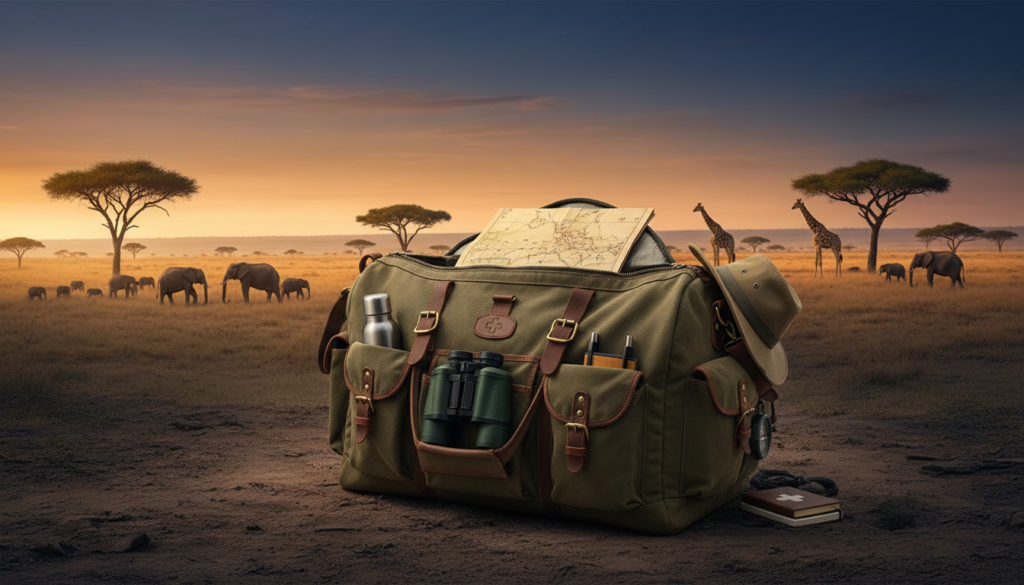
Soft-sided duffel bags are top picks for safaris. They’re flexible and fit well in tight spaces, like car compartments. Their soft sides make packing and unpacking easy.
Choose bags made from tough, water-resistant materials. They should handle travel and weather well. Look for bags with strong stitching, sturdy handles, and a secure closure.
Recommended Brands and Durability Features
Many brands are known for their durable safari bags. When picking a brand, think about the materials, construction, and extra features. These help with durability and function.
| Brand | Material | Key Features |
|---|---|---|
| Osprey | Water-resistant nylon | Reinforced stitching, multiple compartments |
| The North Face | Durable polyester | Weather-resistant coating, ergonomic design |
| Patagonia | Recycled polyester | Environmentally friendly, robust construction |
Daypack Selection for Game Drives
A daypack is crucial for game drives. It should hold essentials like water, snacks, a camera, and binoculars. Choose a daypack that’s light, has many compartments, and is comfy to wear.
Opt for daypacks with padded straps and a waist belt. This spreads out the weight. Look for ones that fit hydration bladders for long drives.
Selecting Appropriate Safari Clothing for Tanzania
Getting ready for your Tanzanian safari means picking the right clothes. Your outfit should be comfy and fit the weather. It also needs to respect the nature around you.
Color Palette: Why Neutral Tones Matter
Neutral colors are key for a safari. Shades like khaki, olive, and beige help you blend in. These colors also match the African savannah, making your trip better.
Bright colors and patterns can scare animals. David Attenborough said, “To see wildlife, blend in with their world. Clothes play a big part in this.”
- Khaki
- Olive green
- Beige
- Neutral browns
Fabric Choices for Breathability and Protection
The fabric of your clothes is as important as their color. Choose breathable, moisture-wicking fabrics to stay cool and dry. Cotton is good, but synthetic or blends are better for staying dry fast.
| Fabric Type | Breathability | Moisture-Wicking | Durability |
|---|---|---|---|
| Cotton | High | Moderate | High |
| Synthetic | High | High | Moderate |
| Blend | High | High | High |
Long-Sleeved Shirts and Trousers for Insect Protection
Wear long-sleeved shirts and trousers to avoid bug bites and sunburn. Lightweight, long-sleeved clothes help keep mosquitoes away. This lowers the chance of getting sick with diseases like malaria.
“The simplest acts of protection can make a significant difference in your safari experience. Clothing that covers your skin is your first line of defense against the elements and insects.”
When you pack for your safari, focus on clothes that protect and are comfy. The right colors, fabrics, and styles make your Tanzanian safari safer and more fun.
Footwear Requirements for Game Drives and Walking Safaris
Footwear is key for a good safari experience. Whether you’re driving or walking, the right shoes are important. Tanzania’s varied landscapes mean you need to pick wisely.
Comfortable Walking Shoes for Bush Walks
For walking safaris, you need comfortable and sturdy walking shoes. They should support your ankles and grip well on different grounds. Look for shoes that are waterproof and breathable to stay dry and comfy.
Think about the terrain you’ll be walking on and if you might get wet. A light pair helps avoid getting tired on long walks.
Lightweight Options for Vehicle-Based Safaris
On game drives, lightweight and comfortable shoes are best. Since you’ll mostly be sitting, focus on comfort, not heavy boots. But, pick shoes that protect your feet if you need to get out fast.
Opt for shoes with a flexible sole and breathable upper. This keeps your feet comfy during long drives and changing temperatures.
Sock Selection and Blister Prevention
Sock selection is often missed but is key to avoiding blisters. Go for moisture-wicking socks like merino wool or synthetic fibers. They keep your feet dry and blister-free.
Bring multiple pairs of socks to change into during the day. This is especially true after walking or sweating. Pack a few with extra cushioning for extra comfort.
Essential Safari Gear for Wildlife Photography
Going on a safari in Tanzania means you’re ready for an adventure. To capture the beauty of wildlife, you need the right gear. Tanzania’s diverse landscapes and rich wildlife make it a photographer’s dream. But, you must be ready.
Invest in top-notch camera equipment that can handle the safari’s challenges. This includes the camera body and lenses made for wildlife shots.
Camera Bodies and Lens Recommendations
For wildlife photos, a DSLR or mirrorless camera is key. Look for one with good autofocus and high burst mode. Also, choose a weather-sealed camera to protect it from dust and moisture.
Lenses are just as important. You’ll need a telephoto lens with at least 200mm focal length. This lets you take photos without disturbing the animals. A lens with image stabilization helps reduce camera shake.
- A minimum of 200mm focal length for telephoto lenses
- Image stabilization for reduced camera shake
- Weather-sealing for protection against the elements
Memory Cards and Backup Storage Solutions
On a safari, you’ll take many photos. So, sufficient memory cards are essential. Bring lots of high-capacity memory cards.
Having a reliable backup storage solution is also key. Use portable hard drives or SSDs to back up your photos each day. This keeps your data safe.
- Bring multiple high-capacity memory cards
- Use portable hard drives or SSDs for backup
Cleaning Kits for Dusty Environments
The safari environment in Tanzania can be dusty. This poses a risk to your camera equipment. A cleaning kit is a must-have for keeping your gear in good shape.
A good cleaning kit includes a soft brush, microfiber cloths, and cleaning solution. Clean your lenses and camera body regularly. This prevents dust from damaging your equipment.
Binoculars and Optical Equipment for Game Viewing
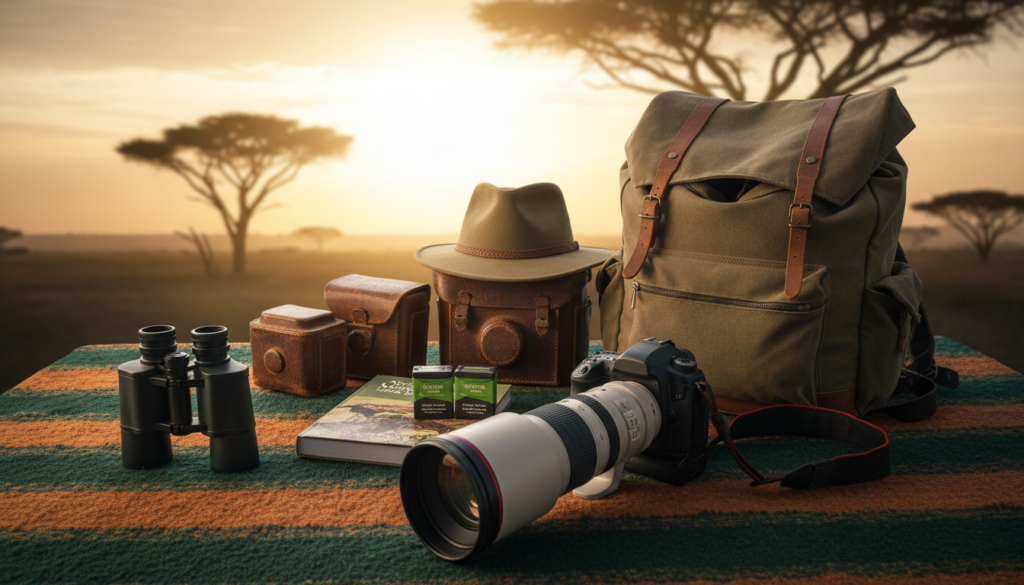
Binoculars are key for a great game viewing experience on a Tanzania safari. The right pair lets you get up close to the action. This makes your experience more immersive and fun.
Magnification and Objective Lens Explained
When picking binoculars for a safari, look at magnification and objective lens size. Magnification is how big an object looks compared to the naked eye. For safaris, 7x or 8x magnification is best. It balances big images with steady views.
The objective lens size is in millimeters and affects how much light binoculars gather. A bigger lens lets in more light, making images brighter. This is great for early morning or late afternoon drives when it’s hard to see.
Why Personal Binoculars Enhance the Experience
Having your own binoculars makes your safari better. They let you watch wildlife from a safe distance. You can also see the small details of nature.
Personal binoculars mean you can see wildlife clearly and comfortably. You don’t have to wait for others or share equipment. This is especially good in groups where everyone has different views.
Using your own binoculars also makes you more connected to your surroundings. You can watch animals, notice their behaviors, and enjoy the scenery. You don’t feel rushed or limited by shared gear.
Personal Health and First Aid Kit Requirements
Going on a Tanzania safari means more than just picking out clothes. You also need to think about your health. Being ready for any medical issue is key for a fun and safe trip.
Prescription Medications and Documentation
If you have health issues or take medicine, pack it with your prescription and a doctor’s letter. This info is very important in case of an emergency. Keep your meds in their original packaging to avoid mix-ups.
For more travel and health tips, check our FAQs and travel information page.
Malaria Prophylaxis and Insect Repellent
Tanzania has a lot of malaria, so you need to take steps to protect yourself. Talk to your doctor about the best malaria prevention for you. Also, use insect repellents with DEET, picaridin, or oil of lemon eucalyptus to keep mosquitoes away.
Here are some malaria prevention tips:
- Start your prevention treatment before you arrive in Tanzania.
- Keep taking the medicine for the full time after you leave.
- Know the possible side effects and talk to your doctor if you have any.
Basic First Aid Supplies for Remote Areas
A basic first aid kit is essential for any safari. It should have items for minor injuries, like:
- Bandages and band-aids
- Antiseptic wipes and ointment
- Pain relievers and antihistamines
- Blister care and any personal medications
Think about the remote areas you’ll be in and the limited medical help. Also, ask your tour operator for any first aid tips they might have.
Toiletries and Personal Care Items for the Bush
When you go into the Tanzanian wilderness, it’s key to pack the right toiletries. These items help you stay comfortable and enjoy your safari more.
Keeping clean and protecting your skin from the outdoors is vital. So, picking the right toiletries and personal care items is crucial.
Sun Protection and Skincare Essentials
The sun in Tanzania can be very strong. So, protecting your skin is a must. Use a broad-spectrum sunscreen with high SPF, lip balm, and after-sun lotion to keep your skin safe.
Key sun protection items include:
- High SPF sunscreen
- Lip balm with SPF
- After-sun lotion or aloe vera gel
For your skin, the dry and dusty bush needs special care. Use moisturizer and gentle cleansers to keep your skin healthy.
Biodegradable Products for Eco-Conscious Travel
We all should try to be kind to the environment. Use biodegradable soaps, toothpaste, and wet wipes instead of regular ones.
| Product | Biodegradable Alternative | Benefits |
|---|---|---|
| Soap | Biodegradable soap | Breaks down naturally, reducing environmental impact |
| Toothpaste | Biodegradable toothpaste | Environmentally friendly, gentle on the ecosystem |
| Wet Wipes | Biodegradable wet wipes | Decomposes naturally, minimizing waste |
Wet Wipes and Hand Sanitizer
Wet wipes and hand sanitizer are must-haves for staying clean on your safari. They’re great when water is hard to find or when you’re on a game drive.
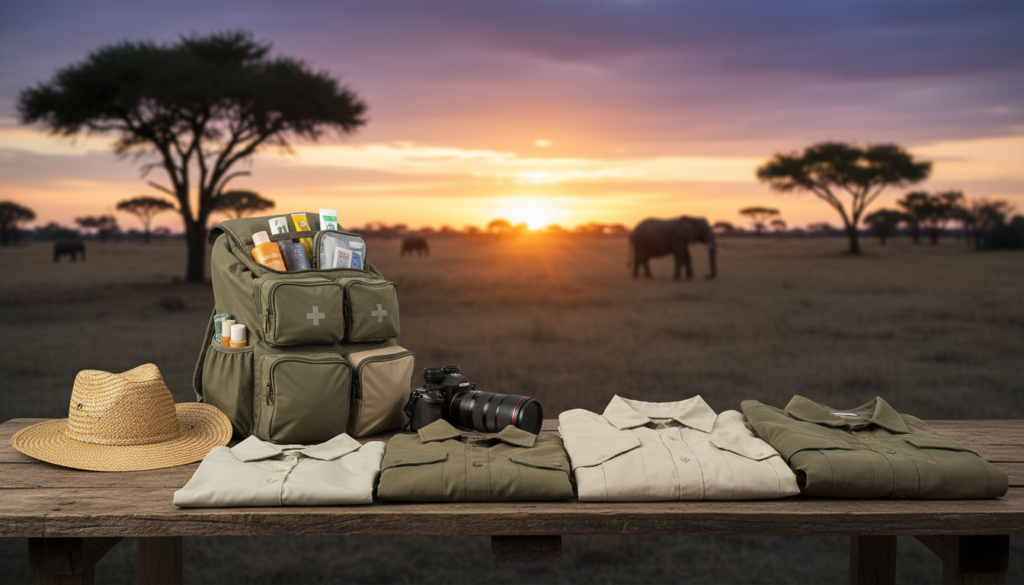
Choose biodegradable wet wipes to help the environment. Hand sanitizer should be at least 60% alcohol to fight off germs and bacteria.
By thinking about your toiletries and personal care items, you can have a better and more eco-friendly safari in Tanzania.
Electronic Devices and Power Management Solutions
When on a Tanzanian safari, we rely on our electronic devices. Cameras, GPS, and phones are key. A good power plan is essential.
We need to think about Tanzania’s power outlets and our activities. Game drives and camp life can be long.
Universal Adapters for Tanzanian Outlets
Tanzania’s power sockets are different from many places. A universal adapter is a must. Look for a small, multi-outlet one for all your devices.
Portable Power Banks for Long Game Drives
Long game drives mean we need portable power banks. Choose one with lots of power (at least 10,000 mAh) and USB ports.
A good power bank can charge many devices at once. This keeps us connected and ready to capture the day’s moments.
Headlamps and Flashlights for Camp Use
At night, headlamps and flashlights are crucial. Headlamps are great for hands-free use. Flashlights offer more light.
When picking, think about brightness (in lumens), battery life, and red light mode. These help us see better at night.
| Device | Recommended Feature | Benefit |
|---|---|---|
| Universal Adapter | Multi-outlet, compact design | Charges multiple devices at once, space-efficient |
| Portable Power Bank | High capacity (≥10,000 mAh), multiple USB ports | Charges devices multiple times, accommodates several devices |
| Headlamp/Flashlight | Brightness (lumens), red light mode | Provides necessary light, preserves night vision |
Important Documents and Travel Logistics
Planning a successful Tanzania safari requires careful attention to documents and travel details. Having the right paperwork and understanding the logistics can greatly enhance your trip.
Passport, Visa, and Vaccination Records
First, check your passport to make sure it’s valid for at least six months after your return. Some nationalities need a visa to enter Tanzania. Check with your local Tanzanian embassy or consulate for visa needs. Also, you’ll need certain vaccinations, like yellow fever, for Tanzania. Keep your vaccination records handy, as you might need to show them when you arrive.
“Travel is more than the seeing of sights; it is a change that goes on, deep and permanent, in the ideas of living.” Being well-prepared with your travel documents is key to this change.
Digital Copies and Cloud Storage Backups
In today’s digital world, it’s wise to make digital copies of your important documents. Scan your passport, visa, and vaccination records. Store them in cloud services like Google Drive or Dropbox. This way, even if your physical documents get lost or stolen, you can still access them.
It’s also smart to share these digital copies with someone you trust back home. They can help in case of an emergency.
Managing Cash and Currency Requirements
Knowing the local currency and how to manage your money is essential. Tanzania’s currency is the Tanzanian Shilling (TZS), but US dollars are also widely accepted. Carry some local currency for small purchases and tips. Credit cards are accepted in many places, but cash is often preferred for some transactions.
Remember to tell your bank about your travel plans to avoid any issues with your cards. As part of your Tanzania safari packing list, include a reliable way to manage your money, like cash, credit cards, and a debit card for ATMs.
Packing for Different Seasons in Tanzania
When planning a Tanzania safari, knowing the seasons is key. Tanzania’s weather changes a lot between the dry and wet seasons. This affects what you’ll need for your trip.
The dry season, from June to October, is dry and dusty. It gets cooler in the mornings and evenings. The wet season, from November to May, is greener but can be rainy and muddy.
Gear for the Dry Season
In the dry season, you need to protect yourself from dust and cold. Here’s what to pack:
- Dust-repellent clothing and gear to keep dust off your stuff and clothes.
- Warm layers for the cooler mornings and evenings, even when it’s warm during the day.
- High SPF sunscreen and lip balm to shield against the sun.
The dry season is also the best time to see wildlife. Animals gather near water, making them easier to spot.
Adjusting for the Wet Season
The wet season has its own challenges, like rain and mud. Here’s what to pack for it:
- Waterproof gear, like a waterproof jacket or poncho, to stay dry in the rain.
- Water-resistant bags or covers for your gear to keep it dry.
- Sturdy, waterproof footwear for muddy paths.
The wet season is greener and less crowded, offering a peaceful safari experience.
By tailoring your packing list to the season, you’ll have a more comfortable and enjoyable safari in Tanzania.
What to Leave Behind: Items to Avoid
Knowing what not to pack can make your safari in Tanzania better. It’s as important as knowing what to pack for your safari packing list Tanzania.
Prohibited Materials and Camouflage Clothing
When you pack for your Tanzanian safari, remember what’s not allowed. Camouflage clothes are off-limits because they’re for military use only. Also, some materials and items might be banned due to conservation or local laws.
Unnecessary Heavy Items and Valuables
It’s wise to leave heavy or valuable items at home. They can be hard to carry and might get lost or damaged in the wild.
| Item Category | Examples | Reason to Avoid |
|---|---|---|
| Prohibited Materials | Camouflage clothing, certain plastics | Legal restrictions or conservation efforts |
| Unnecessary Heavy Items | Excess clothing, heavy books | Cumbersome during transfers |
| Valuables | Jewelry, expensive watches | Risk of loss or damage |
By choosing what not to bring, you’ll have a better safari. The secret to a great safari packing list Tanzania is to find the right balance. Pay attention to the local rules and environment.
Tips for Efficient Packing and Weight Management
Packing well is key for a great Tanzania safari. It affects how you move and enjoy your trip. The secret to a great safari is packing smart and managing weight.
Packing for a safari is more than just what you take. It’s how you pack it too. Using the right methods can greatly improve your travel.
Packing Cubes and Organizational Strategies
Packing cubes are a great way to stay organized in your safari bag Tanzania. They help sort your stuff, making it easy to find things without unpacking all your bags.
Putting clothes, gear, and personal items in different cubes saves space. It also keeps things neat and lowers the chance of losing things while traveling.
Wearing Bulky Items on Transit Days
Wearing your biggest or heaviest clothes on travel days is another smart move. It frees up space in your luggage. This lets you bring more important items or souvenirs on your way back.
Using these packing tips makes your safari better. It makes packing less stressful and lets you enjoy the adventure more.
Sustainable and Eco-Friendly Packing Practices
Tanzania’s stunning landscapes make us think about how we pack to protect them. As travelers, we must do our part to keep the environment we visit pristine.
Reducing single-use plastics is a big step. These items are often used once and then thrown away, harming our planet. By using reusable items like water bottles and cloth bags, we can cut down on waste.
Minimizing Plastic Use
When packing for a Tanzanian safari, think about plastic’s role in your gear. Choose products with little or biodegradable packaging. For example, pick toiletries in refillable containers or items sold in bulk to reduce waste.
Refusing single-use plastics is simple yet effective. Say no to plastic straws, cutlery, and bags. Bring your own reusable versions instead, making sure they’re easy to find during your trip.
“The earth has enough for everyone’s need, but not enough for everyone’s greed.” – Mahatma Gandhi
Supporting Conservation Efforts
Our gear choices can help local conservation efforts. By picking products and services that support conservation, we make a difference. For instance, choose tour operators that follow sustainable tourism or buy gear from companies that donate to conservation.
Local communities and conservation organizations gain from our choices. Buying handmade gear or souvenirs supports local artisans and the economy.
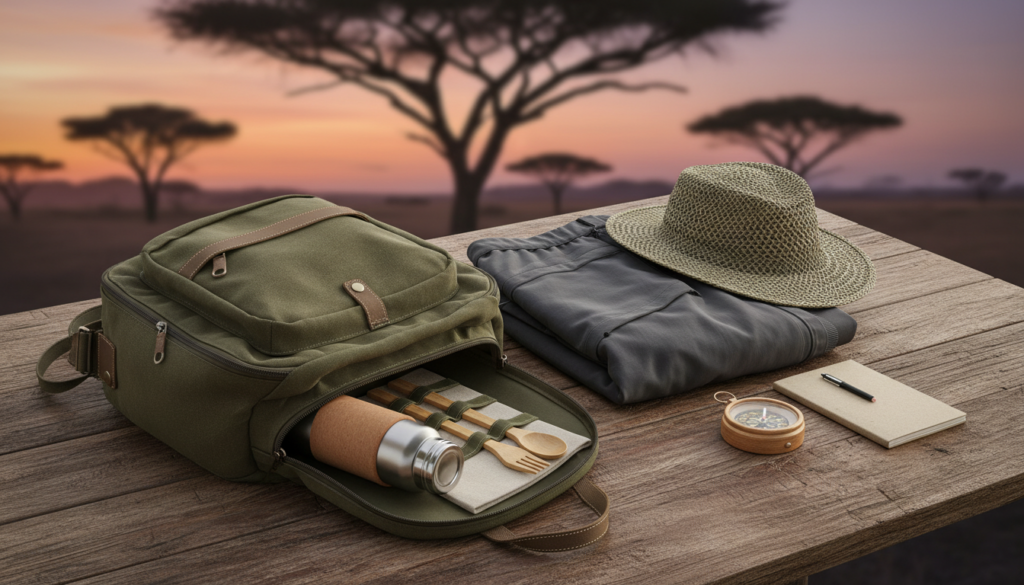
As we get ready for our Tanzanian adventure, remember every choice we make affects the environment. By choosing sustainable and eco-friendly packing, we help preserve Tanzania’s beauty for future generations.
Conclusion
As we wrap up our guide on the ultimate Safari Packing List Tanzania, we stress the need for careful planning. Choose lightweight, breathable clothes in earthy tones. Don’t forget sunscreen, a hat, sturdy shoes, a camera, and binoculars. This will get you ready for the Tanzanian wilderness.
By using this guide, you’ll handle the climate and terrain with no problem. For more details on Tanzania safari tours and to plan your trip, check out our Tanzania Safari Tours page.
With the right equipment and knowledge, you’re all set for an amazing time in East Africa’s wild. We’re excited to help you make unforgettable memories on your Tanzania safari adventure.