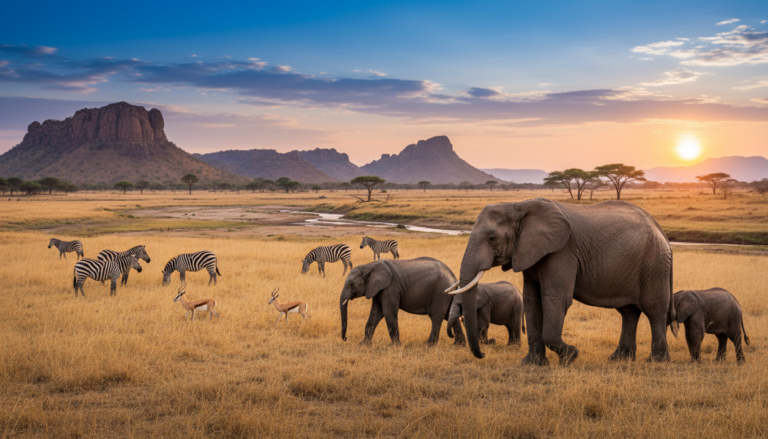
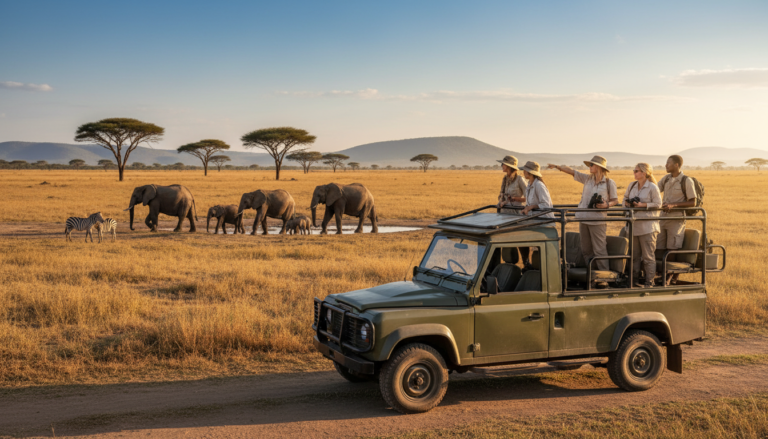
Standing at the base of the great mountain, you feel the weight of the journey ahead. Many travelers focus solely on the ascent. Yet, the surrounding plains offer a profound wilderness experience that complements the physical challenge.
Choosing a Kilimanjaro area safari allows you to witness the rhythm of East African life. This experience prepares you for the high-altitude challenge that lies ahead.
We believe that true exploration requires balance. By visiting a Safari Near Kilimanjaro, you ground yourself in the natural beauty of the region. These landscapes provide a quiet space to reflect and observe local wildlife.
They also help prepare your mind for the days of climbing that await. This balance is key to a fulfilling journey.
Key Takeaways
- Plan your wildlife viewing to align with your physical recovery needs.
- Select parks that offer shorter travel times to maximize your rest.
- Focus on the unique biodiversity found in the northern circuit.
- Balance the intensity of your trek with moments of stillness in nature.
- Prioritize authentic encounters over crowded tourist routes.
The Allure of Combining Kilimanjaro Climbs with Wildlife Safaris
For many adventurers, climbing Kilimanjaro is more than just reaching Africa’s highest peak. It’s a chance to see the rich wildlife around it. By combining a climb with a safari, travelers get to see all of Tanzania’s natural beauty.
The contrast between Kilimanjaro’s rugged terrain and the open savannah is very appealing. The Tanzania safari Kilimanjaro region offers diverse landscapes. From the mountain’s snowy peaks to the sun-drenched plains below, it’s all there.
A game drive near Kilimanjaro is a special chance to see the Big Five. These are lion, leopard, rhinoceros, elephant, and Cape buffalo. The region has several national parks, each with its own charm and wildlife.
Let’s look at a table that shows the diversity of experiences near Kilimanjaro:
| National Park | Main Attractions | Best Time to Visit |
|---|---|---|
| Arusha National Park | Momella Lakes, giraffes, and diverse birdlife | June to October |
| Tarangire National Park | Large elephant herds, baobab trees | January to March, June to October |
| Lake Manyara National Park | Tree-climbing lions, flamingos, diverse birdlife | June to October |
Exploring these options shows that a game drive near Kilimanjaro is more than just an extra. It’s a key part of the journey. Whether you love elephants in Tarangire or birdwatching in Lake Manyara, there’s a safari for you.
Arusha National Park: The Closest Safari Near Kilimanjaro
Arusha National Park is the closest national park to Kilimanjaro. It’s a great spot for a pre- or post-climb safari. Here, you can see wildlife and enjoy beautiful views, all close to the mountain.
Why Arusha National Park is Perfect for Short Trips
Arusha National Park is perfect for travelers with little time. It’s close to Kilimanjaro and Moshi town. You can easily add a safari to your trip. Visit Poria Africa Adventure to plan your visit.
The park is small but offers many activities. You can go on game drives, walking safaris, and canoeing on Momella Lakes. This means you can see the best of Arusha National Park, even if you’re short on time.
Wildlife Highlights and Unique Landscapes
Arusha National Park is full of wildlife. You can see giraffes, zebras, and many antelope species. The park’s landscapes are also stunning, with Mt. Meru, Momella Lakes, and varied vegetation.
| Activity | Description | Duration |
|---|---|---|
| Game Drive | Explore the park’s diverse wildlife | 2-3 hours |
| Walking Safari | Guided walk to observe flora and fauna | 1-2 hours |
| Canoeing on Momella Lakes | Observe birdlife and enjoy serene landscapes | 1-2 hours |
Tarangire National Park: The Land of Giants
As we enter Tarangire National Park, we see giant elephants and ancient baobab trees right away.
The Famous Elephant Herds of Tarangire
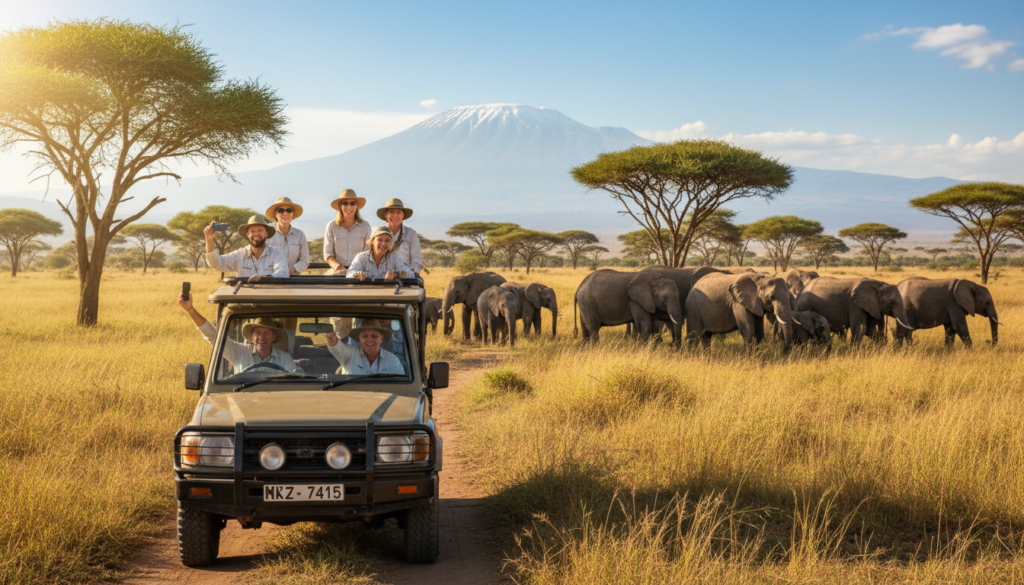
Tarangire is famous for its big elephant population. The elephants here are not just many but also very impressive, often seen in large groups. Seeing these gentle giants in their natural home is an exciting experience for anyone.
On a game drive near Kilimanjaro, watching the elephants’ social structures is really interesting. The matriarchal herds, led by the oldest female, show a complex and cooperative behavior. It’s both captivating and humbling.
Baobab Trees and Seasonal Migration Patterns
The landscape of Tarangire is filled with baobab trees, some over a hundred years old. These trees are not just beautiful but also very important for the ecosystem. They provide food and shelter for many animals.
The park’s wildlife has seasonal migration patterns. In the dry season, Tarangire’s water sources attract many animals. This creates a lively and dynamic ecosystem. Some of the key wildlife species you can see include:
- Lions
- Leopards
- Cheetahs
- Zebras
- Giraffes
These migration patterns, along with the park’s unique landscape, make Tarangire National Park a great place for wildlife lovers and photographers.
Lake Manyara National Park: A Birdwatcher’s Paradise
Lake Manyara National Park is perfect for a Kilimanjaro area safari. It has a wide range of landscapes. These include the lake’s shores, forests, and grasslands, home to many animals.
The park is famous for its tree-climbing lions. These lions are seen lounging in sycamore fig trees. It’s a unique sight for visitors.
Tree-Climbing Lions and Flamingos
The tree-climbing lions of Lake Manyara are a big draw. Their reason for climbing trees is still a mystery. But, it might be to avoid tsetse flies or to cool off.
The park is also known for its flamingos. The lake’s alkaline waters are perfect for these birds. During certain times, the shores turn pink with flamingos.
The Great Rift Valley Escarpment Views
Lake Manyara National Park is located in the Great Rift Valley. It offers stunning views of the escarpment. This dramatic landscape is great for wildlife watching and hiking.
Some key features of Lake Manyara National Park include:
- Diverse wildlife, including tree-climbing lions and large flamingo populations
- Breathtaking views of the Great Rift Valley escarpment
- A variety of habitats, from lake shores to forests and grasslands
Ngorongoro Crater: The Eighth Wonder of the World
The Ngorongoro Crater is a UNESCO World Heritage Site. It’s a natural wonder with a high concentration of wildlife. It’s part of the Tanzania safari Kilimanjaro region, offering a unique safari experience.
When we enter the Ngorongoro Crater, we see a breathtaking landscape full of life. The crater floor is a vast area of grasslands and swamps. It’s home to many animals, including the Big Five: lions, leopards, elephants, buffalo, and rhinoceros.
The Caldera Ecosystem and High-Density Wildlife
The Ngorongoro Crater is a self-contained ecosystem. Its unique geography supports a high density of wildlife. The crater’s caldera, formed millions of years ago, is now a thriving habitat.
Wildlife Highlights include the annual migration of wildebeest, zebras, and gazelles. The area is also known for its large population of predators. This makes it perfect for observing the savannah ecosystem.
Planning Your Descent into the Crater Floor
Visiting the Ngorongoro Crater requires careful planning. The descent is steep, and the terrain can be challenging. It’s important to choose a reputable tour operator with experienced guides.
When planning your visit, consider the time of day and the season. Early morning and late afternoon are best for game viewing. The dry season, from June to October, is the best time to visit. This is because the wildlife is more concentrated around water sources.
By understanding the ecosystem and planning your visit carefully, you can have a great time. Enjoy a truly unforgettable Tanzania safari experience in the Kilimanjaro region.
Serengeti National Park: The Ultimate Tanzania Safari Kilimanjaro Region Experience
Serengeti National Park is a highlight in Tanzania’s wildlife. It’s famous for its vast landscapes and the Great Migration. This natural event attracts visitors worldwide.
This park is more than a safari spot. It’s a deep dive into nature, where wildlife and landscapes come alive. The name Serengeti means “endless plains” in Maasai, fitting its vast grasslands.
The Great Migration and Predator Action
The Serengeti is known for the Great Migration. Over a million wildebeest, zebras, and gazelles migrate in search of food. It’s a natural wonder and a thrilling sight for those who see it.
The migration also brings predators like lions, leopards, and cheetahs. They hunt the herds, offering a chance to see intense predator-prey encounters. The best time to see these is during river crossings, where the action is fierce.
- Witness the Great Migration, one of the world’s most spectacular wildlife events.
- Observe a variety of predators in their natural habitat.
- Experience the vast, untouched beauty of the Serengeti’s endless plains.
Navigating the Vast Serengeti Plains
Exploring the Serengeti needs skill, patience, and knowledge. Our guides track wildlife and understand the natural world. They help visitors make the most of their time here.
The Serengeti’s vastness is exciting but can be daunting. With the right guide, it becomes a journey of discovery. Take time to notice the acacia trees and diverse birdlife.
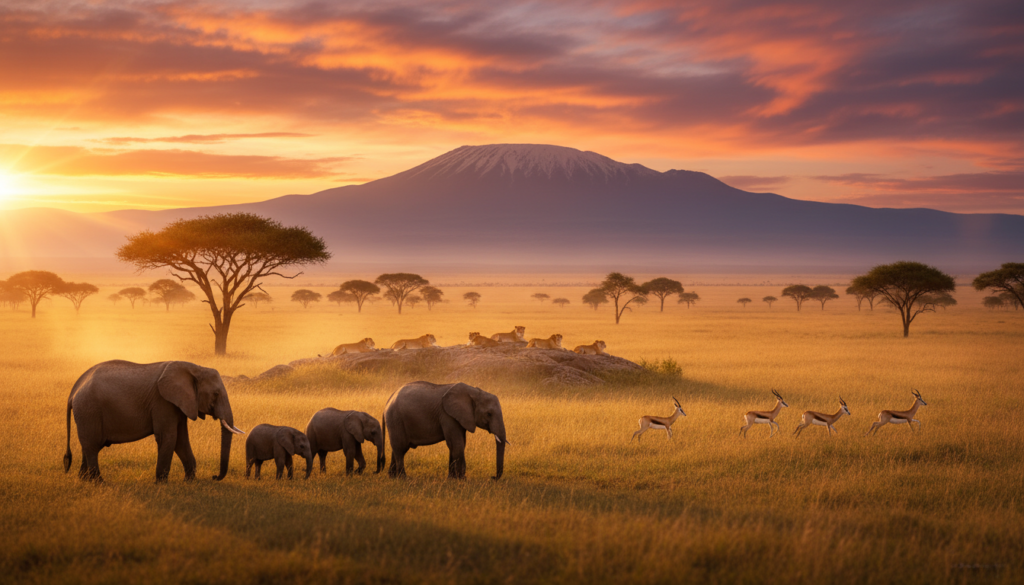
Exploring the Serengeti highlights the need for conservation. Sustainable tourism helps protect this amazing place for the future. By visiting, you support conservation and help preserve Tanzania’s natural heritage.
Logistics of Planning a Game Drive Near Kilimanjaro
We’ll help you plan a game drive near Kilimanjaro for a great Tanzanian adventure. A well-planned drive can make your experience unforgettable. You’ll see the amazing wildlife diversity in the area.
When planning, think about the safari type and when you’ll go. These choices affect your wildlife viewing and fun.
Choosing Between Private and Group Safaris
First, decide on a private or group safari. Private safaris let you customize your trip. They’re perfect for a personal nature experience or specific wildlife goals.
Group safaris are social and budget-friendly. They offer a rich experience with knowledgeable guides.
- Private Safari Benefits:
- Personalized itinerary
- Flexible scheduling
- Enhanced privacy
- Group Safari Benefits:
- Social interaction
- Cost-effective
- Shared experiences
Best Times of Year for Wildlife Viewing
The best time for a game drive near Kilimanjaro depends on the season. The area has wet and dry seasons, each with its own wildlife viewing opportunities.
The dry season, from June to October, is best for spotting animals. They gather near water, making them easier to see. It’s great for seeing the Big Five.
The wet season, from November to May, offers lush landscapes and newborn animals. It’s perfect for seeing the wild’s life cycle.
| Season | Best For | Wildlife Highlights |
|---|---|---|
| Dry Season (June – October) | Spotting a wide range of wildlife around water sources | The Big Five, general wildlife viewing |
| Wet Season (November – May) | Witnessing newborn animals and lush landscapes | Newborn animals, migratory birds |
Selecting the Right Safari Vehicle for Your Adventure
Choosing the right safari vehicle is key for a great Kilimanjaro area safari. The vehicle you pick affects how you see wildlife and enjoy your trip.
Think about the vehicle’s roof type, seating, and comfort features. You can choose between pop-top roofs and window seats. Knowing their benefits helps you decide.
Pop-Top Roofs vs. Window Seats
A pop-top roof lets you see wildlife and landscapes clearly. It’s great for photos, as it doesn’t block your view. A safari guide said,
“A pop-top roof can make all the difference when trying to get that perfect shot of a lion or elephant.”
Window seats, however, offer a cozy and enclosed feel. They’re better in cold weather or long drives. But, you might see less because of the windows. It’s up to you whether you prefer a pop-top roof or window seats.
Comfort and Amenities for Long Drives
Comfort is key for long drives in the Kilimanjaro area. Look for vehicles with comfy seats, lots of legroom, and space for your stuff. Some have fridge boxes for snacks and drinks, which is handy on long trips.
Also, check the vehicle’s suspension and condition. A well-kept vehicle with good suspension makes rough roads smoother. This keeps you comfortable and happy during your safari.
Packing Essentials for Your Post-Climb Safari
Getting ready for your safari after climbing Kilimanjaro is key. You need the right gear for a fun and comfy trip. You’ll explore Tanzania’s amazing national parks, like the Arusha National Park safari.
Clothing and Gear for Dusty Environments
Tanzania’s savannah and grasslands can get dusty. So, pack clothes and gear that can handle this. Here’s what we suggest:
- Lightweight, breathable clothes that cover your skin to protect against sun and dust.
- Sturdy, comfy boots for walking safaris.
- A hat and sunglasses for sun protection.
- A scarf or bandana to keep dust out of your face.
For dusty places, choose clothes that are easy to clean or replace. Neutral or khaki colors are best. They blend in and don’t scare animals.
| Clothing Item | Recommended Features | Benefits |
|---|---|---|
| Safari Jacket | Lightweight, breathable, multiple pockets | Comfortable, practical for carrying essentials |
| Safari Pants | Durable, water-resistant, convertible legs | Versatile, protects against the elements |
| Safari Hat | Wide brim, breathable material, chin strap | Protects face and neck from sun |
Camera Equipment and Binoculars
Remembering your safari is as important as the trip itself. For great photos, bring:
- A DSLR or mirrorless camera with a telephoto lens.
- Binoculars for spotting wildlife from afar.
- A camera that works well in low light for early and late drives.
- Extra batteries and memory cards so you don’t miss a photo.
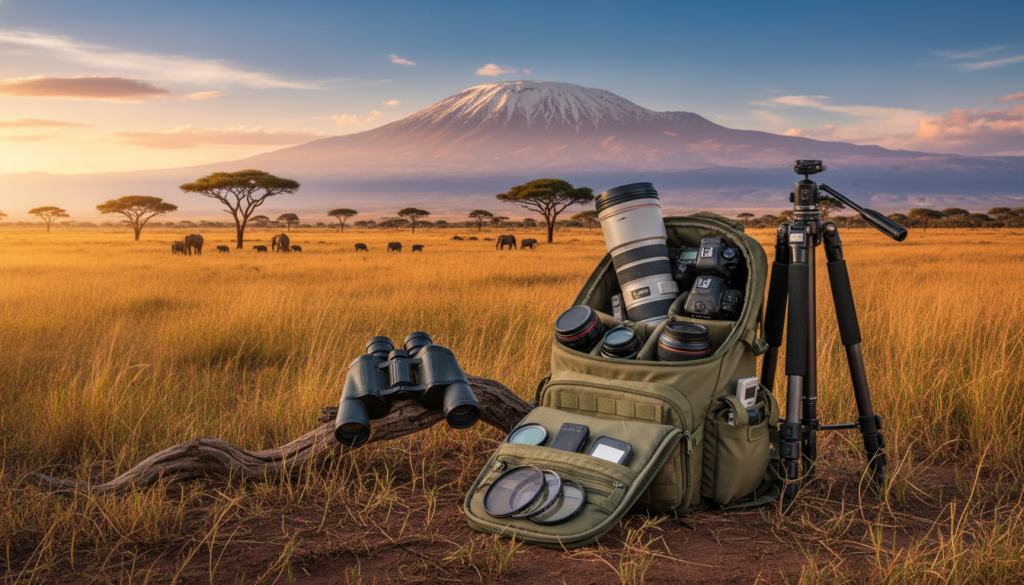
It’s not just about the gear for a great safari. Being ready for the environment is key. With the right clothes and equipment, you’ll enjoy and capture the beauty of your safari.
Safari Moshi: Starting Your Journey from the Kilimanjaro Gateway
Your adventure starts in Moshi, a town that mixes adventure with culture. It’s the entry point to Kilimanjaro. Here, you can prepare for your climb and dive into the local culture.
Take a day or two in Moshi to get ready for your journey. The town has many places to stay and things to do. These can make your trip even better.
Where to Stay in Moshi Before Your Safari
Moshi has many places to stay, from simple guesthouses to fancy hotels. Think about what you need before your safari. Choose a place with the right amenities.
| Accommodation Type | Amenities | Price Range |
|---|---|---|
| Budget Guesthouse | Basic rooms, shared facilities | $20-$50 per night |
| Mid-range Hotel | Private rooms, restaurant, Wi-Fi | $80-$150 per night |
| Luxury Lodge | Private suites, pool, guided tours | $250-$500 per night |
Local Cultural Experiences Near the Mountain
Exploring local culture is key to the Tanzanian experience. In Moshi, you can visit markets, go on coffee tours, or see nearby villages. This will help you understand the Chagga culture better.
Local markets show you how people live, with goods like handicrafts and fresh food. Coffee tours teach you about Tanzania’s coffee, from bean to cup.
The Role of Professional Guides in Your Safari Success
Professional guides are key to a great safari in the Kilimanjaro region. They share insights that make your wildlife adventure better. Their knowledge goes beyond just finding animals; it’s about the whole ecosystem.
Going on a safari with a guide is more than following someone. It’s learning about the land, its history, and its creatures. This knowledge makes our wildlife encounters more meaningful.
Why Expert Spotters Make the Difference
Expert spotters are vital for a Tanzania safari near Kilimanjaro. They can spot animals from far away and know their behavior. This skill is especially useful in big places like the Serengeti or dense forests of Arusha National Park.
With expert spotters, we see wildlife in their natural home. They teach us about animal social structures, how they eat, and when they move. This gives us a full view of the ecosystem.
| Guide Expertise | Benefits to Safari Experience |
|---|---|
| Animal Tracking | Increases chances of spotting a wide variety of wildlife |
| Ecosystem Knowledge | Provides deeper understanding of the natural world |
| Safety and Emergency Response | Ensures a safe and prepared response to any situation |
Understanding Local Flora and Fauna
A professional guide knows more than just animals. They also know about the plants in the area. This helps us see how plants and animals work together, like how trees feed animals or how the landscape affects animal paths.
This knowledge lets us enjoy the safari more. We’re not just watching; we’re learning about the ecosystem’s balance.
Sustainable Tourism and Wildlife Conservation Efforts
Planning a safari near Kilimanjaro means we must focus on sustainable tourism. This ensures the area’s natural beauty stays protected for the future. It also makes our trip better and helps local ecosystems and communities.
Supporting Local Communities and Parks
Sustainable tourism in the Kilimanjaro area means helping local communities and parks. We do this by choosing tour operators that care about the environment and local people. This way, everyone benefits from tourism.
Tourism greatly affects local economies. Many places in Kilimanjaro are run by locals, giving them jobs. By staying at these places, we help the local economy grow.
Also, local communities lead many conservation efforts. They work to protect wildlife and live in harmony with nature. Our support through tourism is key to these efforts.
| Community Benefits | Conservation Impact |
|---|---|
| Economic empowerment through job creation | Protection of wildlife habitats |
| Support for local businesses and entrepreneurship | Promotion of coexistence with wildlife |
| Community development through infrastructure and services | Conservation of natural resources |
Responsible Wildlife Viewing Practices
Responsible wildlife viewing is crucial for sustainable tourism. We must keep a safe distance, not litter, and respect animal habitats. This way, we protect the environment and ensure animals thrive.
Guided tours are great for responsible wildlife viewing. Guides know a lot about local wildlife and can teach us about their behavior and habitats. This deepens our appreciation for nature.
It’s also important to choose tour operators that follow responsible tourism. They should support conservation and care for the environment.
Budgeting for Your Kilimanjaro Area Safari
Planning a game drive near Kilimanjaro means you need a budget. A good budget helps you enjoy your safari without worrying about money.
Setting a budget for a safari is more than just the initial cost. You should think about the type of safari, where you’ll stay, and when you’ll go.
Hidden Costs and Park Fees Explained
Park fees are a big part of safari costs. These fees change based on the park and your vehicle. For example, the Serengeti National Park or Ngorongoro Crater might cost more than other places.
Other costs include:
- Guide fees
- Fuel for the safari vehicle
- Accommodation costs, which can range from budget-friendly options to luxury lodges
- Food and beverages during your safari
| Cost Component | Estimated Cost (USD) | Notes |
|---|---|---|
| Park Fees | $50 – $100 per person per day | Varies by park and nationality |
| Guide Fees | $20 – $50 per day | Depends on the guide’s expertise |
| Accommodation | $30 – $500 per night | Ranges from camping to luxury lodges |
Value-for-Money Tips for Travelers
To save money, follow these tips:
- Plan your safari during the off-season when prices are lower.
- Choose accommodations that offer inclusive packages.
- Opt for a guided tour that includes all necessary fees and services.
Knowing the costs and planning ahead can make your game drive near Kilimanjaro fun and affordable.
Health and Safety Considerations in the Bush
When you’re getting ready for your safari near Kilimanjaro, knowing about health and safety is key. Your safety is crucial for a great adventure.
Malaria Prevention and Vaccination Advice
Malaria is a big health worry on safari. Talk to your doctor about taking malaria medicine before you go. The risk of malaria changes with the season and where you are.
Other shots might be needed or suggested for Tanzania. Make sure you’re current on all vaccines. Also, think about getting shots for Hepatitis A and typhoid.
| Vaccination | Recommendation | Details |
|---|---|---|
| Hepatitis A | Recommended | Two doses, spaced 6-12 months apart |
| Typhoid | Recommended | Either oral or injectable, booster doses required every 2-5 years |
| Malaria Prophylaxis | Required for some areas | Medication varies; consult healthcare provider |
Staying Safe Around Wild Animals
Keeping safe around wild animals is vital on safari. We teach you how to keep a safe distance and understand animal behavior. This helps lower the risk of danger.
Always listen to your guides. They know the area and animals well. Stay in the vehicle and keep your hands and feet inside.
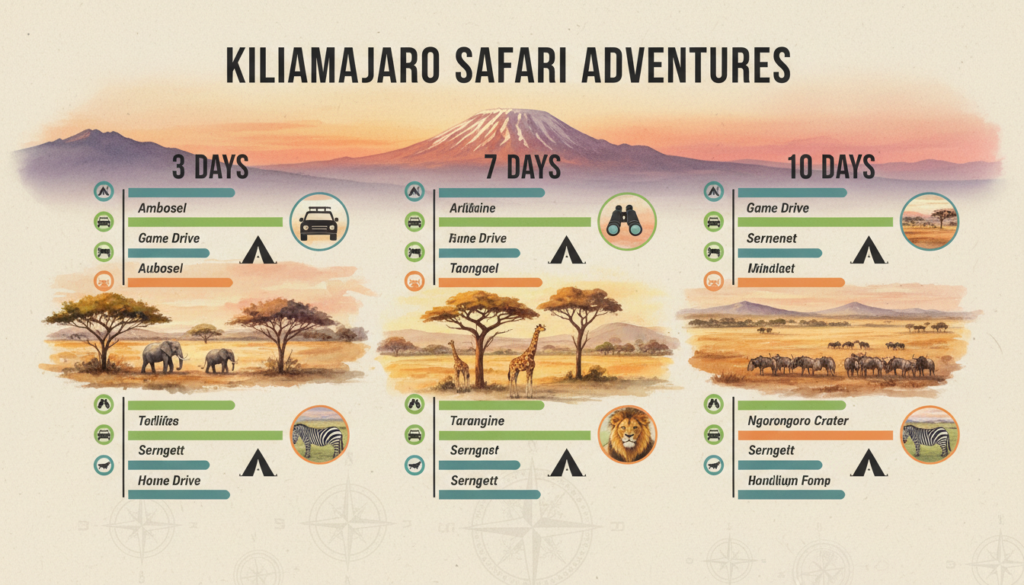
Comparing Safari Itineraries for Different Timeframes
The length of your safari greatly affects your wildlife encounters and the landscapes you see. It’s key to think about what you want to see and how much time you have.
We have various safari itineraries for different schedules and preferences. Whether you want a quick taste of Tanzania’s wildlife or a deep dive into its national parks, we can guide you.
One-Day Excursions vs. Multi-Day Expeditions
One-day excursions are perfect for those with little time or a first-time safari experience. These trips usually focus on one park or activity, like a game drive in Arusha National Park. They offer a quick but satisfying experience.
Multi-day expeditions, however, let you enjoy a slower pace and see more places. For instance, you could spend days exploring the Serengeti and Ngorongoro Crater together.
| Safari Type | Duration | Highlights |
|---|---|---|
| One-Day Excursion | 1 day | Game drive in Arusha National Park, visit to Momela Lakes |
| Multi-Day Expedition | 3-5 days | Exploration of Serengeti, Ngorongoro Crater, and Tarangire National Park |
Customizing Your Route Based on Interests
Customization is crucial for a great safari. We help tailor your trip to match your interests. This could be seeing the Great Migration, spotting certain animals, or enjoying Tanzania’s scenic views.
For those starting in safari Moshi, we arrange transport and activities that fit your schedule. This ensures a smooth transition from your Kilimanjaro adventure to your safari.
Conclusion
Exploring the best parks to visit before or after climbing Kilimanjaro reveals a unique adventure. A Tanzania safari in the Kilimanjaro region is unmatched. The varied landscapes and abundant wildlife of Arusha National Park, Tarangire National Park, Lake Manyara National Park, Ngorongoro Crater, and Serengeti National Park add to the mountain’s grandeur.
When planning your safari, picking the right parks, guides, and logistics is key. Expert guides are essential for exploring the region’s diverse ecosystems. They help spot the incredible wildlife that lives here.
A well-planned Tanzania safari in the Kilimanjaro region boosts your adventure. It also supports local communities and conservation. By choosing responsible tour operators and respecting local environments, you help preserve this incredible region.
As you prepare for your journey, think about the options. From one-day excursions to multi-day expeditions, pick what fits your interests and schedule. With good planning, your Kilimanjaro region safari will be unforgettable.
FAQ
What is the most accessible Arusha National Park safari for those finishing a climb?
For those finishing a climb, Arusha National Park is the closest option. It’s just a short drive from the mountain and city. The park’s quiet, green landscapes are perfect for a gentle return to the world below.
Here, you can see black-and-white colobus monkeys and giraffes grazing. It’s a great way to see wildlife without a long trip.
Can we arrange a game drive near Kilimanjaro if we only have one day available?
Yes, a game drive near Kilimanjaro is possible in one day. We can quickly get to Arusha National Park or Tarangire. This way, you can see the wild and return to your lodge by evening.
It’s perfect for those with tight schedules.
How do we choose the right parks within the Tanzania safari Kilimanjaro region?
Choosing the right park depends on what you like. Tarangire is great for seeing elephants and baobabs. Lake Manyara is perfect for birdwatchers and those who love the Great Rift Valley.
If you have more time, Ngorongoro Crater and the Serengeti offer amazing wildlife views.
Is it better to start a safari Moshi based or travel to Arusha first?
Starting in Moshi is now a popular choice, especially after climbing. It saves time by going straight from the mountain to the safari. Many routes start in Moshi, heading west to the parks.
What should we pack for a Kilimanjaro area safari to ensure comfort?
For a safari, pack light, neutral clothes to stay cool and blend in. A dust mask or scarf is essential for dry trails. Make sure your binoculars and camera are ready for the great light near the equator.
Why is the presence of professional guides essential for a successful safari?
Guides are key to understanding the wild. They spot animals and share knowledge on plants and animals. Their expertise makes your safari educational and respectful.
What are the primary health and safety considerations when visiting the parks?
Safety is crucial. Check for malaria prevention and vaccinations before you go. Always follow your guide’s instructions to stay safe around animals. We focus on responsible wildlife viewing for everyone’s safety.
How do we budget for a safari near the mountain without hidden surprises?
We believe in clear budgeting. We include all costs like park fees and vehicle expenses. Group safaris are cheaper, but private ones offer more flexibility. We give you a detailed cost breakdown upfront, so you can enjoy your trip without worrying about money.